


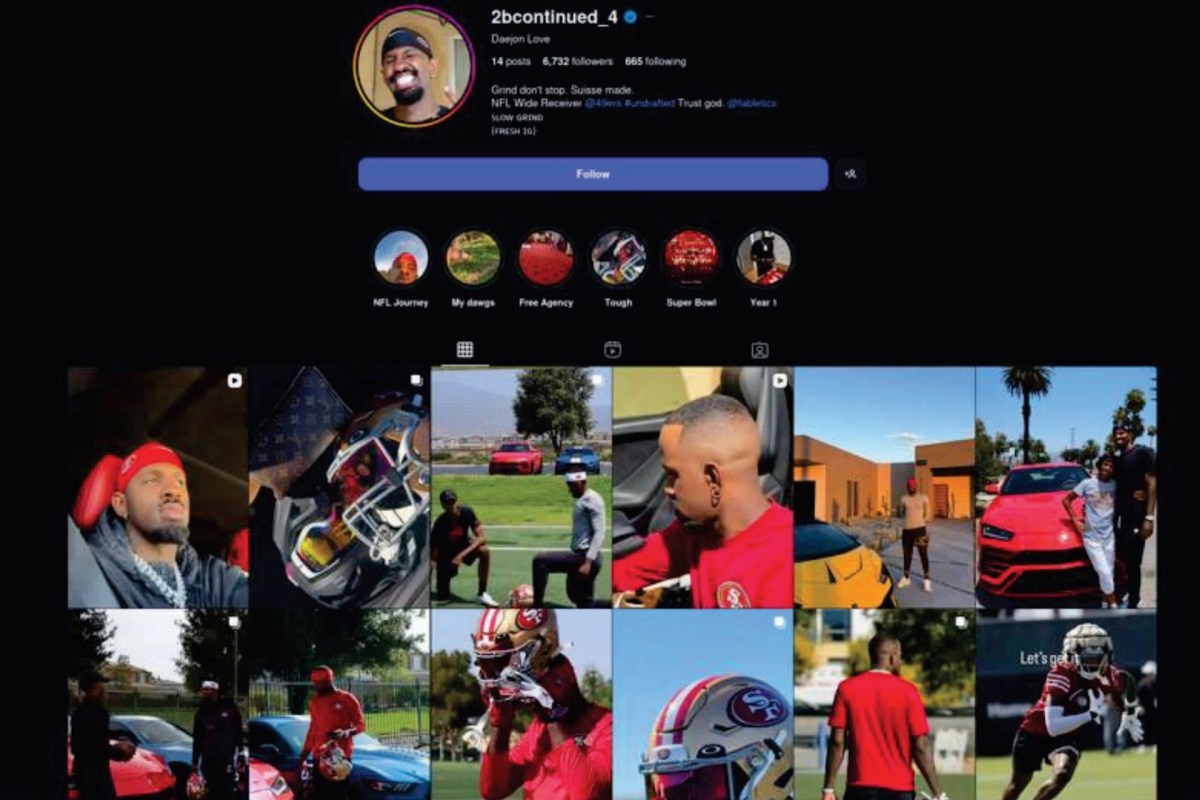
An Oregon man accused of posing as an NFL player on dating apps to scam women allegedly didn't just fool his targets. Federal investigators contended his online trail was convincing enough to mislead Google's AI-generated search summaries, which repeated the fake persona as if it were real.
The allegation raises fresh questions about how false information spreads when AI tools mistake repetition for proof.
Here's what to know
According to Futurism, the FBI is accusing 35-year-old Daejon Labrayae Love and 18-year-old Taylor Jamie Chan of scamming about $1.3 million from at least 26 women across four states.
The Justice Department's press release noted that investigators are alleging that Love variously claimed to be a San Francisco 49ers player or a wealthy Swiss real estate developer, while Chan allegedly posed as his financial advisor.
The FBI said the pair used dating apps to meet women and steer them into fake investment opportunities. Some victims were allegedly persuaded to take out loans before handing over cash.
Court documents declared "some victims became suspicious of Love and searched for Love's information through the internet."
TCD Picks » Quince Spotlight
💡These best-sellers from Quince deliver affordable, sustainable luxury for all




"Due to Love's false social media representations, search engines and artificial intelligence occasionally stated that Love was a bonafide 49ers player," the filing added.
Authorities have said that misleading online footprint made the alleged scheme appear more believable.
More background
Futurism noted that Love packed Instagram, TikTok, and LinkedIn with posts portraying himself as a sidelined member of the 49ers. In that way, the alleged fraud wasn't limited to direct contact. Those social media posts also helped reinforce the broader false narrative.
AI search tools are increasingly used as quick credibility checks. Confident but inaccurate summaries can help fraud spread, erode trust, and make it harder to tell what's real online.
The AI boom also has a broader energy angle. AI systems can offer meaningful benefits, including helping utilities balance power demand, integrate renewable energy, and optimize the electric grid. However, those same systems can also consume enormous amounts of electricity and water, and rapid adoption may contribute to greater infrastructure strain and potentially higher energy costs.
The case points to another downside of misuse, security concerns, and unintended societal harm when AI systems present bad information as fact.
AI is powerful, resource-intensive, and still highly vulnerable to garbage in, garbage out.
What can be done?
This case uncovers the need for stronger safeguards around AI-generated search results, especially when summaries involve identity, employment, or financial claims. Better source vetting, clearer uncertainty labels, and faster correction systems could reduce the chances that a fabricated online persona gets echoed back as truth.
It's best to avoid treating an AI summary as verification. A search result, even one written in an authoritative tone, shouldn't replace checking official team rosters, public records, financial licensing databases, or trusted news reporting.
According to the Los Angeles Times, Love allegedly pointed to Google's AI summary in his own defense, saying: "That's Google. That's not me, that's Google."
It also helps to stay cautious whenever a romantic connection quickly shifts toward investments, loans, or urgent money transfers. Pressure, secrecy, and promises of easy returns are classic red flags.
Cross-checking information through multiple independent sources can help keep a digital mirage from becoming a real-world loss.
Where can I learn more?
This case sits inside a much bigger AI debate. The articles here look at misinformation alongside the industry's mounting security, water, and electricity problems, while also highlighting efforts to use the technology in more practical ways.
• Across the tech industry, public outcries against AI advancements are intensifying over security, water, and jobs.
• At MIT, Priya Donti is using AI systems to optimize renewable grids instead of muddying facts.
• U.S. utilities are signing unprecedented deals with this industry as data-center power demand surges.
• Big Tech's AI boom is outrunning the power grid as infrastructure spending races ahead.
• In homes near heavy data-center loads, massive power grid issue warnings reach everyday appliances.
They emphasize why AI should be judged by more than speed and polish. When safeguards fall behind, the same systems marketed for convenience can also add real-world costs, confusion, and strain.

Get TCD's free newsletters for easy tips, smart advice, and a chance to earn $5,000 toward home upgrades. To see more stories like this one, change your Google preferences here.






