


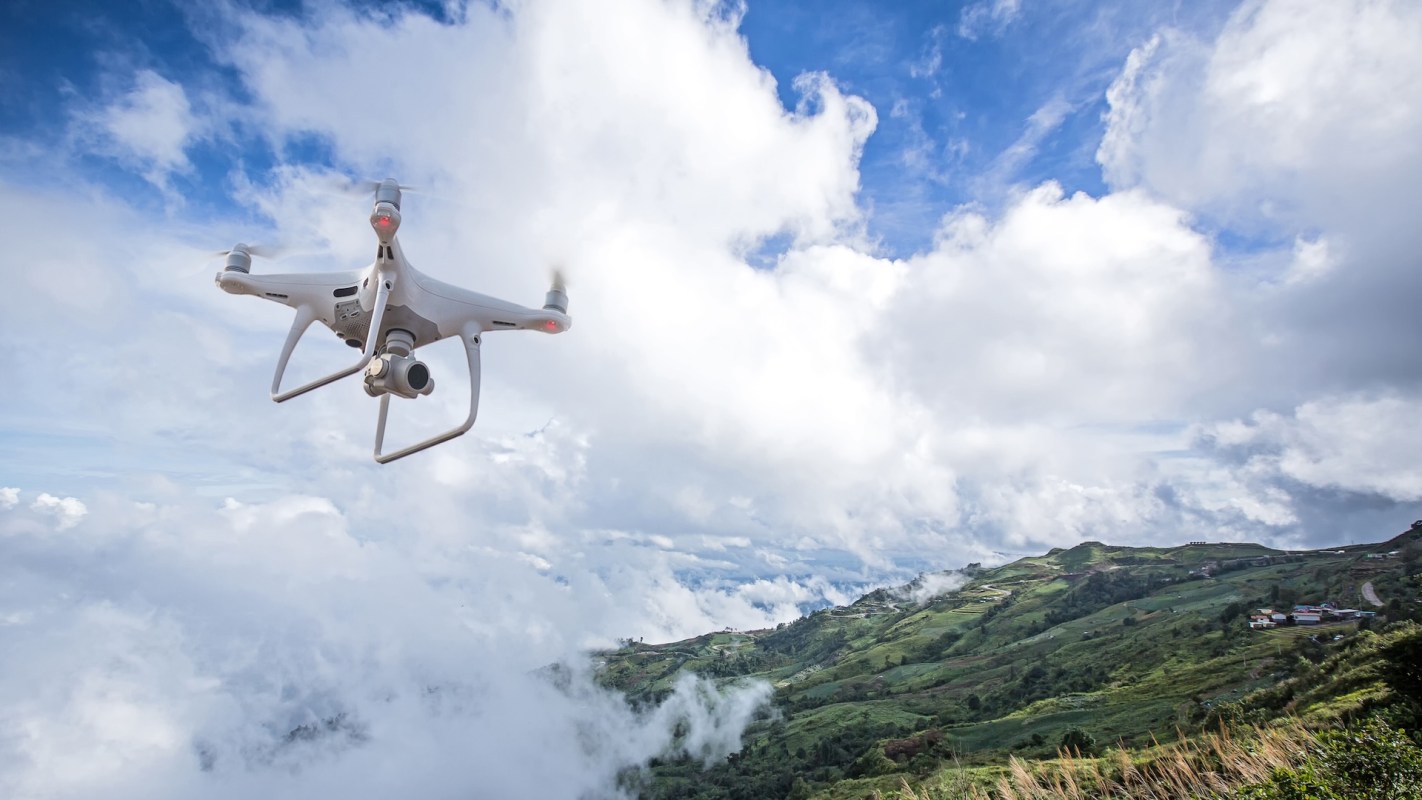
Drones carrying silver iodide could help increase rain and snowfall across roughly 1,640 square miles of southern Oregon under a new proposal to support local water supplies.
Here's what to know
Rainmaker Technology Corp. has applied to the Oregon Department of Agriculture to conduct research and development in Jackson County, with effects extending into Josephine, Douglas, and Klamath counties, according to Your Oregon News.
The proposal calls for flights from November to May, subject to approval and suitable cloud conditions. The Federal Aviation Administration has approved the proposed flight areas around Medford.
Rainmaker uses drones and high-altitude aircraft to release particles that promote ice formation in clouds. The company was founded in California in 2023 and plans to deploy an unmanned quadcopter and a crewed Beechcraft King Air C90A.
The project looks to encourage rain and snow by adding material to winter clouds that contain supercooled liquid water, a technique called glaciogenic cloud seeding.
More background
The department described the project as a "research and development campaign to evaluate and improve cloud seeding for increasing wintertime precipitation and mountain snowpack in Jackson, Josephine, Douglas, and Klamath counties in support of irrigation, water supply, groundwater recharge, and hydropower," according to Your Oregon News.
TCD Picks » Quince Spotlight
💡These best-sellers from Quince deliver affordable, sustainable luxury for all




The quadcopter's silver iodide flares would burn in place, and the King Air could also carry burn-in-place flares. Other equipment options are a pneumatic dispenser for the quadcopter and ejectable flares for the King Air.
The agriculture department held a public hearing Tuesday, giving residents a chance to weigh in before the agency decides whether to approve the project.
The agriculture department director's office will approve or reject Rainmaker's application, which the department received Oct. 22.
Where can I learn more?
The proposal is one of several efforts to influence weather or shore up water supplies.
• Indonesia is ramping up cloud seeding in Borneo as wildfires threaten a particularly severe year.
• Record heat in 2026 is reviving sulfur-dioxide solar geoengineering proposals, while critics warn of a climate detour.
• New England scientists are launching a snowpack monitoring effort as warming winters bring drought and flash floods.

Get TCD's free newsletters for easy tips, smart advice, and a chance to earn $5,000 toward home upgrades. To see more stories like this one, change your Google preferences here.






