


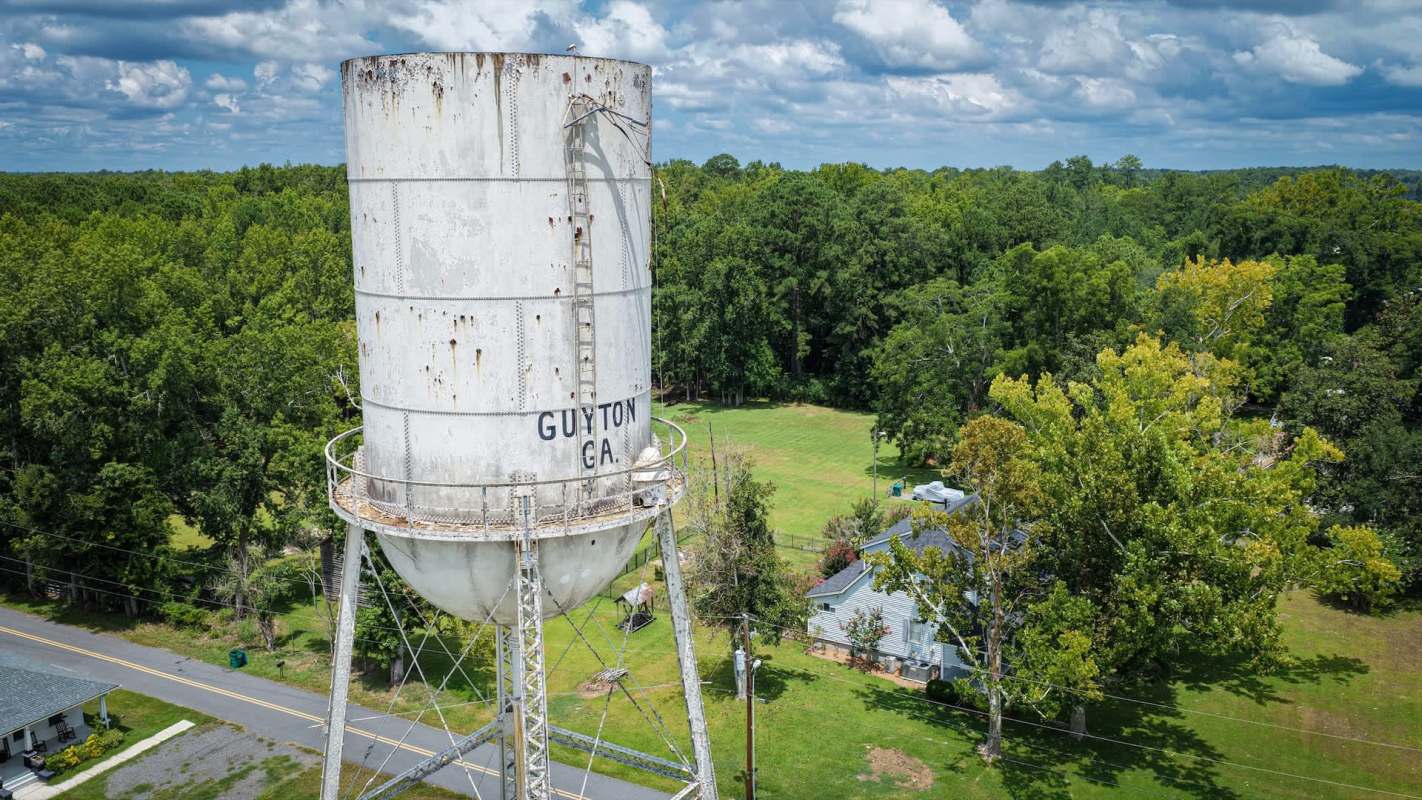
On July 23 in Rincon, Georgia, more than 500 people filled an OpenAI open house, and hundreds of others demonstrated outside, the Statesboro Herald reported, highlighting the divisiveness of the company's proposed data center in the area.
People who spoke out about the plan cited its size along with worries about water consumption, noise, and the short notice they said they received before the meeting.
What happened?
OpenAI proposed Project Camellia, a $20 billion artificial intelligence data center on 1,400 acres at the Savannah Gateway Industrial Hub. The company says the campus could begin operating in 2028 and, once built out, use up to 3.2 gigawatts of electricity.
At the open house, some residents wore shirts reading "Say no to data centers," while demonstrators outside carried signs that said "Protect our water" and "You can't drink data."
Among those voicing skepticism was resident Chris Barber, who said he works in artificial intelligence. He told the outlet, "It just feels very, 'We're going to slide this by as quietly as possible.'"
Barber's wife, Trivinia, said she first heard about the proposal through a school district email.
TCD Picks » Quince Spotlight
💡These best-sellers from Quince deliver affordable, sustainable luxury for all




"The secrecy ... the backdoor deals — it's very weird," she said, per the Herald.
Not everyone opposed the project. Resident and AI strategist Nicholas Dowling said he was encouraged by the announcement, telling the newspaper, "A project of this size will bring an entire ecosystem with it."
Why does it matter?
The dispute in Effingham County reflects a broader tension playing out across the country as AI infrastructure expands. Advanced AI tools can optimize electricity systems, improve weather forecasting, support cleaner energy technology, and make industries more efficient.
At the same time, the computing power behind those tools can require enormous amounts of electricity and water, straining local grids, infrastructure, and natural resources.
Concerns about water were especially prominent among residents who rely on private wells.
Some objections, on the other hand, focused on the area's character and daily life. Isaiah Scott, founder of Rookery and Roots Conservancy, described Effingham County as "a biodiversity hotspot," while Cheryl Sparks of neighboring Springfield questioned the site's proximity to Blandford Elementary School.
"What about our children? What are they thinking?" she said, according to the Herald.
The controversy also reflects another common concern tied to major development projects: whether local communities are meaningfully included before key decisions are made.
What's being done?
The open house was designed for questions, with OpenAI engineers, recruiters, and executives stationed at tables covering site plans, jobs, water use, and power demand. Effingham County representatives also presented a proposed $320 million surface water treatment plant that officials said would expand capacity for future growth.
For some residents, the meeting represented a first step. For others, it fell short.
"There are a lot of questions that people have, but they can't answer them," William McDonald of nearby Guyton told the Herald.
Dowling added, "There's going to be skeptics regardless."
"If we don't protect the land here in Effingham, we're eventually going to lose what makes Effingham stand out," Scott warned, per the paper.

Get TCD's free newsletters for easy tips, smart advice, and a chance to earn $5,000 toward home upgrades. To see more stories like this one, change your Google preferences here.






