


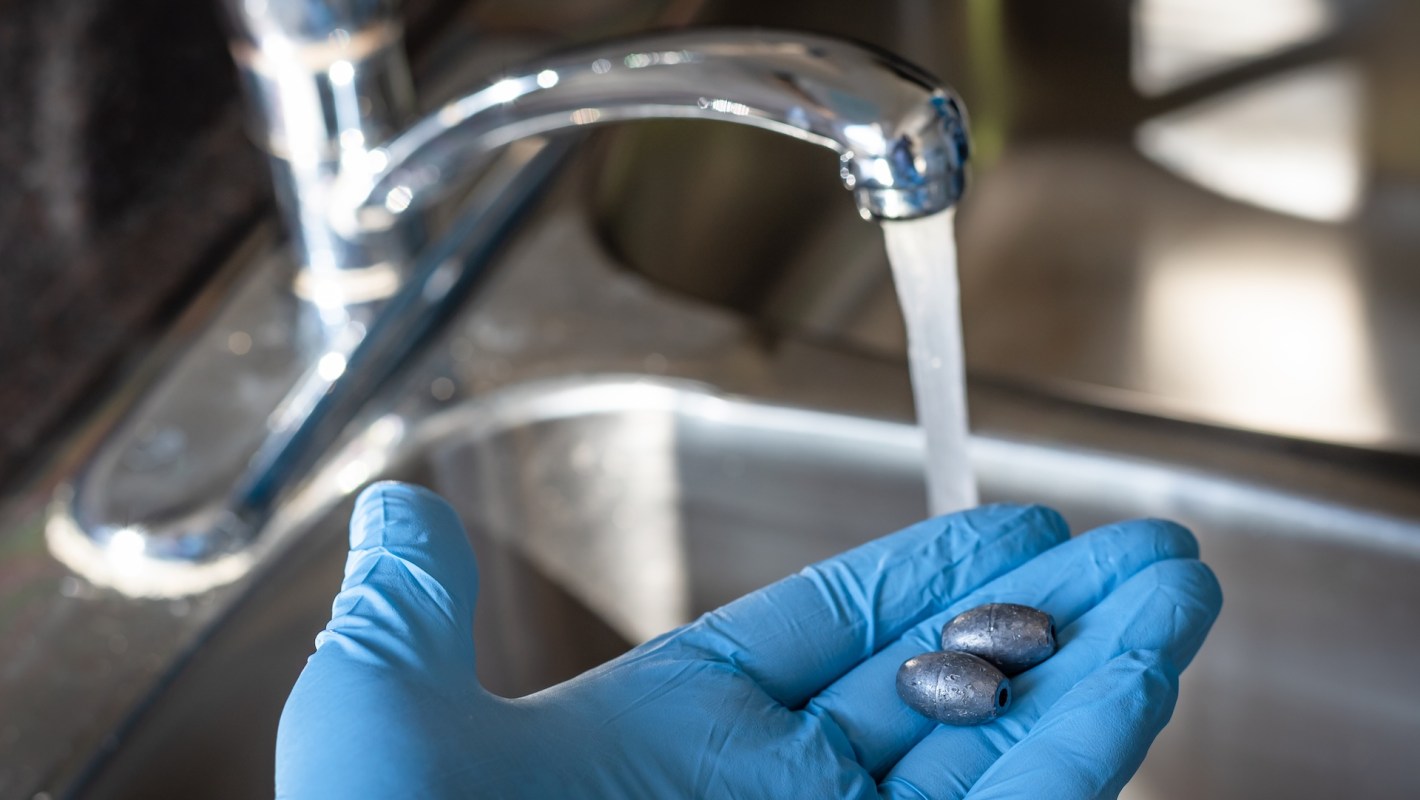
Ontario has continued to allow twice the concentration of lead in drinking water as the national standard, with internal records pointing to cost as the reason for resisting tighter protections.
Children's heightened vulnerability to lead's harmful effects has made the decision especially consequential for schools and childcare centers, which might require millions of dollars in upgrades before they could comply with a stricter standard.
Here's what to know
A March 2026 Environment Ministry memo warned that adopting the federal guideline could cost municipalities millions of dollars and create significant expenses for schools and childcare centers, according to the Investigative Journalism Bureau.
The possible health benefits of stricter protections, and any related savings, were not assessed in the records. A financial breakdown was also missing, per the IJB.
Health Canada lowered its lead guideline to five parts per billion in 2019, but Ontario still permits 10 parts per billion in its drinking water. Eight provinces have adopted the federal benchmark, while Saskatchewan, the only other holdout, has been reviewing its policy, according to the IJB.
Ontario's own public guidance acknowledges that children under seven absorb lead more easily than adults. Lead exposure can cause neurodevelopmental problems and reduce children's IQ, and the World Health Organization has said no amount of lead in drinking water is safe.
TCD Picks » Quince Spotlight
💡These best-sellers from Quince deliver affordable, sustainable luxury for all




More background
An IJB analysis of more than 175,000 school water tests from 2019 through 2025 found that 10% exceeded even Ontario's limit. More than 50% of tested schools had a result exceeding the federal benchmark, according to the IJB.
At Mississauga's St. Francis of Assisi Catholic elementary school, which serves about 425 students, 23 of 52 tests exceeded the federal guideline during that period. Fourteen exceeded Ontario's limit, the IJB reported.
Oswald Emmanuel, a former school council treasurer whose three children attended the school, said that, although the results were posted online, parents were not proactively informed.
Internal environment ministry records showed that officials challenged ministry messaging that cited an absence of reported childhood lead poisonings linked to drinking water. Even without a reported poisoning, low-level exposure can still cause lasting harm, and Ontario does not run a program that directly tests children for lead, according to the IJB.
What's being done?
Ontario's Ministry of Health said schools, private schools, and childcare centers must conduct routine plumbing flushes and collect samples to check for lead, according to the IJB. Concerned families can also consult six years of Ontario school and daycare results through the IJB's Lead Tracker.
Manitoba announced in 2020 that it would follow Health Canada's limit, and the roughly 32,000-student Winnipeg School Division committed to testing and infrastructure improvements. In British Columbia, Surrey Schools, serving more than 82,000 students, expressed support for the lower benchmark as well.
According to the IJB, Ontario officials considered bringing the federal standard into force in January 2022, but no change followed. Polytechnique Montréal professor Dr. Michèle Prévost, who studies lead in drinking water, explained that compliance costs would include repairing or replacing plumbing that releases lead.
Julie Mutis, a Canadian Environmental Law Association community outreach worker, said the stakes extend beyond diagnosed poisoning.
A lack of lead poisonings "is not the metric of success we should be talking about, especially around children's exposure," Mutis said, per the IJB. "The most common concern, especially when we're talking about schools, is the irreversible impacts of low levels of lead exposure."
Where can I learn more?
Questions about lead exposure and the cost of safer water extend far beyond Ontario's schools.
• A homeowner's 12 ppb lead result highlighted that one NSF label doesn't guarantee lead removal.
• A New York homeowner still cannot confirm lead-free tap water as 6,300 systems miss an EPA deadline.
• New York's Nassau County has 12,904 lead water lines, compared with just 16 in Suffolk.
• More Colorado homes near an old smelter could qualify for cleanup under lower EPA lead limits.
• In Ontario, Ramara ratepayers sued to stop 8% water and 15% wastewater rate increases.

Get TCD's free newsletters for easy tips, smart advice, and a chance to earn $5,000 toward home upgrades. To see more stories like this one, change your Google preferences here.






