


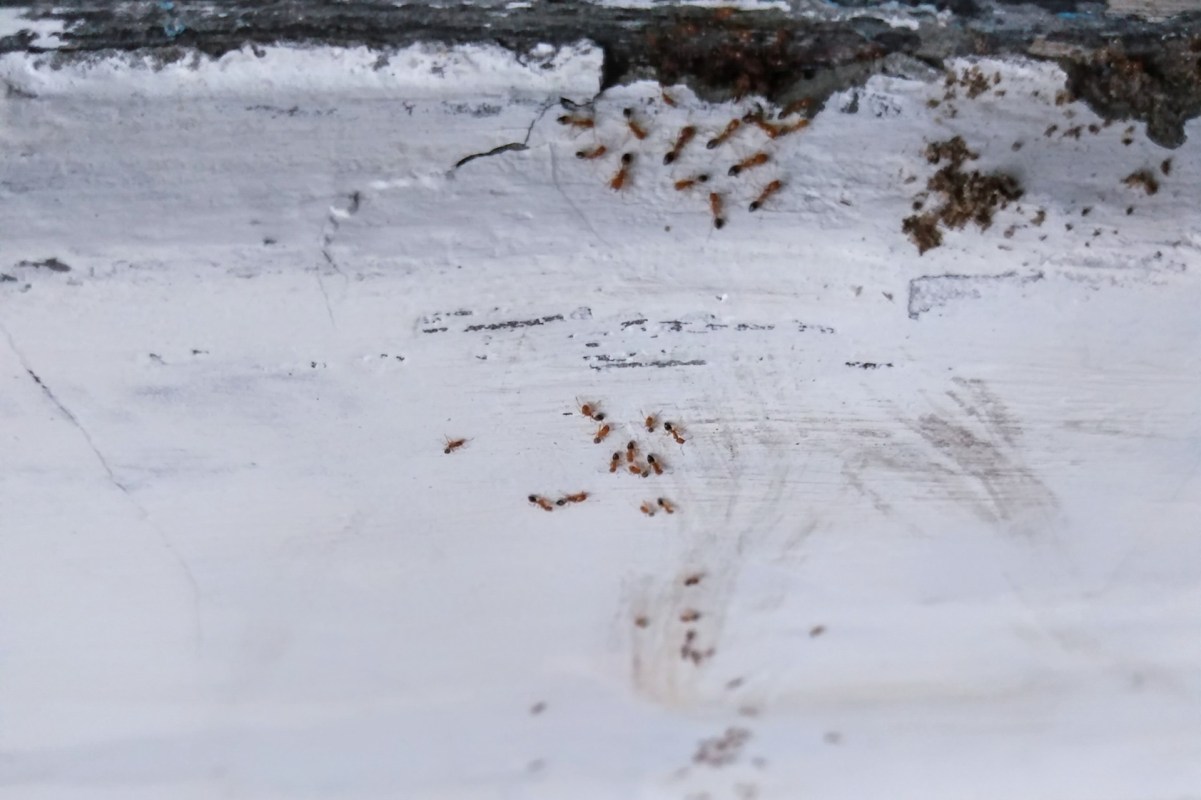
Seeing ants stream up the outside of an apartment or office building might seem like a pest issue. But in several Ohio cities, researchers have said the behavior can instead indicate that urban ecosystems are doing better than many people might expect.
In Cincinnati, Dayton, and Columbus, scientists found ants apparently climbing several stories to reach rooftop gardens on green roofs — a pattern they say bodes well for biodiversity.
Here's what to know
A study by University of Dayton associate professor of biology Chelse Prather examined how ants used nine green roofs and nearby habitats at ground level, according to WVXU. Published in the journal Urban Ecosystems, the project followed ant abundance, food preferences, and other measures over several months.
The researchers centered the study on ants because they are widespread in urban areas, many species are native, and the insects play meaningful ecological roles.
"We know that they're an organism that will live in a lot of different places," Prather told WVXU. "You catch a lot of them going into your house, so we figured that if any organism was using these green roofs, that ants would be a likely candidate."
Instead of finding sharply different groups on roofs and at street level, the team found a strong resemblance between the two ant communities.
TCD Picks » Quince Spotlight
💡These best-sellers from Quince deliver affordable, sustainable luxury for all




"The key finding is that the ant community was the same on the ground and the roof," Prather said. "That was really surprising because they have very different conditions."
That result stood out because rooftops are usually much more difficult environments.
"The roofs are hotter, they're windier, they're drier — unless they're irrigated, which some of the roofs were," Prather noted.
More background
Overall, the study indicates that green roofs may serve as genuine habitat for native insects, not just as decorative patches of vegetation in built-up areas with limited natural space.
Researchers also watched worker ants move in lines up buildings, apparently traveling from nests on the ground to forage among rooftop plants. That could help explain why the roof and ground communities looked so much alike; colonies at both levels may be connected, with rooftops acting as feeding areas.
"A lot of the habitat on the ground was just like turf grass, maybe some planters, but not a whole lot of vegetation; not a whole lot of flowering stuff," Prather said. "Whereas on the roofs there was a lot of stuff that was flowering and ants could eat that potential nectar."
Ants were not the only creatures using the planted roofs. Researchers also observed butterflies, bees, grasshoppers, plus ducks and geese nesting on the plant-filled roofs.
Those kinds of habitats may help beyond the roofline itself. By adding more places for insects and other animals to feed and shelter, green roofs can support urban biodiversity where development has reduced natural habitats.
What's being done?
Deliberately planted green roofs can turn otherwise unused rooftop space into habitat in growing cities. For building owners and planners, that means rooftops can become places where insects and other animals feed, shelter, and move through urban landscapes.
Still, a planted roof does not automatically become a thriving ecosystem right away. Plant choice, water, and connections to nearby habitat all matter, but the Ohio findings suggest that even elevated, exposed spaces can support native species.
"As cities continue to expand, we're always interested in ways to increase biodiversity in cities because they're very different than a lot of natural areas," Prather said. "One way to do this is [through] these green roof sites."
Where can I learn more?
Ants can be useful in and around planted spaces, from flagging issues in garden soil to helping protect crops.
• In an urban garden, ants swarming in a bed can signal compacted soil.
• At an edible raised bed, ants moving white larvae pushed growers toward one safe fix.
• Scientists found common ants surprisingly effective at detecting spotted lanternflies threatening orchards.
Ant activity around planted spaces can point to very different things depending on the setting.

Get TCD's free newsletters for easy tips, smart advice, and a chance to earn $5,000 toward home upgrades. To see more stories like this one, change your Google preferences here.






