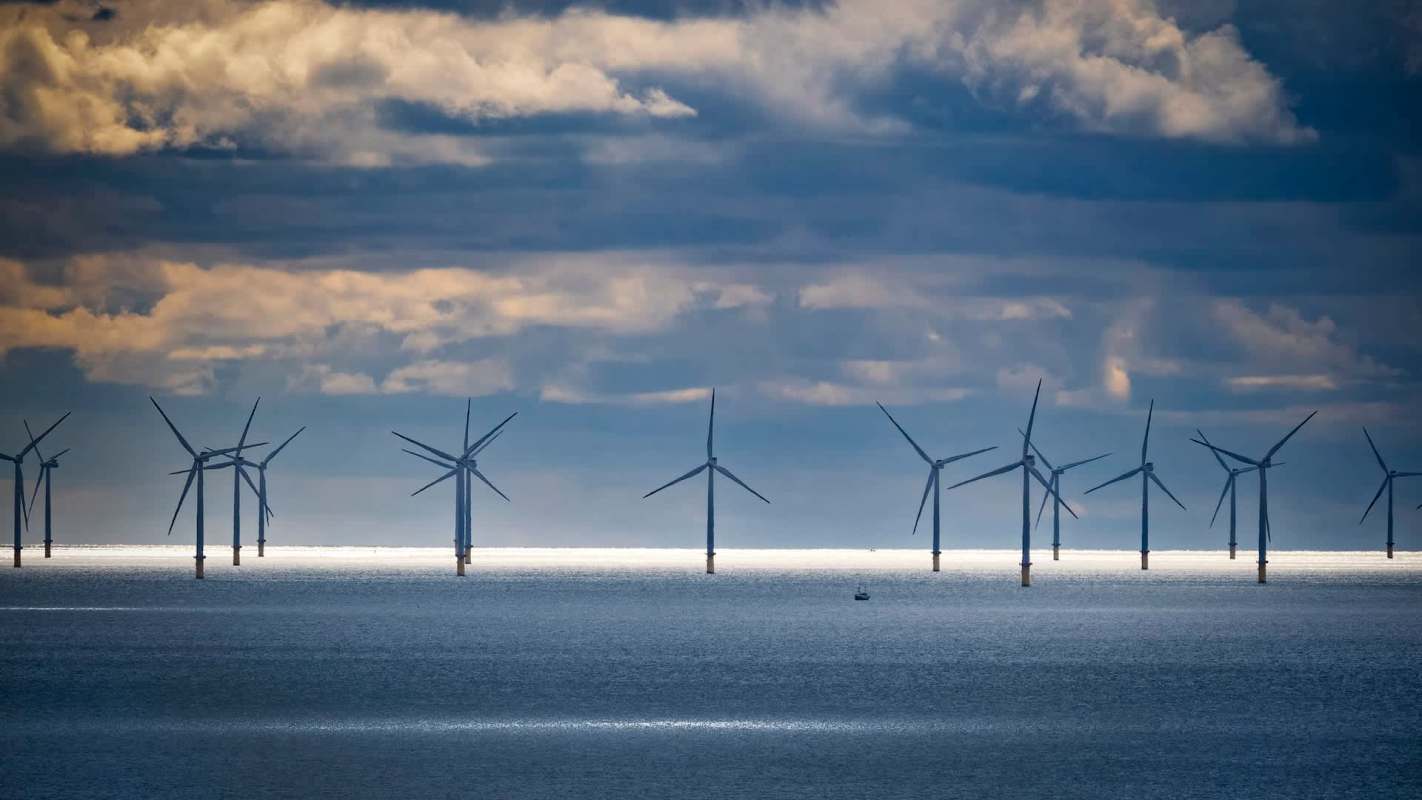
With the wind-energy industry in the United States squeezed by financial strain and facing fierce political opposition from the Trump administration, renewable energy plans in many East Coast states are now in doubt.
Here's what to know
The East Coast's offshore wind business is weakening at a time when conditions are especially tough, according to a Grist report.
As data centers and electrification drive up energy demand, many states have been relying on large offshore wind projects to increase electricity supplies and help meet ambitious pollution-reduction targets.
In states such as Massachusetts, New York, and New Jersey, officials are trying to reduce pollution even as electricity demand grows and power prices rise. But because these states are densely developed and rely on aging transmission infrastructure, options are limited.
These hurdles have become even more challenging since the Trump administration took office in January 2025. From the outset, it has taken direct aim at wind power, hitting the industry with permit revocations, stop-work orders, and Pentagon reviews.
The administration has even gone as far as to shell out billions of taxpayer dollars to pay developers to walk away from projects planned for federally managed waters.
TCD Picks » Quince Spotlight
💡These best-sellers from Quince deliver affordable, sustainable luxury for all




As of mid-August, roughly $4 billion had been set aside for those buyouts, eliminating about 21 gigawatts of potential wind capacity — enough to power more than 15 million typical U.S. households, according to Grist.
For Massachusetts in particular, this abrupt policy shift has caused chaos because offshore wind was a key piece of the state's energy strategy. In a place with a heavily built-up coastline, the technology had stood out as a way to generate power near where demand is highest.
"Companies are trying to be upbeat, but I think if you kind of peel back the layers a bit, there's a number of emotions out there; anger, sadness," said Mark Repsher, an energy and sustainability expert at PA Consulting, per Grist.
More background
Offshore wind has been seen as a potential solution to a long-running East Coast problem. The region's biggest population centers need more electricity, yet much of the cleaner power produced on land is located far from those cities and has to travel over aging, overburdened transmission lines. The result is essentially an electricity bottleneck.
When that system is strained by increased demand and cleaner energy projects are delayed, households can end up paying more for electricity. States can also slip further behind on pollution-reduction targets intended to slow rising global temperatures and protect public health.
Massachusetts is not alone in seeing offshore wind as vital to its economic future. New York has called wind power "critical" to its climate plan, while Maryland has described it as its "greatest opportunity" to meet emissions goals, Grist reported.
The Trump administration's approach to wind power marks a notable U-turn from previously implemented policies. Demonstrating its full-throated support for wind power and other renewables, the government of former president Joe Biden approved the first-ever commercial-scale U.S. offshore wind project, Vineyard Wind, in 2021. The Biden administration also leased an unprecedented 1.9 million acres of coastal waters to developers of offshore-wind projects.
If offshore wind is taken off the table as a potential source of renewable energy, states along the eastern seaboard do not have a clear alternative. Eastern states lack the massive amounts of undeveloped land and ample sunshine of the Western U.S., putting them at a distinct disadvantage.
"The wind resource, and even the solar resource, in the Eastern U.S. is not nearly as good as it is in the West," Repsher added.
What's being done?
Despite the industry's troubles, some major companies — including Orsted and Avangrid — are still holding onto their offshore leases in the hope that the political winds in Washington, D.C., will soon shift again.
Advocates are also planning for the day when a new administration takes office, hopefully with greater enthusiasm for wind power. Kris Ohleth, executive director of Special Initiative on Offshore Wind, said supporters are assembling "Project 2029," which Grist described as a policy playbook for a future administration to revive the ailing sector.
Additionally, some wind projects remain under development and are still slated to be brought online in the coming years. For example, Empire Wind is expected to begin operating in 2027. Once completed, the offshore wind project will send electricity directly to New York City through undersea cables.
Similarly, Coastal Virginia Offshore Wind already serves the mid-Atlantic's fast-growing data center corridor, helping to alleviate the impact of the region's spike in electricity demand.
Direct-delivery projects like Empire Wind can reduce grid stress and strengthen reliability for places that need more power.
"If you had additional wind, it could be filling those gaps, reducing any of those challenges at a time the grid really, really needs that," said Hillary Bright, executive director of Turn Forward, according to Grist.
Rising electricity prices could also help strengthen the case for wind generation while making wind projects more feasible economically. Despite recent headwinds, advocates have not given up hope.
"Offshore wind is still such an exciting opportunity," said Ohleth, as quoted by Grist. "It's such a cool technology. There's something on the horizon, and that gives me hope."
Where can I learn more?
Wind projects are advancing despite political backlash. The technology still appeals to planners despite tougher financing, permitting delays, and federal hostility.
• In New York, two offshore wind projects were revived after a brutal year nearly sank them.
• New Jersey approved two offshore wind farms as officials sought power closer to where the demand is.
• Offshore wind is really good for taxpayers when strong coastal gusts keep power output high.
• In Michigan, offshore wind projects were shelved by an official who then targeted solar and clean-energy laws.
Much of the East Coast's clean energy planning still hinges on whether offshore wind can make it through this challenging period.

Get TCD's free newsletters for easy tips, smart advice, and a chance to earn $5,000 toward home upgrades. To see more stories like this one, change your Google preferences here.