


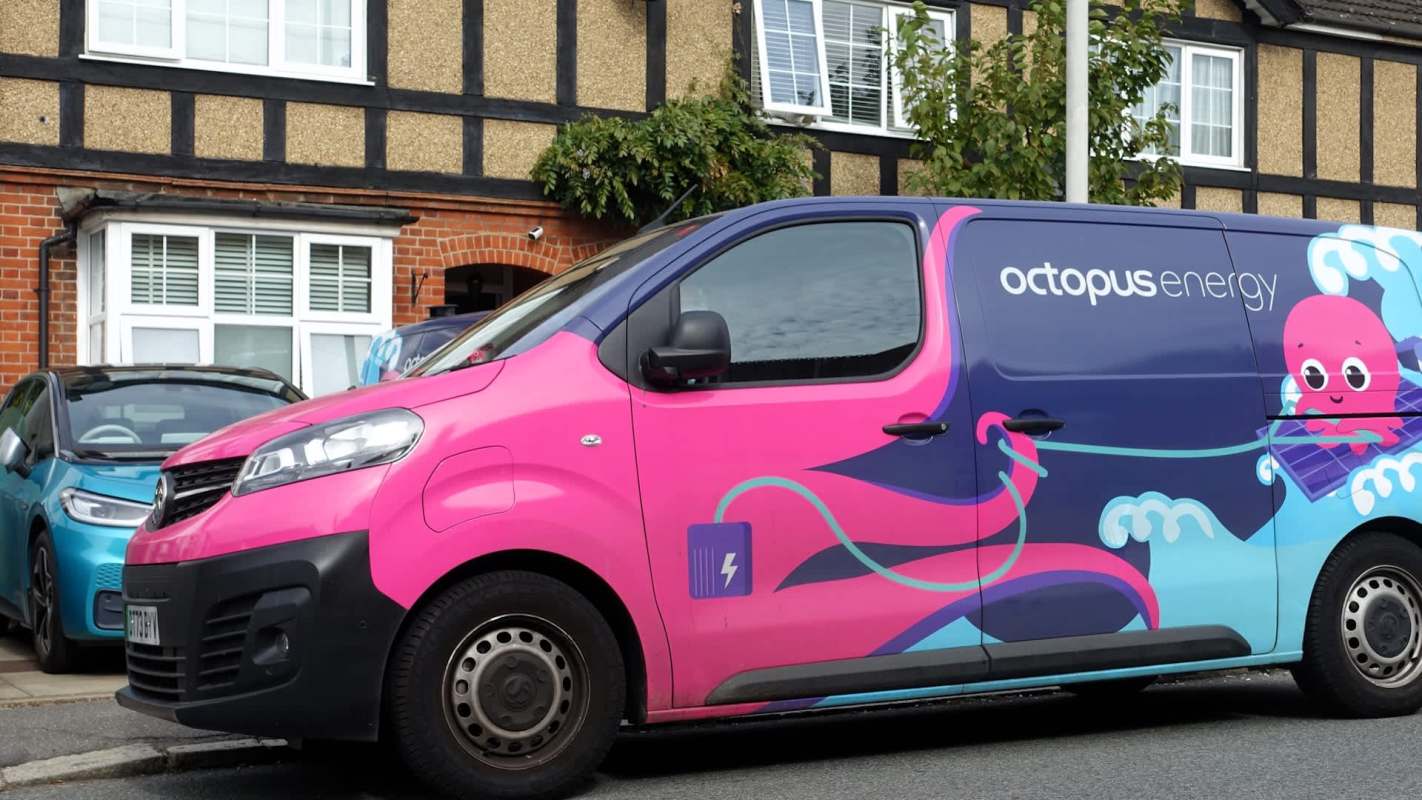
As part of its continued efforts to lower household electricity bills and make the power grid more resilient, Octopus Energy is working on a collaboration that aims to improve the efficiency of automated home-battery systems.
Here's what to know
Octopus Energy has paired up with Ampace, a battery manufacturer, to research new storage technologies, according to T3. The European countries that Octopus Energy already serves will be the primary focus of the collaboration.
Alongside sodium-ion batteries and higher-energy-density cells, longer battery life has been another primary focus of the companies' research. If proven to be practical at an industrial scale, these technologies would be paired with Octopus Energy's software to manage when batteries charge and when they release electricity.
More background
The Ampace partnership has not been Octopus Energy's only battery-related collaboration. Prior to the Ampace agreement, Octopus already had been working in cooperation with battery company CATL. The two companies previously collaborated on deploying Swaptopus battery-swapping stations throughout Europe, T3 reported.
Octopus Energy's low-carbon household equipment range has extended beyond battery storage to include Octopus Charge chargers for electric vehicles and heat pumps branded Octopus Cosy. The company has also announced the Cosy Cooler, an accessory that enables cooling through its Cosy heat pump.
Efficiency through automation
T3 stated that Octopus Energy and Ampace have been investigating batteries that could charge automatically when electricity prices were lowest.
TCD Picks » Quince Spotlight
💡These best-sellers from Quince deliver affordable, sustainable luxury for all




Such a system could also be designed to take into account factors other than price. For example, the availability of renewable electricity could also guide when the system charges or discharges a battery.
While these systems have the potential to save ratepayers money, they also could play a significant role in supporting the grid and helping to smooth out peaks in demand. According to T3, the batteries could be used to supply the electricity network with stored power during demand spikes.
Greg Jackson, the founder and CEO of Octopus Energy Group, emphasized the potential of this technology.
"Combining CATL and Ampace's world-leading battery chemistry with Octopus's smart tech and customer platform will transform home energy storage," Jackson said, as T3 relayed. "Together, we're building next-generation batteries where hardware and software work in complete harmony to slash energy bills and speed up the green energy transition."
Where can I learn more?
U.K. households have been exploring ways to cut electricity costs with home batteries and Octopus tariffs.
• A U.K. Octopus Go customer explored cheap overnight battery charging with an EcoFlow system.
• U.K. Octopus Go users said home batteries can qualify without an electric vehicle.
• U.K. home battery owners reported £150-plus in export income from virtual power plant participation.
• A U.K. homeowner considering battery-only storage for savings received warnings about grid connection requirements.

Get TCD's free newsletters for easy tips, smart advice, and a chance to earn $5,000 toward home upgrades. To see more stories like this one, change your Google preferences here.
Cool Picks






