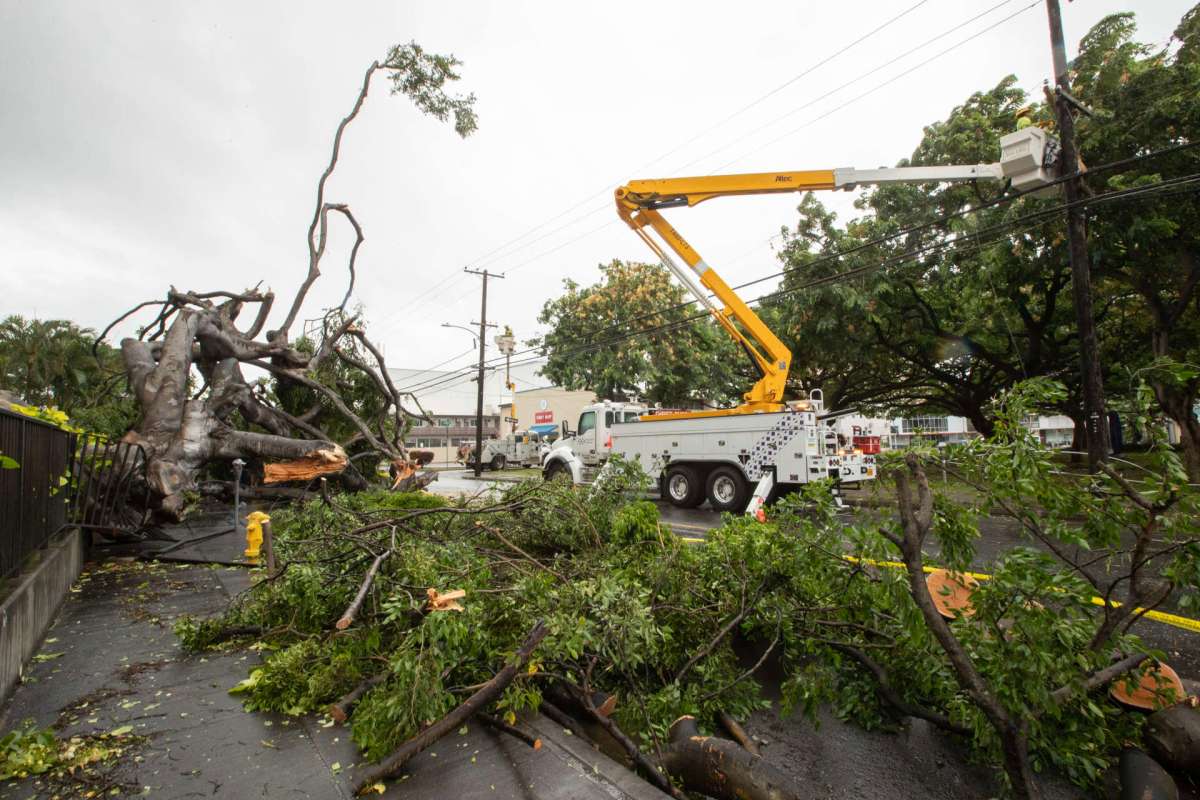
Back-to-back storms in Hawaiʻi are doing more than knocking out power and flooding roads.
Officials and climate experts said that the March Kona lows, Hurricane Lala, and Hurricane Lowell exposed a deeper problem: critical systems that millions depend on can fail at the same time when extreme weather strikes, according to Hawaii News Now.
Among the systems feeling that pressure is Oʻahu's drinking water supply. If electricity goes down, water service can be threatened almost immediately.
Here's what to know
Ernie Lau, manager and chief engineer for the Board of Water Supply, said that Hawaiian Electric's grid is crucial to moving drinking water across Oʻahu to homes and businesses, so outages can quickly put that service in jeopardy.
"Out of Tropical Storm Lala, we established a daily coordination call with Hawaiian Electric and explained to them our priorities of restoration of power to certain wells in different communities, and they were extremely responsive," Lau said. "But the fact is our infrastructure is vulnerable, so how do we continue to harden that infrastructure, but continue to deal with these storm events and be able to recover from it?"
Pointing to the broader pattern, University of Hawaiʻi climatologist Dr. Chip Fletcher, from the UH School of Ocean and Earth Science & Technology, said that the direction of the climate is unmistakable.
TCD Picks » Quince Spotlight
💡These best-sellers from Quince deliver affordable, sustainable luxury for all




"This is a glimpse into the future. The trend is going to continue this way. Future conditions will bring more and more hazards. We must comprehensively and systematically examine the role of government in raising resiliency and protecting our community," Fletcher said.
More background
Fletcher said that Hawaiʻi needs to invest in a broader statewide climate strategy.
"We do not yet have a comprehensive systemic analysis of how the government of Hawaiʻi, both state and county, is going to respond to this problem of climate change," Fletcher said. "And because of that, we are still playing whack-a-mole. We're still getting surprised by these events. However, by this time in 2026, following the fourth or fifth big flood event, we are no longer surprised. We see it coming."
Fletcher also warned that the ongoing super El Niño season could raise wildfire risk.
What's being done?
One response already in motion is tighter coordination during storm recovery between water officials and Hawaiian Electric. Lau said the utility was responsive to requests to restore power to priority wells after Tropical Storm Lala.
Still, Fletcher said that the state needs investment in critical infrastructure upgrades.
Fletcher also said that a new pattern linked to the ongoing super El Niño season is expected.
"As we move through the fall and winter, December starts to dry out," Fletcher said, "which will continue into the spring of 2027. With all the rainfall in the summer and fall we're going to see an increase of invasive grasses in unmanaged lands. Combined with the drought over the winter, spring, and next summer, we may expect an increase for wildfires, so now is the time to prepare."
Where can I learn more?
What's happening in Hawaiʻi reflects a wider strain on power grids, water systems, and other public infrastructure as extreme weather grows more intense. Outages and climate pressure can hit communities from the mainland U.S. to island regions facing repeated disasters.
• Across the U.S., infrastructure crumbles under extreme weather, amplifying pressure on essential services.
• In Washington state, tens of thousands without power complicated recovery after a deadly storm.
• In Vanuatu, a mounting crisis eroding local resources shows how island communities face compounding hazards.
As storms intensify, weak points in essential systems can trigger wider failures. That's why resilience planning matters before the next outage or disaster, not after.

Get TCD's free newsletters for easy tips, smart advice, and a chance to earn $5,000 toward home upgrades. To see more stories like this one, change your Google preferences here.