


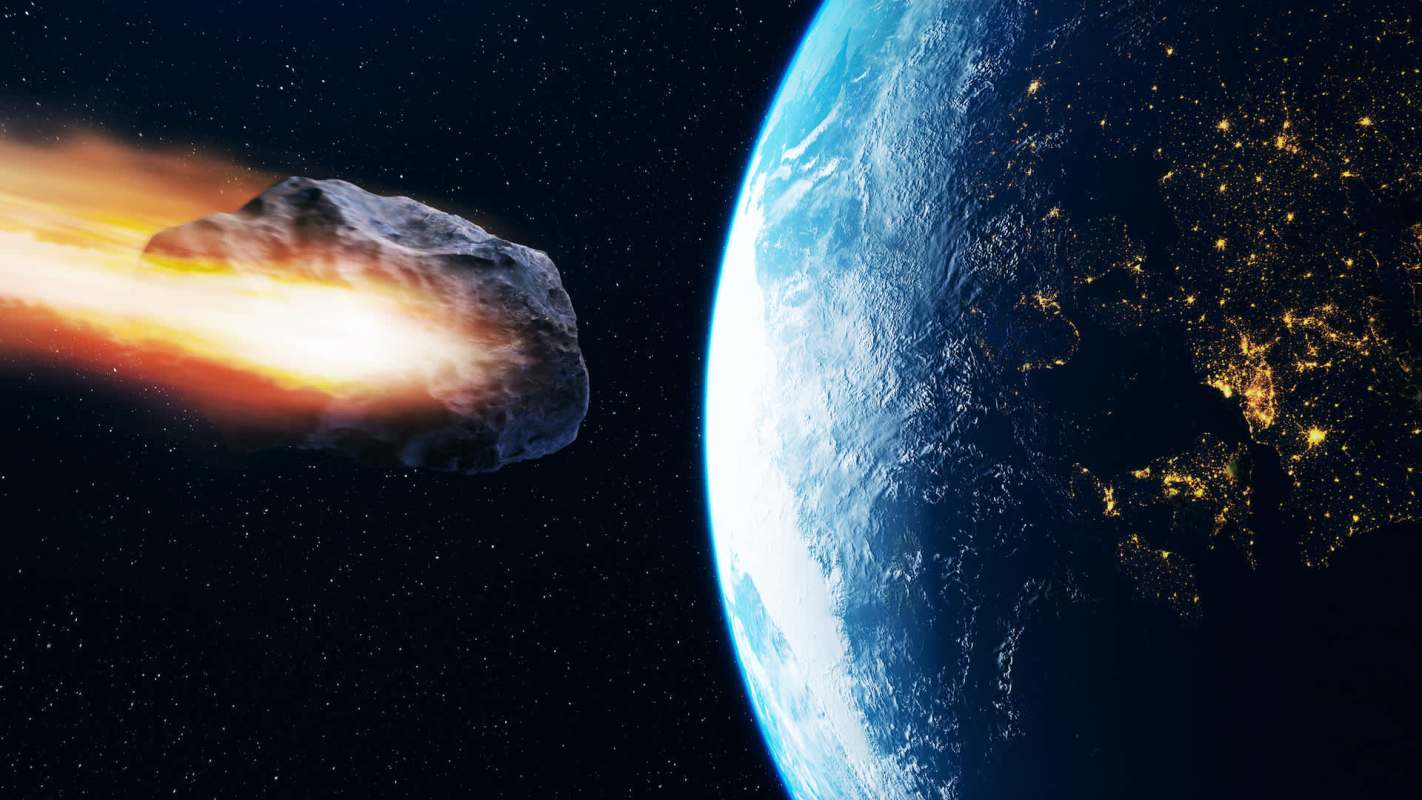
For all of human history, if a large enough asteroid were ever found on a collision course with Earth, it would cause an unavoidable extinction event.
Recently, humanity has been exploring options for defending against such an event, and most options end in shooting a bomb at the space rock. Researchers in China say there may be a more effective response than simply detonating a nuclear weapon at its surface.
They propose a two-stage attack: create a substantial opening in the rock first, then explode a nuclear weapon below the surface so the asteroid is either shattered or pushed onto a different path.
What's happening?
Scientists led by the China Academy of Launch Vehicle Technology in Beijing have outlined a spacecraft mission they say could rank among the strongest options for stopping a hazardous asteroid, the South China Morning Post reported.
Under the plan, one spacecraft would drive a metal penetrator into the asteroid to make a deep cavity, and another would deliver a nuclear bomb into that hole for a subsurface detonation.
In simulations described in the journal Space: Science & Technology in May, the team found that an asteroid roughly 328 feet (100 meters) wide could be completely destroyed by a 3-megaton nuclear explosion, a yield about equal to 200 Hiroshima bombs.
TCD Picks » Quince Spotlight
💡These best-sellers from Quince deliver affordable, sustainable luxury for all




They reported that putting the device around 98 feet (30 meters) underground, rather than nearer the surface, could more than triple the resulting change in the asteroid's velocity and make a deflection attempt far more effective.
Why does it matter?
The study centers on engineering practicality. Instead of relying on one fast strike at a hard-to-predict location, the two-step approach could give mission planners more control over where force is applied and how deeply the explosive energy is delivered.
A more efficient approach to deflecting and destroying asteroids has the potential to save humanity from extinction, which affects everyone on the planet.
Until the modern era, we have relied mostly on luck (and a little bit of, solar system, planetary, and atmospheric physics) for survival, but now, with the technological advancements of today, we have a fighting chance to save ourselves if need be.
What's being done?
Researchers are continuing to study how different asteroid-defense strategies might perform under real-world conditions, including differences in an asteroid's size, composition, and trajectory. This proposal from China adds to a growing global discussion about how to prepare for an emergency.
The earlier a dangerous object is detected, the more options scientists have to redirect it safely. Asteroid tracking and observation are just as important as interception technology.
A buried explosion, the researchers found, offered "lower technical complexity and better defence effectiveness" than detonating a bomb on direct impact with an asteroid, the South China Morning Post reported. If future studies support that conclusion, the approach could become an important addition to Earth's planetary defense toolkit.

Get TCD's free newsletters for easy tips, smart advice, and a chance to earn $5,000 toward home upgrades. To see more stories like this one, change your Google preferences here.






