


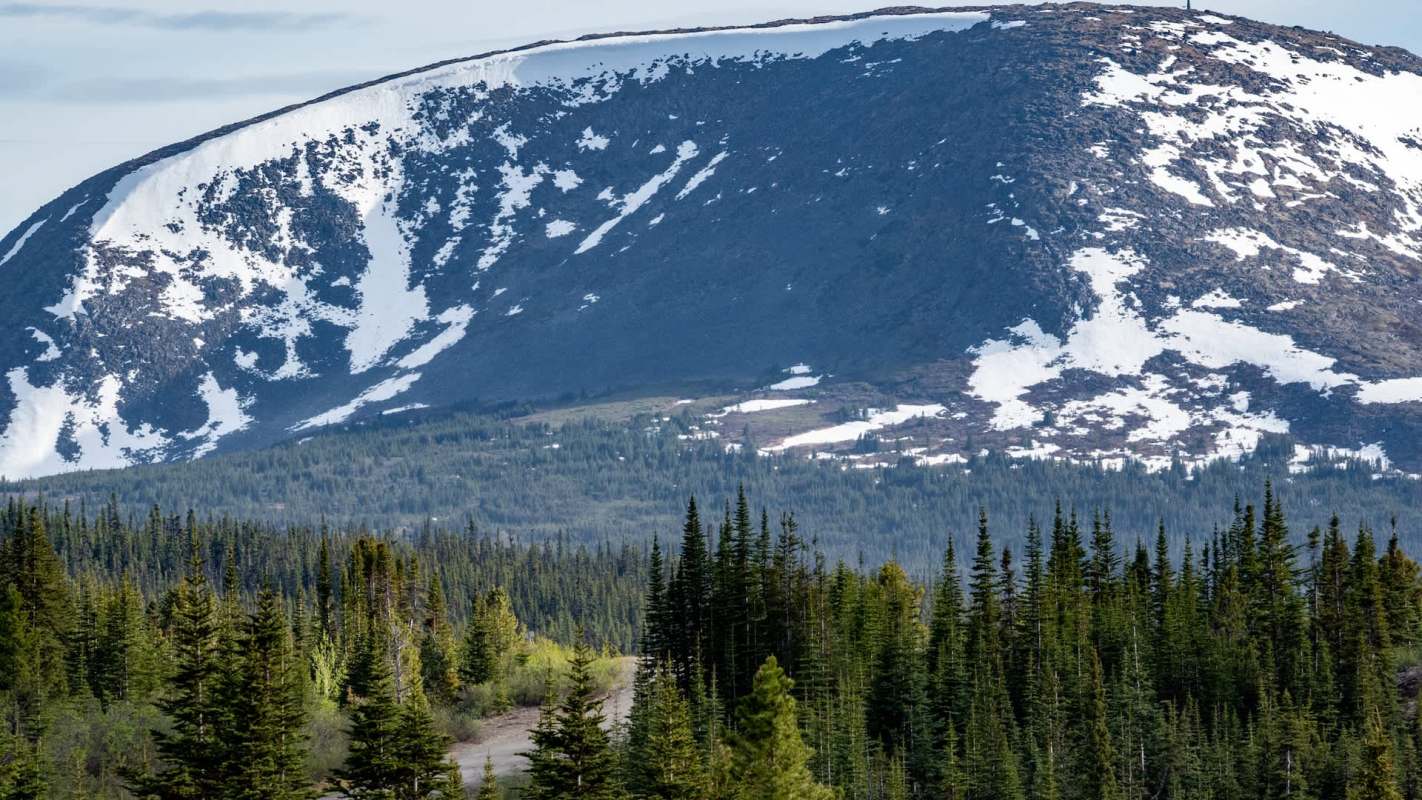
A massive landslide in Canada's Northwest Territories sent roughly seven Great Pyramids' worth of earth downhill in 2018, leaving a barren scar in the surrounding forest.
For scientists, the puzzle lay in the material itself, as much of it was still frozen as it slid.
Here's what to know
Wildfires may leave slopes vulnerable to catastrophic failure decades later, research published in Geophysical Research Letters in September suggests. The researchers identified a previously unrecognized category of these events called permafrost detachment slides, according to Science News.
The team examined two enormous slides in the region. The 2018 event moved 23.5 million cubic yards (18 million cubic meters) of earth, blocking the Redstone River, while a 2017 slide displaced another 5.9 million cubic yards (4.5 million cubic meters).
Both began along relatively flat surfaces about 66 feet (20 meters) underground, at the base of the permafrost layer. Satellite observations revealed decades of gradual movement at both locations, with the ground shifting yards (meters) each year.
The displaced material caught the attention of Joseph Young, a permafrost geologist then based at the University of Alberta. At the site, Young found large blocks of frozen ground that appeared to have traveled hundreds of yards (hundreds of meters). That puzzling 2019 field visit prompted the investigation.
TCD Picks » Quince Spotlight
💡These best-sellers from Quince deliver affordable, sustainable luxury for all




More background
Little thawing was expected at the sites Young visited, so the widespread slope failures were especially surprising. Permafrost is ground that stays frozen for two years or longer, according to Science News.
Tension cracks can develop as ground creeps after wildfires or unusually hot summers warm and weaken it.
Thawing from below, not just from the surface, could explain how the frozen layer breaks free. Water reaching its underside through those cracks may melt the permafrost at its base.
Satellite observations identified more than 150 additional slides in the region that may fit this category, Young said, per Science News. The process could occur wherever relatively thin, warm permafrost encounters a rapid warming event.
What's being done?
To better understand these hidden changes, Young and his colleagues installed instruments to monitor underground temperatures during 2020-2022, according to Science News. They compared undisturbed forest with locations burned by wildfires roughly a quarter-century earlier.
The team then used those measurements in computer simulations to estimate how ground conditions could change in the decades following a fire. The results supported the proposed connection between fire, surface weakening, water infiltration, and thaw beneath the frozen layer.
Examining subsurface conditions is important, stressed University of Alaska Fairbanks geophysicist Dmitry Nicolsky, who was not involved in the study.
"We don't know how [the ground] will move — it might go slowly or it might go catastrophically," he said, per Science News.
Young connected the failures to permafrost thaw around the world.
"This is a direct reality of a changing climate," he said.
Where can I learn more?
Unstable slopes and warming frozen ground pose risks far beyond Canada.
• In Norway, the country's biggest earthquake in a century buried an Arctic glacier.
• Switzerland's Kandersteg faces a landslide threat that scientists warn could rival Blatten's collapse.
• In Nepal, a mountain collapse killed 1,300, and scientists warn warming could trigger more.

Get TCD's free newsletters for easy tips, smart advice, and a chance to earn $5,000 toward home upgrades. To see more stories like this one, change your Google preferences here.






