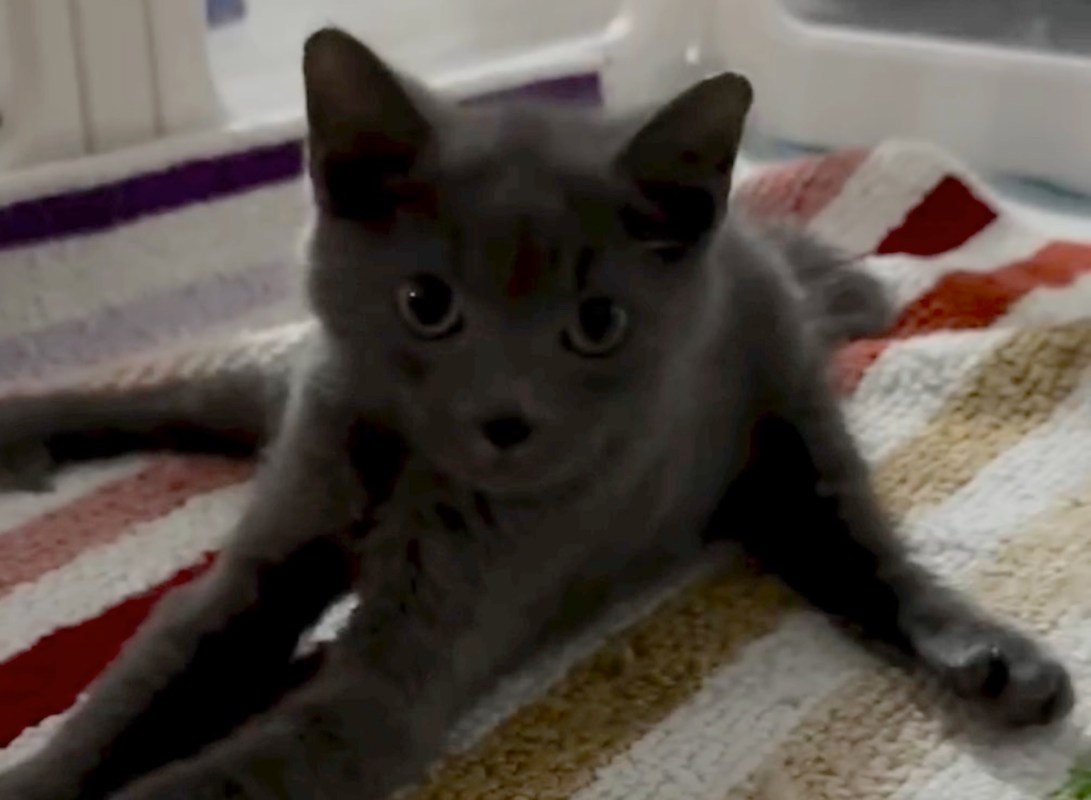
Rex, a rescued North Carolina kitten who had never walked, is now practicing his first steps with the help of a custom wheelchair made from Lego bricks.
Here's what to know
According to WECT, a 4-month-old kitten saved by Rescue Connect was diagnosed with cerebellar hypoplasia, a neurological disorder often called "wobbly-cat syndrome." Because the condition affects balance and coordination, Rex had never been able to walk on his own.
Jennifer Witkowski, with rescue group Miles To Go, said Rex showed very little response when he first came into care.
"He was pretty non-responsive when they got him," Witkowski told the outlet. "They started treating him, and he slowly got more movement."
A traditional wheelchair was difficult for the rescue team to justify. Witkowski said a standard model would cost about $1,800, which is an even more expensive cost considering the fact that Rex would only fit in it for around six weeks.
So volunteers started looking for something less expensive and more adaptable. After hearing about a similar case involving another rescue cat, they contacted the Wilmington Lego specialty store Bricks & Minifigs, and employee Michael Hawley agreed to build the chair.
TCD Picks » Quince Spotlight
💡These best-sellers from Quince deliver affordable, sustainable luxury for all




More background
For small organizations and foster networks, the cost of rehabilitation can be one of the biggest challenges.
Hawley had more than a technical interest in the project. According to WECT, he had previously owned a dog named Mr. Wiggles who had the same condition and died at age 3, giving him personal experience with the mobility difficulties it can cause.
The project also drew on design instincts he had been developing since he was young.
"I'd say some of my earliest conscious memories are with Legos," Hawley said. "My older sisters used to terrorize me when I was younger. In order to fend for myself, I would have to build my own Home Alone contraptions to get back at them. They don't make Lego sets for that, so I had to get creative."
After some fine-tuning, the wheelchair seemed to do what the team had hoped, giving Rex support as he learned a new way to move.
What's being done?
Rex's rehabilitation is still in progress. Volunteers are continuing his daily therapy and using the custom chair to help him develop strength and coordination.
The Lego wheelchair also shows how local collaboration can help rescue groups make the most of limited resources. Rather than relying only on expensive specialty equipment, fosters and nonprofits can sometimes benefit from turning to skilled individuals who can transform ordinary materials into useful tools.
That kind of ingenuity is not a replacement for veterinary care, but it can buy time, reduce costs, and create opportunities for animals that might otherwise go without support. In Rex's case, it could also improve his chances of eventually finding a permanent home.
WECT reported that Rex is not yet available for adoption, though Rescue Connect is expected to list him.
"It's hard when you're in rehab and you watch them struggle and struggle and you don't know what their future is going to be," Witkowski said. "It's nice when you get that moment of hope they might have a normal life."

Get TCD's free newsletters for easy tips, smart advice, and a chance to earn $5,000 toward home upgrades. To see more stories like this one, change your Google preferences here.