


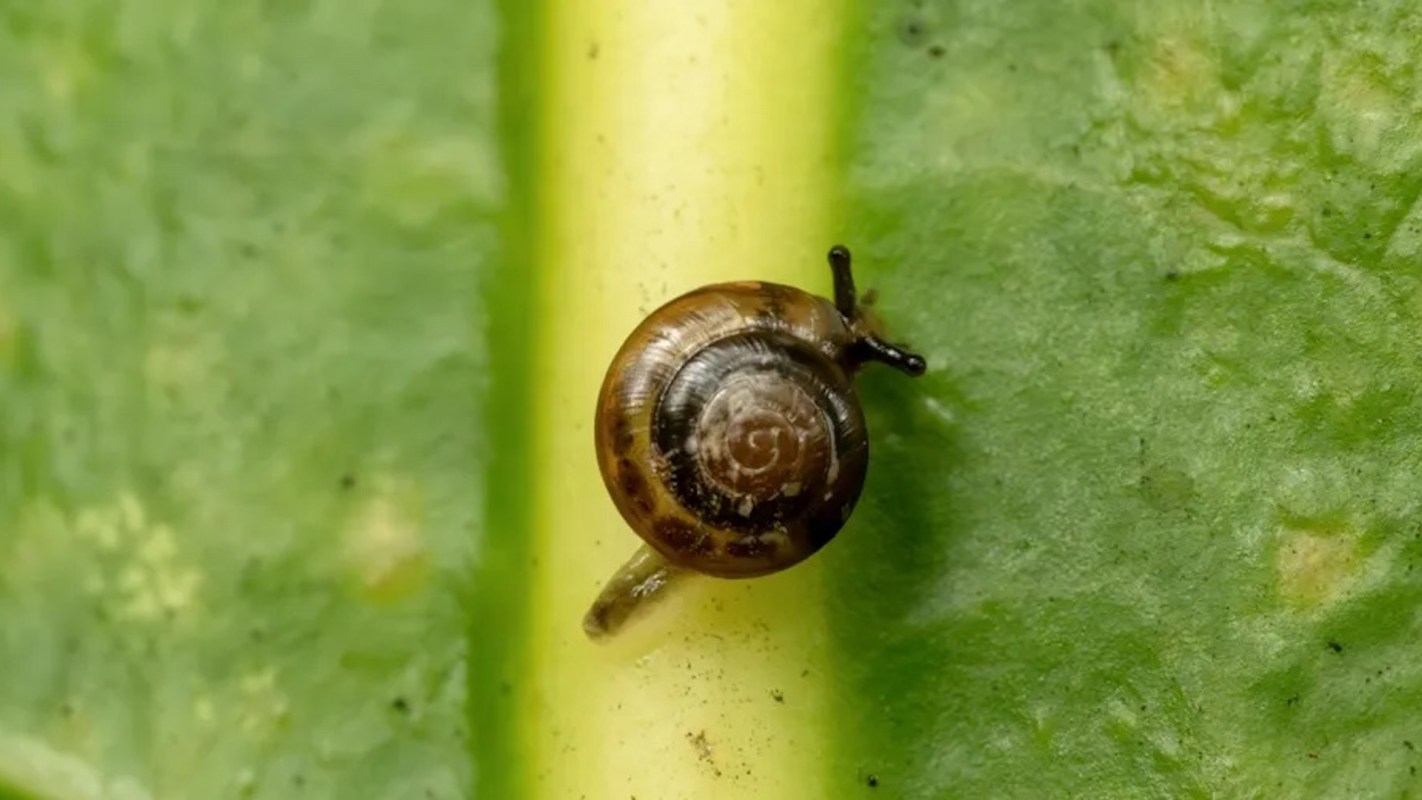
An unusual conservation recovery is underway on Australia's Norfolk Island, where a tiny snail once believed extinct is being given another chance in the wild.
The species is also remarkable for giving birth to live young through a pore in its neck.
What happened?
As ABC News Australia reported, scientists and conservationists have released about 1,000 Campbell's keeled glass snails into a secluded valley on Norfolk Island after breeding the species back from the brink.
Before Norfolk Island resident Mark Scott rediscovered it in 2020, the snail, scientifically known as Advena campbellii, had not been seen for more than three decades and had already been formally declared extinct.
The rediscovery was later confirmed by Australian Museum research scientist Isabel Hyman, who traveled to the island.
"It was so thrilling actually because I'd spent a lot of time looking for these species before as a student and just thought it was completely gone, so it was very exciting to discover it," Hyman said.
TCD Picks » Quince Spotlight
💡These best-sellers from Quince deliver affordable, sustainable luxury for all




That finding led to an Australian-first breeding and reintroduction program involving Taronga Conservation Society and partners including the Australian Museum, Park Australia, Western Sydney University, and the Norfolk Island Regional Council.
When the work started in 2021, researchers had collected only 16 snails from the wild.
The population remained fragile in the program's early phase: one snail died during transport, and the captive group at one point dropped to just nine, according to Taronga Zoo senior keeper Tarryn Williams Clow.
Why does it matter?
Though they rarely draw the attention given to larger animals, land snails perform essential ecological work. They help decompose organic material and contribute to healthy soils and forests, which is especially important in delicate island ecosystems.
Hyman said the broader situation for land snails is especially urgent.
"There are more recorded extinctions of land snails than any other group there is," she said.
Norfolk Island has 61 native snail species, five of which are critically endangered.
What began with a local rediscovery has grown into a scientific recovery effort, with local rangers now helping return a native species to its home environment.
What's being done?
Because the species had never been kept in captivity before, keepers first had to work out its care requirements from scratch.
Williams Clow said, "You can't just compare snails to snails, they are all so niche in their requirements."
That meant fine-tuning multiple conditions, including humidity, lighting, and even the texture of the food. In place of the biofilm the snails eat in the wild, keepers used a substitute blend of nettle leaf, koi food, calcium carbonate, vitamins, and oatmeal.
The breeding effort ultimately grew to more than 1,000 snails.
Those snails have since been returned to Norfolk Island in stages, after teams removed predators such as feral rats and chickens and added irrigation to keep the release area damp during dry periods.
For Norfolk Island National Park ranger Sam Burridge, selecting the right site meant learning to "think like a snail."
An earlier, smaller release has already produced promising results. Surveys a year later found surviving snails, suggesting the species is establishing itself and reproducing in the wild.
"It means they do like the site … and we believe they are giving birth in the wild," Burridge said.

Get TCD's free newsletters for easy tips, smart advice, and a chance to earn $5,000 toward home upgrades. To see more stories like this one, change your Google preferences here.






