


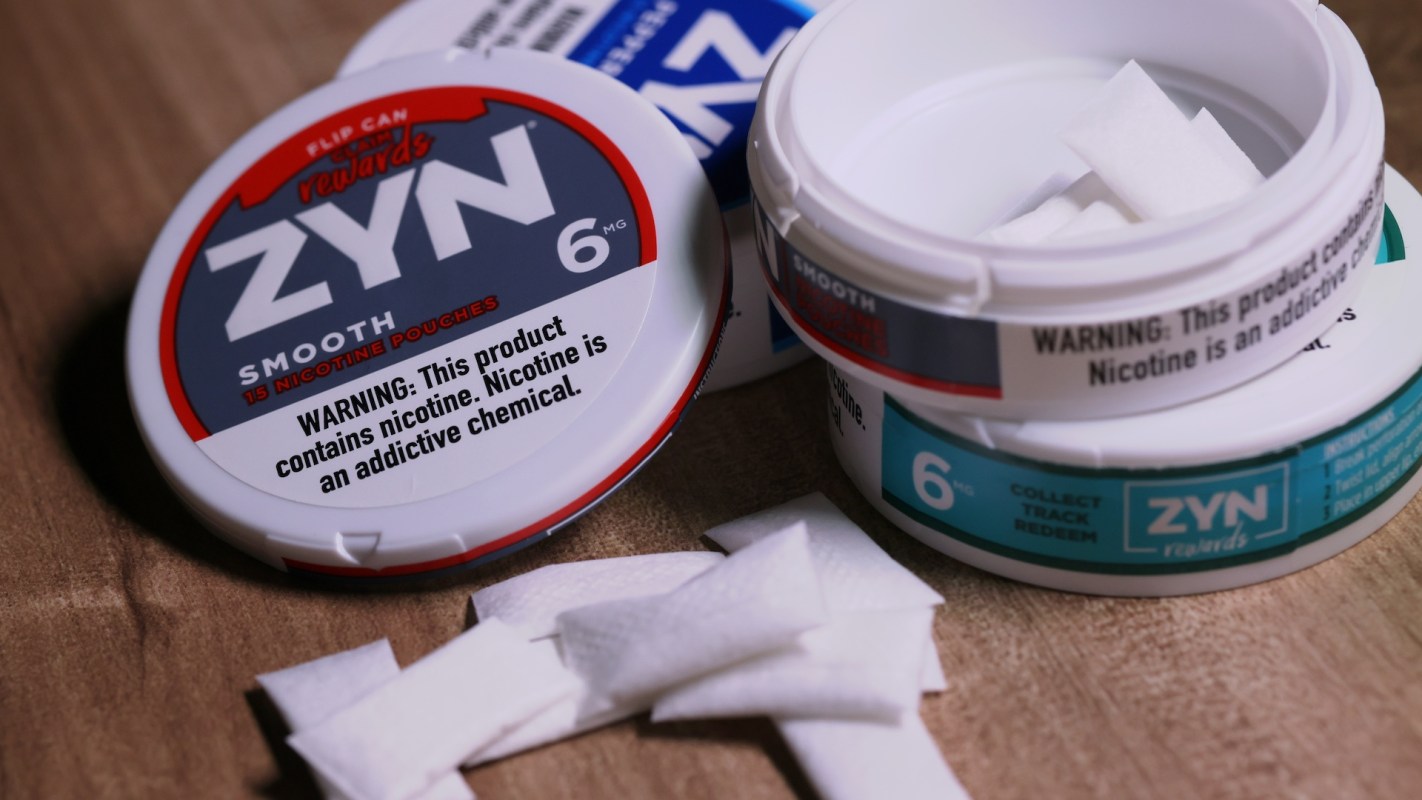
A toxicologist at the U.S. Food and Drug Administration says she purchased Zyn at the Mall of America and tested it in her own kitchen before concluding that a key assumption behind the agency's review may have been flawed.
Her concern centers on the nicotine pouch itself. If the product does not actually dissolve in the mouth, as some at the agency appeared to believe, regulators may have failed to fully assess whether users could be exposed to microplastics.
What happened?
In a report from STAT, based on interviews, emails, and recordings reviewed by The Examination, Christy Leppanen, a toxicologist at the FDA's Center for Tobacco Products, said Zyn was approved even though the agency did not fully understand what the pouch material is made of.
She said her doubts grew after colleagues talked about the pouch as if it melted in the mouth. To test that idea herself, Leppanen bought a can of Zyn and performed several informal experiments in her kitchen, which led her to conclude that the pouches did not dissolve.
"Fundamentally, we did not do a proper assessment," Leppanen said. "People believe the FDA is doing more than it is."
The FDA authorized Zyn for sale on Jan. 16, 2025. Afterward, Leppanen objected to agency documents indicating that she had signed off on an environmental finding related to the approval, saying she had not done so and would not have agreed to it if asked. The FDA later corrected the record.
TCD Picks » Quince Spotlight
💡These best-sellers from Quince deliver affordable, sustainable luxury for all




Former FDA officials who spoke with The Examination said the pouch material itself should have been part of the review. Eric Lindblom, a former FDA policy director, said it would be "careless at best and negligent at worst" if regulators failed to examine whether the material could pose risks of its own.
Why does it matter?
If the pouch is made from a plastic-like substance such as cellulose acetate, researchers say it may release tiny particles while being used. A growing body of research suggests that microplastics can accumulate in the body, and some scientists are concerned that they could contribute to disease.
Leppanen argued that, even though the science is still developing, the FDA should have acknowledged the uncertainty.
"With the increasing body of information about microplastics exposure and how they cross into the bloodstream from the gut, we just needed to know what those materials are," she said.
The issue also comes amid a broader boom in nicotine products that has already created major health and waste concerns. Vaping devices, particularly disposable ones, have been linked to nicotine addiction among young people while also generating massive amounts of single-use plastics, toxic e-waste, and improperly discarded lithium batteries.
Nicotine pouches are not the same as vapes, but the broader pattern is similar: fast-growing products can outpace oversight, leaving health and environmental questions unresolved.
Citing TobaccoIntelligence, The Examination reported that the U.S. nicotine pouch market is expected to reach $6.8 billion this year, a 37% increase.
What's being done?
The FDA has already acknowledged part of the gap in its analysis. A March report from the agency described the environmental effects of nicotine pouches and other oral products as "minimal" and stated that the assessment "does not address the potential effects of plastics and microplastics from the pouch materials."
Researchers are also beginning to narrow down the pouch material. Testing by Denmark's Environmental Protection Agency found that nicotine pouch material appeared similar to cellulose acetate, the same material used in cigarette filters.
The Examination also reported that Richard Thompson, a marine biologist at the University of Plymouth who coined the term "microplastics," said nicotine pouches could release microplastics in the mouth if they are made from that kind of material.
Nicotine pouches are addictive products, and some questions about exposure and disposal remain unsettled.
"Some of my colleagues believe we are working with the tobacco industry," Leppanen wrote. "I have no evidence of that. I believe that we are doing these sorts of things to hide our mistakes and avoid litigation. When we do that, we risk the public health that we are obligated to protect."

Get TCD's free newsletters for easy tips, smart advice, and a chance to earn $5,000 toward home upgrades. To see more stories like this one, change your Google preferences here.






