


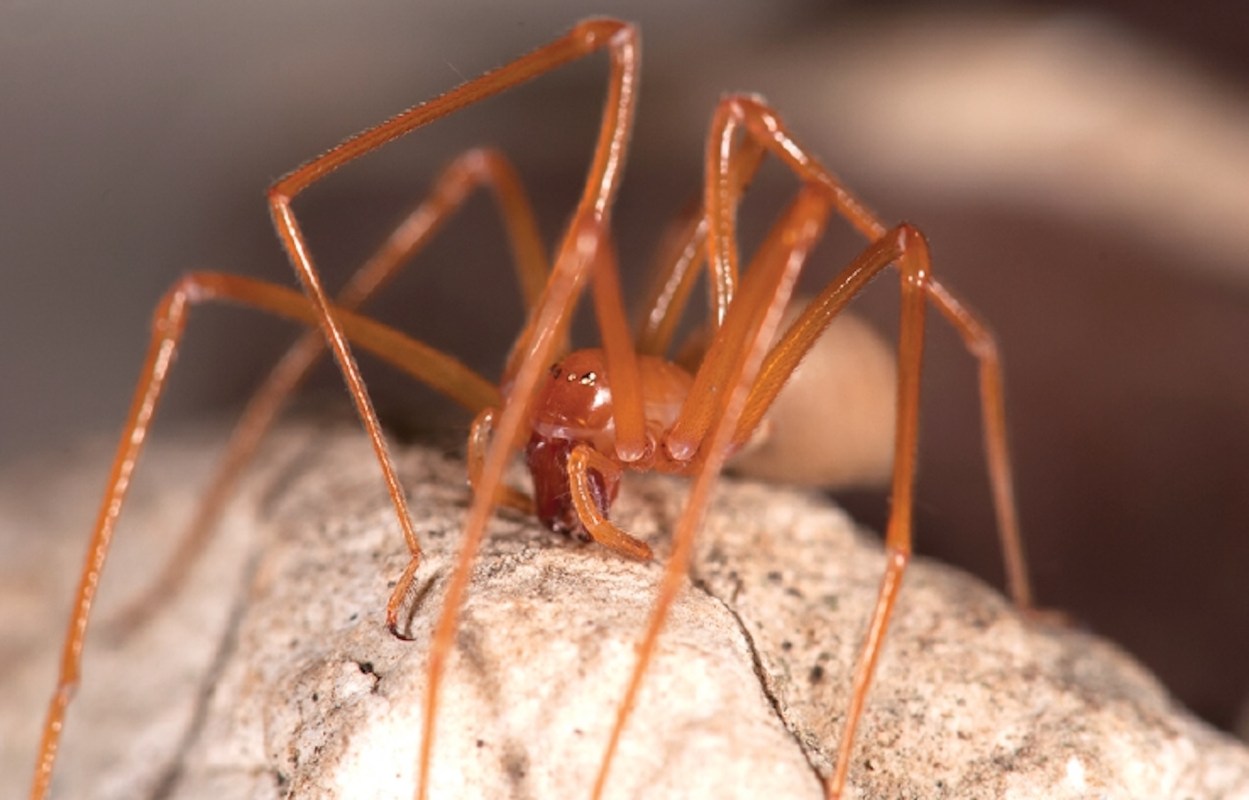
A newly discovered cave spider in Oregon is drawing attention for a reason that has little to do with arachnophobia. The species will be named by the Yakama Nation's Confederated Tribes and Bands.
What happened?
According to NPR, Greta Binford, an evolutionary biologist at Lewis & Clark College, recently found what turned out to be an undescribed cave spider in Oregon's Columbia River Gorge. Binford had discovered a new species of trogloraptor, a family of spiders that previously had only one other species.
Its naming did not follow the usual academic routine. Instead of a researcher alone selecting a Latinized species name, often connected to the organism's characteristics, the choice was informed by the spider's home landscape and by the people with deep ties to that place.
The Yakama Nation's Confederated Tribes and Bands gave the spider its name: trogloraptor tulishpun. NPR noted that the name means "cave spider" in Sahaptin, the Native language traditionally spoken in the area where the spider was discovered.
Tribal members and scientists then gathered for a traditional naming ceremony, complete with gifts, food, a traditional naming song, and a few spiders that were present to receive their names.
Why does it matter?
The discovery is a reminder that even in places many people consider well-known, there is still much to learn about the natural world.
TCD Picks » Quince Spotlight
💡These best-sellers from Quince deliver affordable, sustainable luxury for all




Species cannot be protected if they are overlooked. The discovery of a previously unknown spider in the Columbia River Gorge shows how much biodiversity can remain hidden in fragile ecosystems such as caves.
The Yakama Nation's involvement offers an example of conservation shaped through cooperation between scientific work and the community.
What are people saying?
The response has been warm, with many people seeing the story as both a science win and a community win.
Donella Miller, a member of the Yakama Nation and a biologist with the Columbia River Inter-Tribal Fish Commission, appreciated the tribe's inclusion in the process. She told NPR, "Acknowledging the first people, you know, the Indigenous people who live in that area and bringing them into it, it kind of seems like this is what should have been done all along."

Get TCD's free newsletters for easy tips, smart advice, and a chance to earn $5,000 toward home upgrades. To see more stories like this one, change your Google preferences here.






;_captive_female_2.jpg)
