


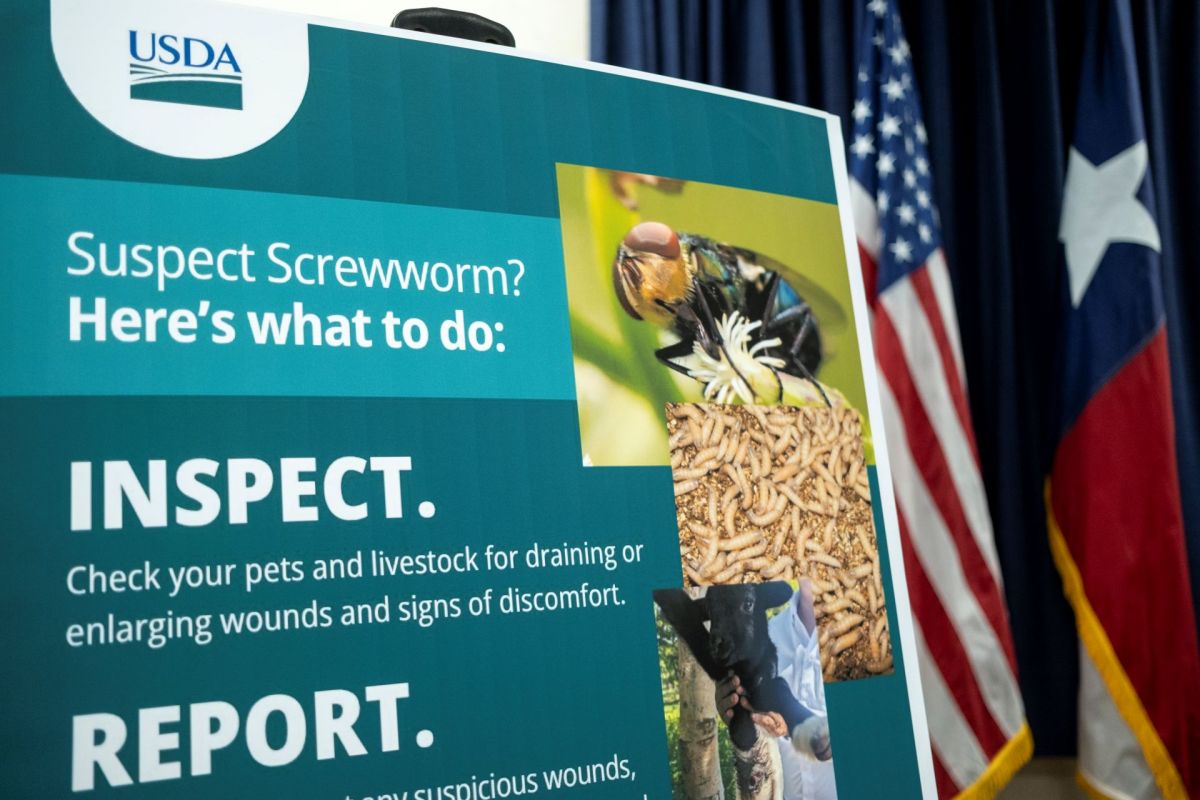
Federal officials have now identified five New World screwworm cases in animals across Texas and New Mexico, raising alarm among ranchers, pet owners, and health experts.
The total to date reflects an escalation from last week. In response, state and federal agencies are expanding surveillance, setting quarantines, and releasing sterile flies to try to contain the flesh-eating pest before it spreads further.
What's happening?
According to Texas Public Radio, the latest Texas detections involved a goat in Gillespie County and a calf in La Salle County.
Federal officials also found an infested dog seen by a veterinarian in Andrews County after the animal had traveled from Mexico. Investigators have not linked that case to a natural spread of the pest into West Texas. The dog reportedly resides in New Mexico.
The New World screwworm is a flesh-eating parasite. It is spread by a fly that deposits eggs in wounds or body openings, with the larvae then burrowing into living tissue.
Livestock, especially cattle, face the highest risk, but pets, wildlife, and, in rare cases, people can also become infested.
TCD Picks » Quince Spotlight
💡These best-sellers from Quince deliver affordable, sustainable luxury for all




The United States eliminated the parasite decades ago, in the 1960s, according to the public radio station.
But Chad Cross, a professor at the Texas Tech University School of Veterinary Medicine, told the outlet about one of the gaps in preventing new cases.
"We do not have guidelines in place to inspect companion animals largely when they're brought across borders," he said.
Why is it important?
If screwworm flies gain a foothold in Texas, it could threaten the nation's largest livestock industry and also put pets and wildlife in greater danger.
The effects could also reach beyond ranches. Animal disease and pest outbreaks can strain local economies, veterinary systems, and food production, while ranchers could face mounting losses, treatment costs, and new movement restrictions if the parasite continues to spread.
USDA Secretary Brooke Rollins described the situation as an emergency in a briefing but emphasized that it is not currently a risk for the nation's food supply.
"This is not a virus," Rollins said. "It is not a disease. It is a pest and so we obviously are treating it as such, but the food supply system remains intact and couldn't be safer."
What's being done?
Over 70 personnel are already working on the ground, according to TPR, with additional help directed toward diagnostics, surveillance, outreach, and logistics.
Authorities have established quarantine areas around confirmed cases and are increasing monitoring.
A key part of the response is the release of millions of sterilized flies. The strategy is meant to disrupt reproduction and eliminate screwworm populations.
Local producers are urging officials to move quickly.
"We need funding and we need to be able to deploy those flies as fast as possible," rancher Christian Biedenharn told TPR. "We kind of need all-the-above strategies right now."

Get TCD's free newsletters for easy tips, smart advice, and a chance to earn $5,000 toward home upgrades. To see more stories like this one, change your Google preferences here.






