


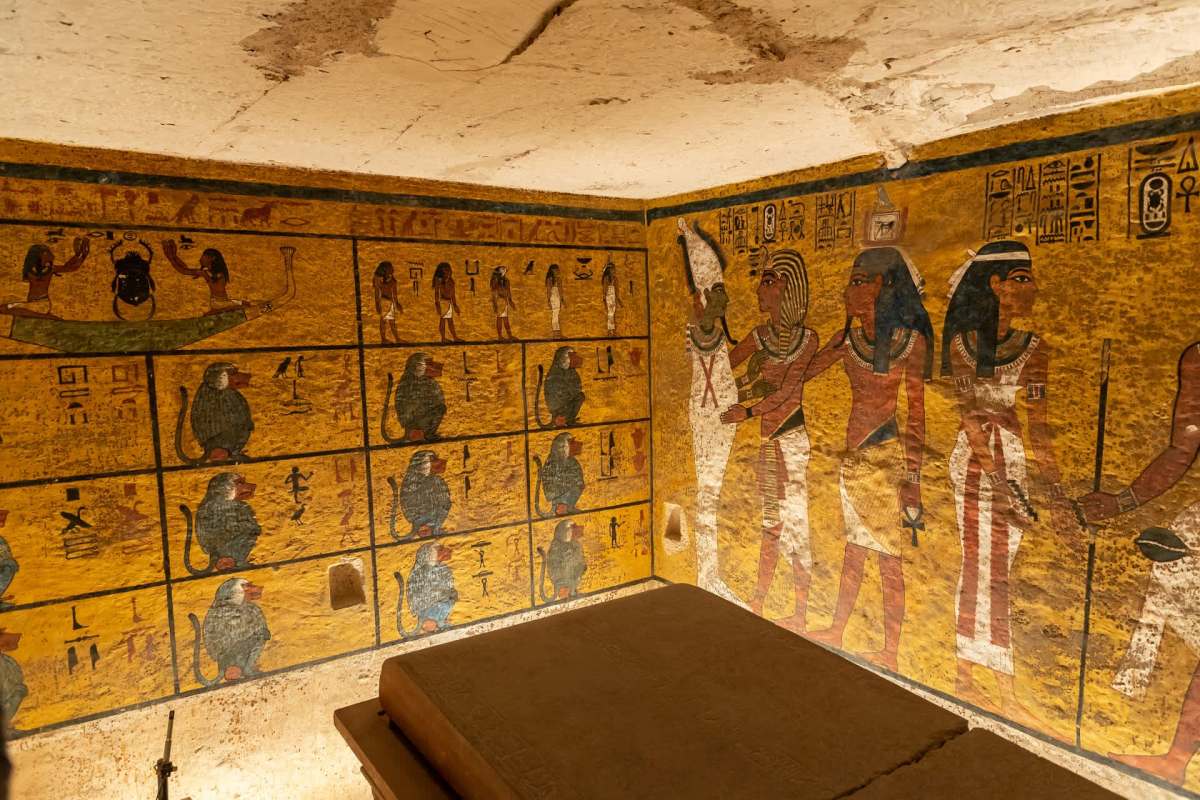
Near Luxor, archaeologists have identified a previously unknown Ramesside-period tomb, offering a rare look at elite burial traditions while highlighting the growing risks climate change poses to ancient sites.
Here's what to know
According to SciTechDaily, the discovery was made by an international team in Lower Sheikh 'Abd el-Qurna during efforts to protect one of ancient Egypt's most important burial landscapes — a flood-prone, UNESCO-listed Theban necropolis near present-day Luxor — from additional damage.
The previously unregistered tomb is about 3,000 years old. Its design matches the standard arrangement for an elite New Kingdom tomb with an open forecourt, a chapel hewn into the rock, and underground burial rooms. In the courtyard, archaeologists also found a mudbrick platform with a niche for an upright stela, or grave marker, plus a staircase flanked by ramps.
The chapel's painted walls depict the tomb owner worshipping deities and sitting with his wife at an offering table set with bread, beer, fruits, meat, and flowers. The paintings led researchers to identify the tomb's owner as an official named Paser and to date the burial to the Ramesside period — roughly 1292 to 1069 BC.
More background
The tomb may also help explain why some officials in the Ramesside era reused or modified older burials, or built new tombs beside the monuments of 18th-dynasty elites.
Although the wider Theban necropolis stretched across about 10 square kilometers (3.9 square miles) and served as Egypt's main royal and elite cemetery for roughly half a millennium beginning around 1550 BC, Lower Sheikh 'Abd el-Qurna has received much less study than better-known places such as the Valley of the Kings.
TCD Picks » Quince Spotlight
💡These best-sellers from Quince deliver affordable, sustainable luxury for all




That means the discovery could speak to the ways ancient Thebans arranged memory, status, and sacred geography.
Cultural treasures around the world are increasingly at risk from extreme weather. At this necropolis, heavy rain can trigger flash floods, and the resulting moisture and salt crystal growth can damage painted surfaces or lead to structural collapse.
What's being done?
The project has been underway since 2018 with the Egyptian Ministry of Tourism and Antiquities, focusing on preventive conservation and risk management rather than excavation alone.
By clearing debris and excavating methodically, the team is trying to steer floodwater away from vulnerable monuments without sacrificing archaeological evidence. In places like this, waiting to make repairs after a storm can mean acting too late.
Researchers expect the tomb to reveal more once conservators remove the dirt covering its painted walls. Cleaning that layer could provide more information about who was buried there and the personal stories tied to them.
Even as the site expands understanding of ancient Egyptian burial customs, archaeologists are racing to protect the evidence as climate change has increased the frequency and intensity of flash flooding, which is only expected to get worse.

Get TCD's free newsletters for easy tips, smart advice, and a chance to earn $5,000 toward home upgrades. To see more stories like this one, change your Google preferences here.






