


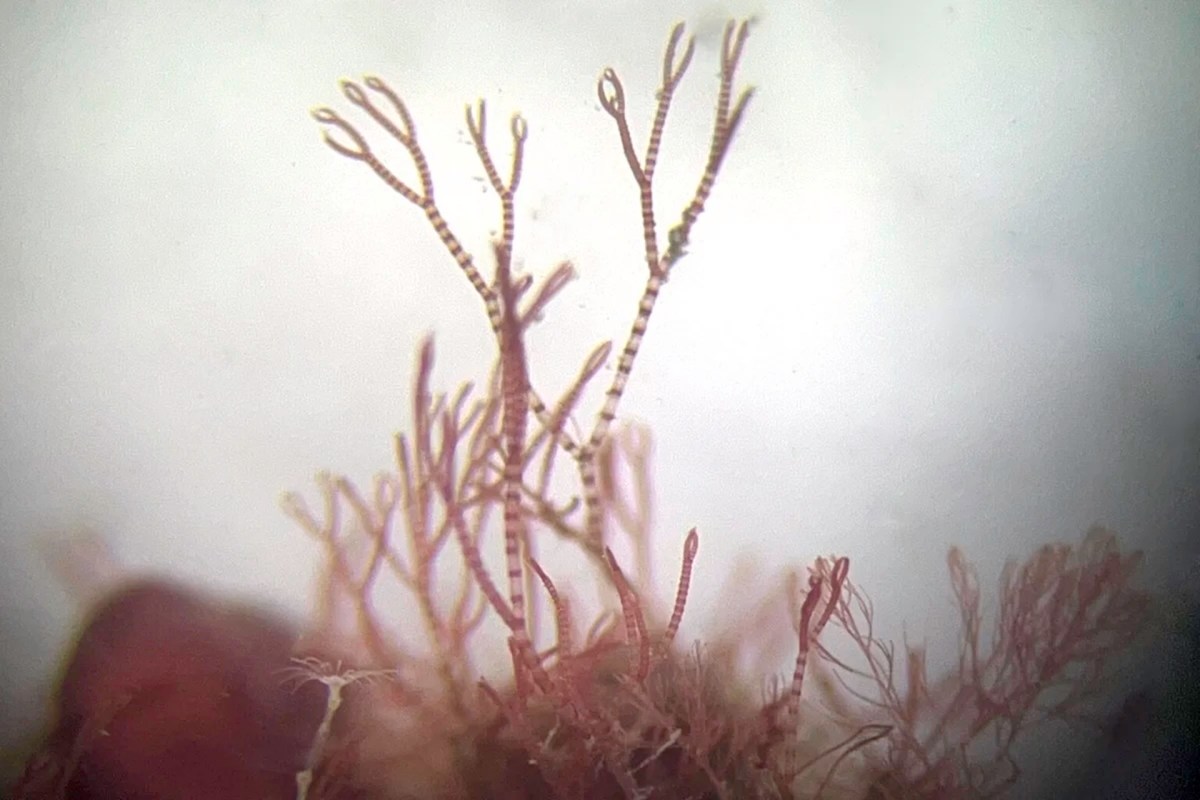
A marine mystery that puzzled scientists for roughly 40 years has finally been solved.
Researchers discovered an unknown seaweed species off the coast of Cornwall, England, and its identity turned out to be a tiny red species that hadn't been formally identified before.
Researchers traced the breakthrough to Cornwall's ancient maerl beds, a fragile underwater habitat that is offering new clues about biodiversity, coastal resilience, and how much remains undiscovered in U.K. seas.
Here's what to know
During surveys along Cornwall's south coast, Natural England's marine dive team came across a Ceramium seaweed — the group often called pincer weed — that was only a few hundredths of an inch wide (a few millimeters), according to Scubaverse.
Divers brought back living fragments, grew them under laboratory conditions, and then analyzed them with DNA sequencing. Those tests showed the seaweed was an entirely new species.
The BBC was filming the surveys when researchers recorded another important detail: One specimen carried tetrasporangia, reproductive structures that had never before been documented on the newly identified species.
TCD Picks » Quince Spotlight
💡These best-sellers from Quince deliver affordable, sustainable luxury for all




The same surveys also found several other rare finds, including Ulva rigida, a green sea lettuce not yet confirmed in U.K. waters; Neofolia rosea, previously recorded just once in Britain; and Bonnemaisonia clavata, a delicate red seaweed absent from British records since the 18th century.
More background
The discovery happened in one of the northeast Atlantic's most biodiverse shallow-water habitats.
Known as rhodoliths, free-living calcified red seaweeds make up maerl beds, and their pink branching forms on the seabed create shelter for marine life.
These beds grow at about 0.02 inches each year, and some in the Fal Estuary may be up to 4,000 years old. More than 380 species have already been recorded on the surface of the maerl beds, and scientists believe many more live within the habitat or appear there seasonally.
Maerl beds provide nursery areas for young fish and shellfish, support wider food webs, and help store carbon in seabed sediments.
What's being done?
Natural England, an official environmental advisory group in the UK, has been collaborating with partners on mapping and protection work for Cornwall's maerl beds, according to Scubaverse.
Since 2023, surveys have found extensive areas of maerl that were previously unknown within and around the Falmouth Bay to St Austell Bay Special Protection Area.
Natural England's plan, according to Scubaverse, brings together scientists, conservationists, marine managers, and policymakers around priorities such as monitoring, water quality, sustainable fishing, habitat restoration research, and public engagement.

Get TCD's free newsletters for easy tips, smart advice, and a chance to earn $5,000 toward home upgrades. To see more stories like this one, change your Google preferences here.







