


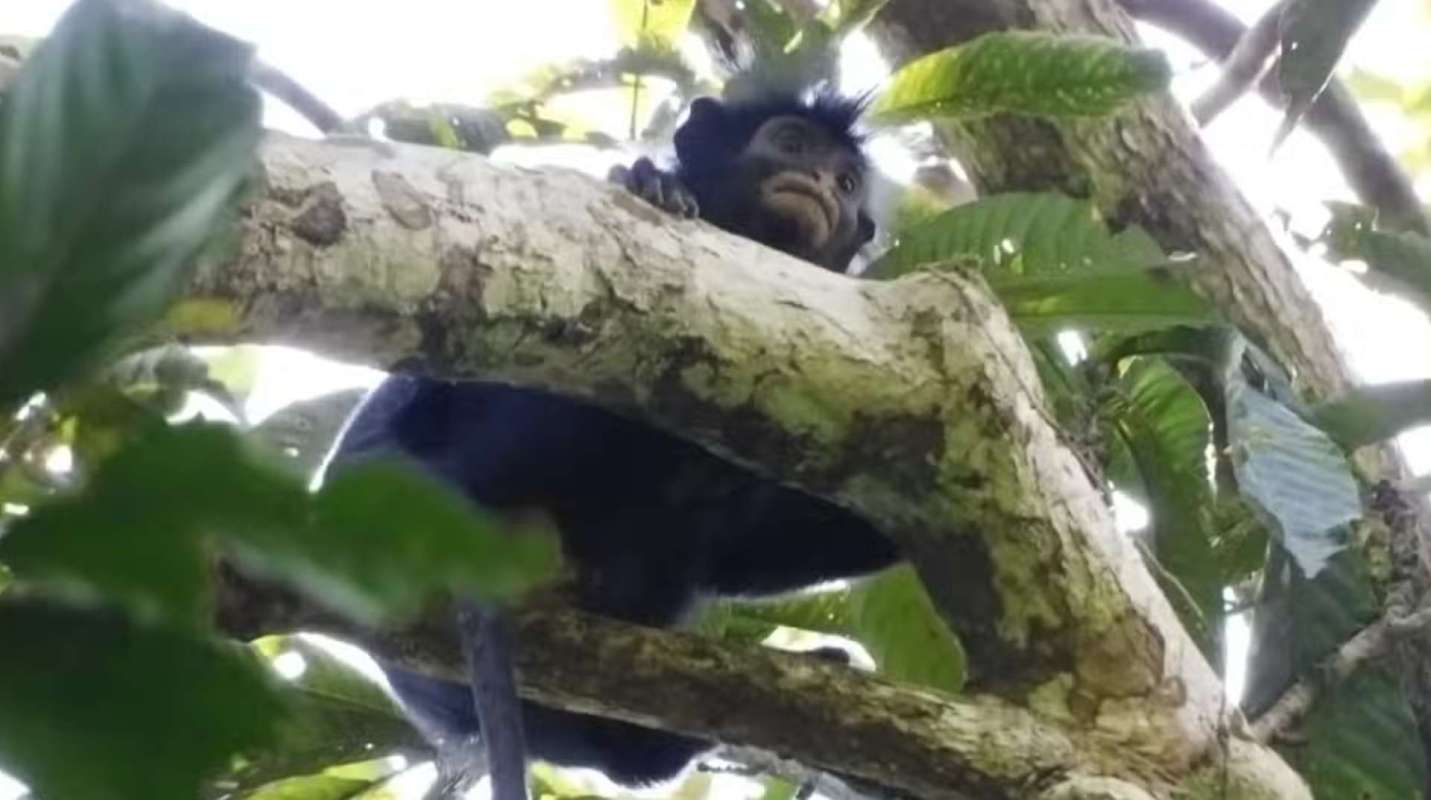
What started as a curious 2008 canopy sighting in the Democratic Republic of Congo — a black monkey caught in a photograph high above the forest floor — ultimately turned out to be something incredibly rare: a primate species unknown to science.
After 10 years of field surveys, skeletal analysis, DNA testing, and work with local communities, scientists confirmed the animal as Colobus congoensis, known locally as the Likweli.
What happened?
The discovery, detailed in PLOS One and reported by The Brighter Side of News, adds a major new branch to Africa's primate family tree.
Likweli is only the fifth African monkey species identified in the last 75 years.
To make the case, researchers spent years comparing skulls, bones, teeth, and fur patterns with museum specimens, then used DNA analysis to test and confirm those findings.
Christopher Gilbert, a professor of anthropology at the CUNY Graduate Center, described the standard researchers had to meet plainly, The Brighter Side of News reported: "When a potential new species is discovered, the evidence has to be overwhelming."
TCD Picks » Quince Spotlight
💡These best-sellers from Quince deliver affordable, sustainable luxury for all




The monkey wasn't just an unusual local population. Its closest known relative is Colobus satanas, and the two lineages split about 4 to 5 million years ago, marking the Likweli as its own distinct branch of the family tree.
Between 2018 and 2022, field teams recorded 114 sightings and determined that the monkey lives in a secluded forest zone of about 1,700 square kilometers (656 square miles) between the Lomami and Congo rivers, near DR Congo's Lomami National Park.
Why does it matter?
Finding an undescribed monkey species is unusual in itself. However, one of the world's most important ecosystems still contains species that science has not fully documented.
These forests help stabilize the climate, support water cycles, and protect the natural systems nearby communities rely on for food, livelihoods, and resilience.
When a species is formally identified and studied, conservation planning can become more precise, helping protect entire habitats rather than just one animal.
Residents in nearby communities recognized the monkey and helped researchers better understand its presence and behavior.
The species may be the first primate to bear the Democratic Republic of Congo's name.
What's being done?
Because the monkey appears to occupy such a small range, researchers are recommending that the Likweli be classified as endangered.
That limited distribution makes the species especially susceptible to change in its habitat, and the dangers it faces are both serious and familiar.
The main threats include habitat loss associated with agriculture, logging, and expanding settlements, along with possible hunting pressure as human activity increases in the region.
Most known populations are in or near Lomami National Park, so protecting that landscape will be central to the species' survival. The Congo Basin's forests are also getting broader protection through a newly launched conservation corridor connecting protected areas across the region.
Once a species receives a formal description, it becomes easier to prioritize further research, direct conservation funding, and make stronger policy arguments for habitat protection.
Investing in conservation is also an investment in climate stability, ecological knowledge, and community well-being.
As John A. Hart of the Lukuru Wildlife Research Foundation put it, per The Brighter Side of News, "We continue to be reminded that the Congo Basin remains one of the world's last great frontiers for mammal discovery."
For Junior Amboko, a co-author and National Geographic Explorer, the discovery is "both exciting and deeply personal."

Get TCD's free newsletters for easy tips, smart advice, and a chance to earn $5,000 toward home upgrades. To see more stories like this one, change your Google preferences here.






