


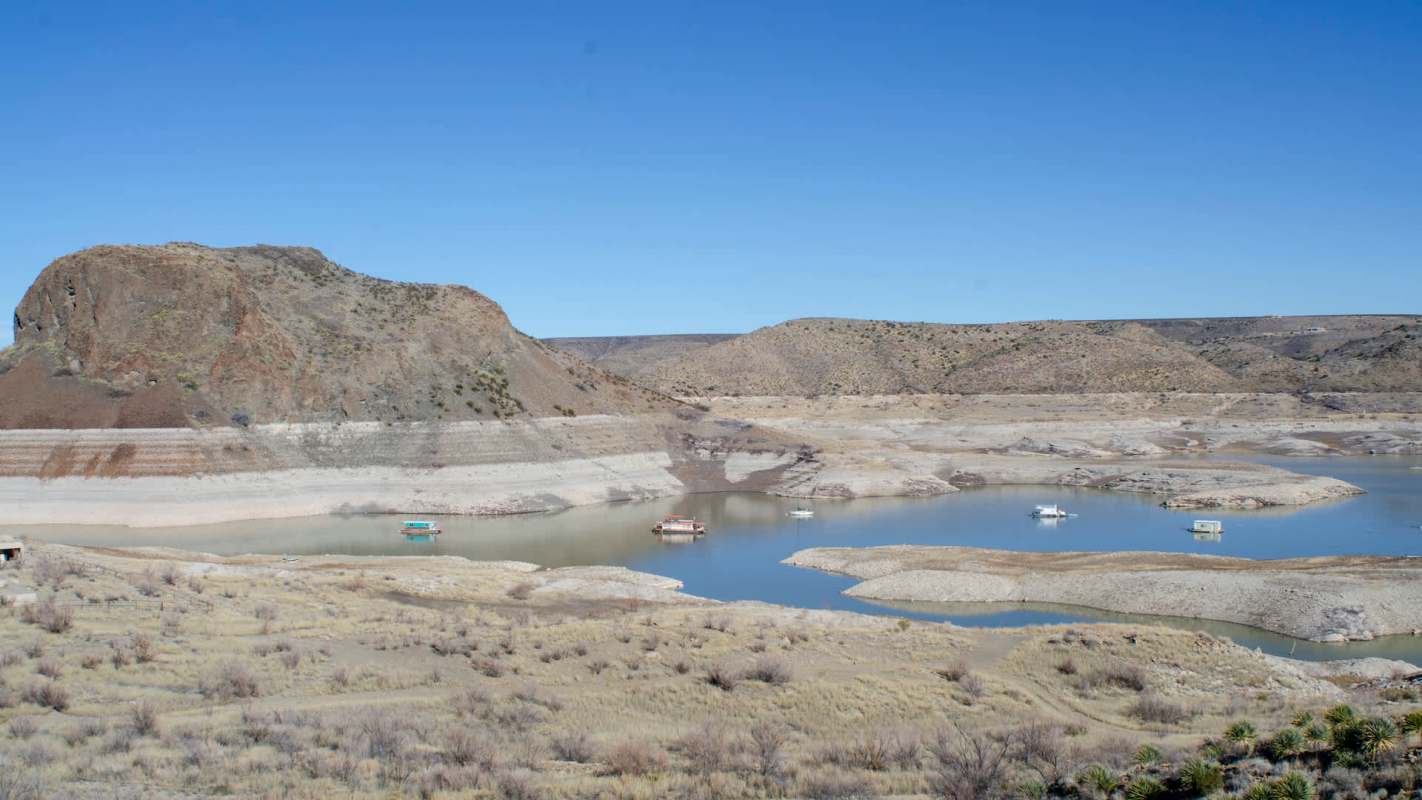
New Mexico is investigating whether the estimated 1.3 trillion gallons of brackish water that lies beneath the state could supplement supplies for communities facing shortages amid persistent drought.
Here's what to know
Engineering firm WSP plans to drill two deep wells at Quail Ranch as part of its state-contracted investigation, according to KOAT. Surveying is underway on the West Mesa to locate the salty underground reserves.
"The target depths are 7,600 feet," said Jeffrey Samson, a WSP water resources engineer.
Brackish water must be desalinated for drinking or agriculture, even though it contains less salt than seawater.
State Sen. George Muñoz co-sponsored the Strategic Water Supply Act, which lawmakers enacted in 2025 to explore brackish water as a supplemental supply.
More background
Elephant Butte Lake, New Mexico's largest reservoir, can hold roughly 2.2 million acre-feet. The state's underground reserves may be larger: A New Mexico Environment Department report estimates them at almost 4 million acre-feet, according to KOAT.
TCD Picks » Quince Spotlight
💡These best-sellers from Quince deliver affordable, sustainable luxury for all




El Paso Water resources manager Scott Reinert said the Kay Bailey Hutchison Desalination Plant in El Paso, Texas, treats almost 30 million gallons of brackish water daily and serves about 100,000 people. New Mexico wants to build large-scale desalination plants modeled on that facility.
With drought affecting the Rio Grande, a waterway shared by New Mexico and Texas, the El Paso facility provides an additional water supply. Plant superintendent Sal Morales said the plant separates salt from water by pushing it through membranes, a process called reverse osmosis.
"We love the Rio Grande. We use it as a water supply here, but it's been subject to drought for many years. And our ways of dealing with drought is building a plant like this," Reinert said, according to KOAT.
What's being done?
Over $40 million has been allocated through grants and contracts to support surveying and development, KOAT reported. Muñoz, however, has questioned both the pace of that spending and whether it is reaching the right priorities.
"New Mexico's been slow, they haven't met the challenge yet," he said. "The money that has been going out has been slowly. And I don't think it really targets where we need to be."
Beyond locating the water, engineers must address another costly challenge in managing the salty byproduct of desalination, known as concentrate.
Samson said options under consideration include deep injection wells and evaporation ponds, which would allow water to evaporate while the remaining waste is managed.
A plan for managing brine has been filed with the New Mexico Environment Department, Samson said.
Despite the unresolved waste-management questions and Muñoz's concerns about progress, Samson emphasized the promising coordination among those involved.
"I think everybody's marching and rowing in the same direction, which is really promising to see," he said, per KOAT.

Get TCD's free newsletters for easy tips, smart advice, and a chance to earn $5,000 toward home upgrades. To see more stories like this one, change your Google preferences here.






