


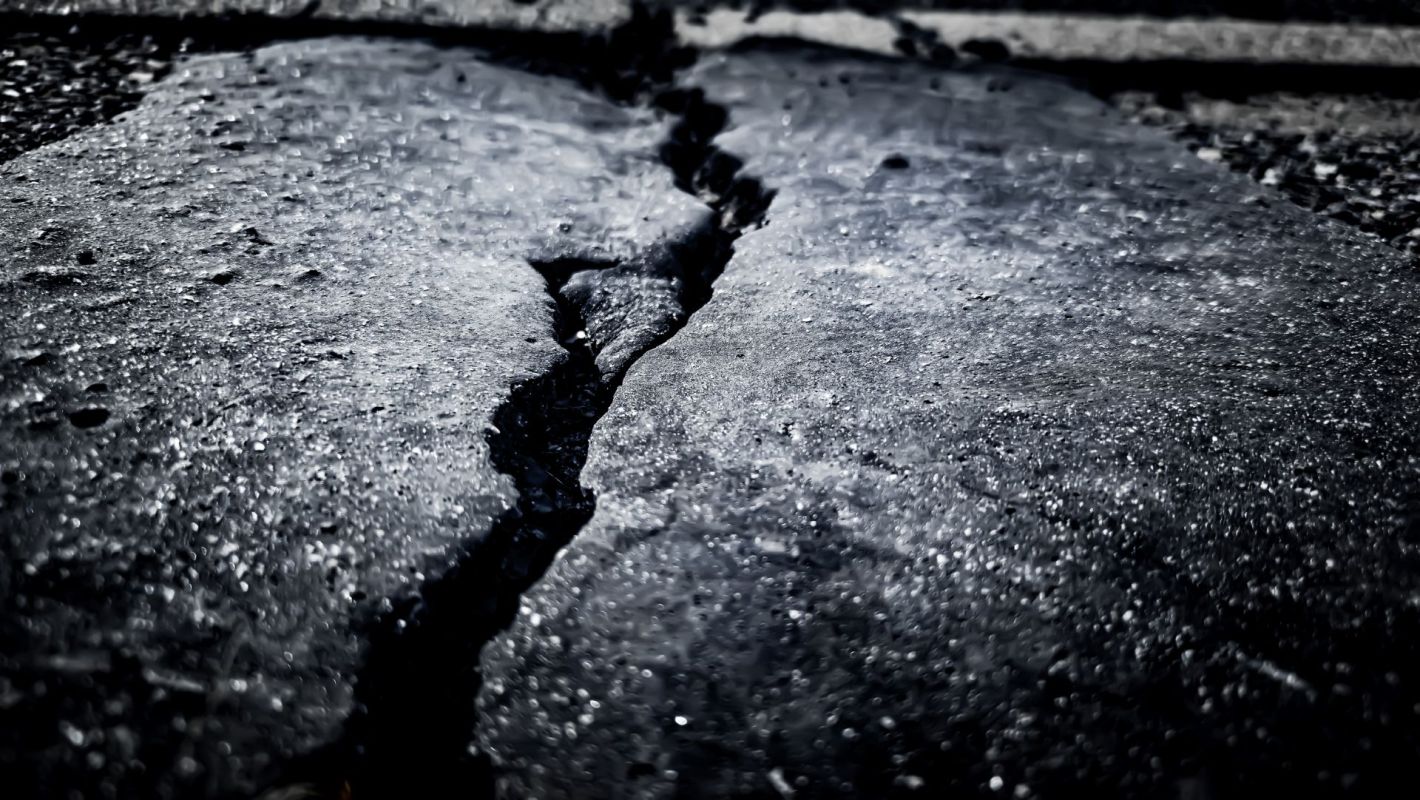
A rare jolt hit New Jersey in April when a magnitude 4.8 earthquake sent tremors across the East Coast, startling millions. Researchers were equally surprised to learn where it came from.
Here's what to know
Scientists traced the April 5, 2024 quake, felt by an estimated 42 million people from Virginia to Maine, to a concealed fault zone in the New Jersey Highlands, according to Gizmodo. Researchers have named the newly identified feature the Mountainville Fault.
Because the Ramapo Fault is the area's biggest known fault, it was the initial leading candidate. But the quake's epicenter sat too far away, and the fault's orientation failed to match the seismic pattern recorded by instruments.
The researchers reported in JGR Solid Earth that the earthquake actually came from an unmapped fault zone roughly two miles west of the epicenter. Although it did not produce major damage, it was New Jersey's largest recorded quake since 1900.
Lead author Folarin Kolawole, a structural geologist at Columbia University's Lamont-Doherty Earth Observatory, explained how they zoned in on the Mountainville area of Tewksbury: "We were able to find the source of the earthquake by projecting the aftershocks of the 2024 event to the surface, and then went out to look at the rock exposures in the area the projection points to."
More background
The East Coast remains distant from an active tectonic plate boundary. Earthquakes in the region occur within the North American plate, making them less frequent and often harder to predict.
TCD Picks » Quince Spotlight
💡These best-sellers from Quince deliver affordable, sustainable luxury for all




Work from Columbia University suggested the rupture followed a north-northeast-trending fault and involved a mix of thrust and strike-slip motion, pointing to a hidden fault plane.
To test that theory, the researchers used aftershock data, field mapping, friction lab work, stress analysis, and LiDAR imaging. After comparing those datasets, they found the aftershocks lined up with an unmapped geologic feature and that fractures in nearby bedrock matched the seismometer record.
While researchers described the Mountainville Fault as "immature," meaning it lacks the obvious surface expression and internal structure associated with larger, better-known faults, it was still capable of producing a quake felt across one of the country's most densely populated regions.
What's being done?
The study indicates that earthquake hazard reviews in the East may need to consider more than the region's most familiar mapped faults. Smaller fault zones that are harder to identify could still present meaningful danger, especially near major population centers such as New York City.
Kolawole said the findings may extend beyond New Jersey. "In fact, we are finding that the faults that ruptured other major earthquakes in the East Coast also exhibit characteristics that are consistent with those of immature faults. So, our results may have implications that extend across the broader U.S. East Coast," he added.
Researchers continue efforts to pin down what triggered the Tewksbury quake to help inform earthquake forecasting in the region.
Kolawole told Gizmodo in an email, "What we are learning through these findings is that subtle, immature faults may pose a greater seismic hazard than the prominent, large faults that we traditionally focus on when assessing the earthquake hazards of a region."
In addition to learning more about what faults can do and what sets them in motion, scientists are exploring how earthquakes are related to climate change, oil, and gas. Researchers worldwide are working to understand the complex causes of human-induced earthquakes, particularly in the context of geothermal energy.

Get TCD's free newsletters for easy tips, smart advice, and a chance to earn $5,000 toward home upgrades. To see more stories like this one, change your Google preferences here.






