


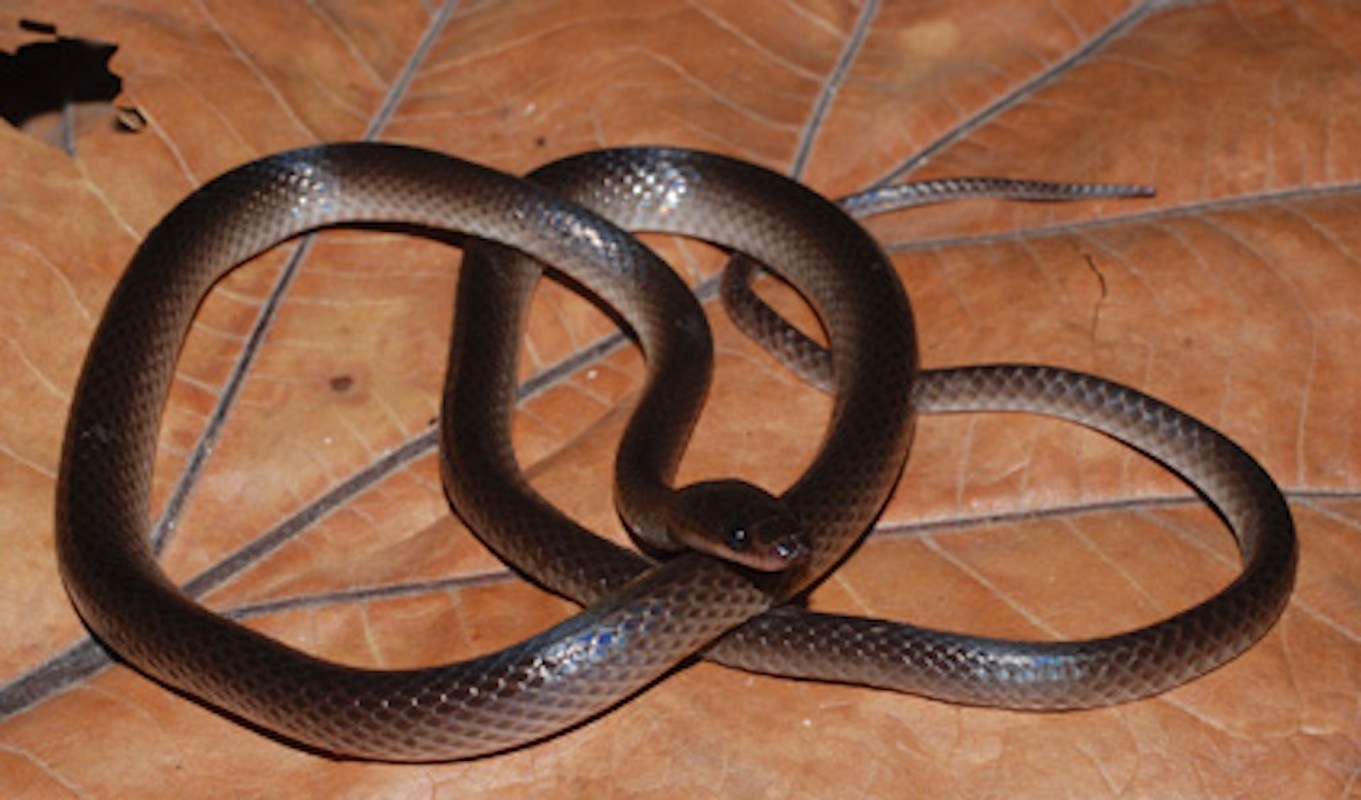
Scientists have identified a previously unknown snake in New Guinea.
The discovery is notable both for its rock-star tribute and for what it suggests about a forest ecosystem researchers are still trying to understand.
Called Lielaphis slashi, or Slash's groundsnake, the reddish-brown species highlights how much biodiversity may still be undocumented in habitats under increasing pressure.
Here's what to know
A paper published on August 11 in Zootaxa formally described the species, according to SciTechDaily.
Researchers determined that the roughly 28-inch snake, which lives in New Guinea's forests, is genetically separate from other similar snakes in the same genus.
Lead author Tianqi Huang, a postdoctoral researcher at the Field Museum, said identifying it as a new species required more than visual differences.
TCD Picks » Quince Spotlight
💡These best-sellers from Quince deliver affordable, sustainable luxury for all




"Using multiple cutting-edge genetic analyses, we found that L. slashi is genetically distinct from other similar snakes in the same genus. The combination of physical characteristics, like differences in numbers of scales when compared with other species, and the genetic evidence is what led us to realize that it is an entirely new species. We also used ecological modeling to show that L. slashi's preferred habitat is different from similar snakes," Huang said.
The name honors Guns N' Roses guitarist Slash, also known as Saul Hudson, in recognition of his lifelong interest in reptiles.
"As a long time herpetophile, I am extremely honored and humbled to have Lielaphis slashi from New Guinea named after me. It is really exciting; I never would have imagined this moment would arrive," Slash said.
More background
New Guinea is the world's second-largest island and is known for extraordinary biodiversity, but much of its wildlife has yet to be closely studied.
That leaves scientists still discovering species that may have lived there unnoticed for generations.
Chris Austin, a professor and curator of herpetology at LSU's Museum of Natural Science, first encountered the snake during nighttime fieldwork in 2006.
"These New Guinea groundsnakes are nocturnal, so the best way to find them is at night. They are typically found just after sunset at the base of large trees where they are looking for something to eat. When working at night in New Guinea you need to be very careful as there are several highly venomous species that look very similar to the non-venomous groundsnakes," Austin said.
Researchers have limited knowledge of the snake's behavior because the animal is so hard to monitor in the wild.
Study senior author Sara Ruane, the Field Museum's Associate Curator of Herpetology, said that challenge has constrained what scientists know.
"It's incredibly hard to observe snakes in the wild before they slither away, so our knowledge about L. slashi is limited," she said.
New Guinea's forests store planet-warming pollution and support the communities that depend on them for their livelihoods.
Identifying the species that live there can help guide conservation decisions before the damage is irreversible.
What's being done?
Scientists are working to document species before they disappear without ever being recorded.
A formal description gives a species the standing needed to support future research, habitat planning, and protection efforts.
Ruane said the forests where the snake lives are already facing pressure.
"The habitats that Slash's groundsnake is from are under threat from industries like coffee farming and mining," she said.
Fieldwork combined with genetic analysis can help researchers chart where species occur and identify places that may need stronger protection.
"That's part of why describing the species that live there is important. Every species should be recognized in order for us to better understand how ecosystems work, how everything fits into the environment. We can't conserve animals or other living things that we don't know about," Ruane said.
Where can I learn more?
These articles add context to the bigger story of snake research and conservation. One looks at a newly identified forest species, while the others focus on snakes already known to science that are dealing with habitat pressure, ecological disruption, and active recovery efforts.
• In India, biologists identified a new forest-dwelling snake with unusual pointed teeth.
• In Louisiana, conservationists released rare snake hatchlings to rebuild a dwindling wild population.
• In Spain, officials warned that an invasive snake sighting could upend native ecosystems.
They underscore why it matters to identify and track species before populations start to crash. The same fieldwork that brings an animal like Slash's groundsnake to light can also guide efforts to protect vulnerable ecosystems.

Get TCD's free newsletters for easy tips, smart advice, and a chance to earn $5,000 toward home upgrades. To see more stories like this one, change your Google preferences here.






