


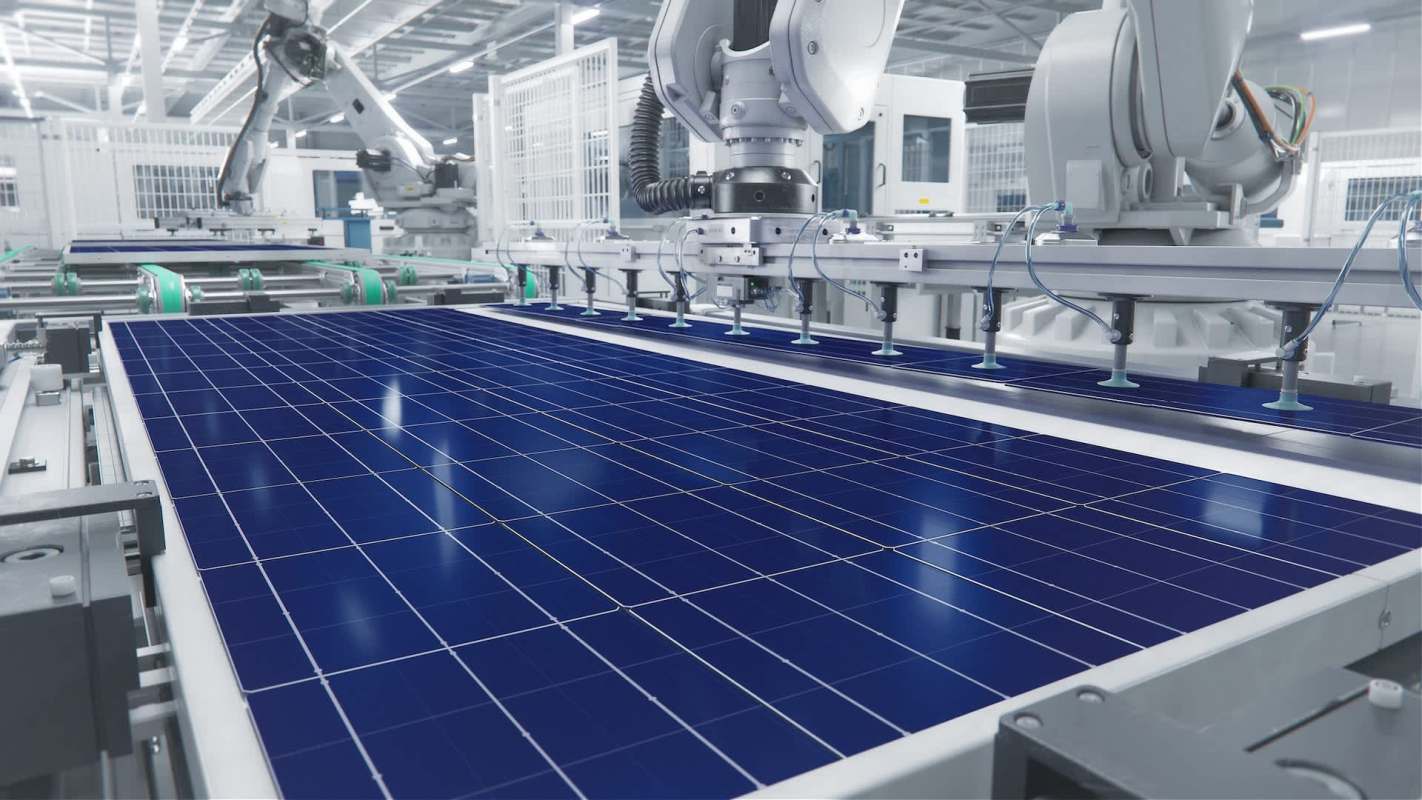
For solar panels, a basic limit from physics has long set expectations: conventional designs top out at roughly one-third of sunlight converted to electricity.
A research team in the Netherlands says some of the energy normally shed almost immediately as heat might instead be captured, hinting at a way past that benchmark.
Here's what to know
In work published in ACS Energy Letters, University of Groningen scientists said so-called hot electrons in solar cells can hold onto surplus energy much longer than researchers had assumed, a result that could support more efficient devices.
Sunlight powers a solar cell by transferring photon energy to electrons, putting them into an excited state that contributes to voltage. The catch comes with the highest-energy photons — they produce hot electrons with extra energy, and standard solar materials usually dump that surplus as heat within picoseconds.
"This means that the energy is lost before the hot electron exits the solar cell material," said Jan Anton Koster, professor of physics of novel semiconductors and devices at the University of Groningen.
If researchers can convert more of that wasted energy into usable power, it could eventually make solar even more cost-effective. For homeowners, going solar is already one of the best ways to save money on home energy, and platforms such as EnergySage let users get free installation estimates and compare quotes.
A tin-based perovskite created by Maria Antonietta Loi, professor of photophysics and optoelectronics at the University of Groningen, stretched that brief period from picoseconds into nanoseconds — about a 1,000-fold increase. To understand the unexpected slowdown, Koster and doctoral student Tim Faber turned to simulations.
More background
Modeling suggested the extended lifetime is not caused by a single effect. In the perovskite, the team found that two mechanisms seem to combine to slow the loss of hot-electron energy, including a "hot phonon bottleneck" in which nearby heat can be reabsorbed by the electrons.
Save $10,000 on solar panels without even sharing your phone number Want to go solar but not sure who to trust? EnergySage has your back with free and transparent quotes from fully vetted providers that can help you save as much as $10k on installation. To get started, just answer a few questions about your home — no phone number required. Within a day or two, EnergySage will email you the best local options for your needs, and their expert advisers can help you compare quotes and pick a winner. |

"The measurements were clear, but we didn't understand the physics behind this," Koster said, and the mismatch between the data and the explanation became so troubling that "we even started to doubt the measurements ourselves."
What's being done?
This work is still in the research stage, but it points to a practical goal: solar cells that waste less of the sunlight they capture.
For consumers interested in rooftop solar, free comparison tools can already make a major difference. With help from EnergySage, the average person can save up to $10,000 on solar purchases and installations. EnergySage's solar map also shows the average cost of a home solar panel system on a state-by-state level, along with details on solar incentives for each state, helping readers get the best price for rooftop solar panels and access available incentives.
Adding battery storage to a solar setup is also one of the best ways to protect your home during outages, save money on energy, and go off-grid. You can explore EnergySage for information about home battery storage options, including competitive installation estimates.
More From EnergySage
💡Go deep on the latest news and trends shaping the residential solar landscape


Taken together, the results indicate that a major constraint on solar power may be more flexible than it appears.
"When we added this well-known process called hot phonon bottleneck to the simulations, it slowed the loss of energy, but not enough to explain our measurements," Koster said.
Where can I learn more?
These articles look at higher-efficiency solar materials, record-setting cell designs, and ways to make perovskites more durable.
• Scientists improved the interface in tandem cells, boosting perovskite-silicon solar efficiency and durability.
• Scientists found promising results in kesterite, a next-gen material for more effective panels.
• Researchers showed performance can be significantly enhanced in tin perovskites, strengthening a lead-free solar alternative.
• Scientists added an innovative 2D layer, helping perovskite solar cells last longer.

Get TCD's free newsletters for easy tips, smart advice, and a chance to earn $5,000 toward home upgrades. To see more stories like this one, change your Google preferences here.






