


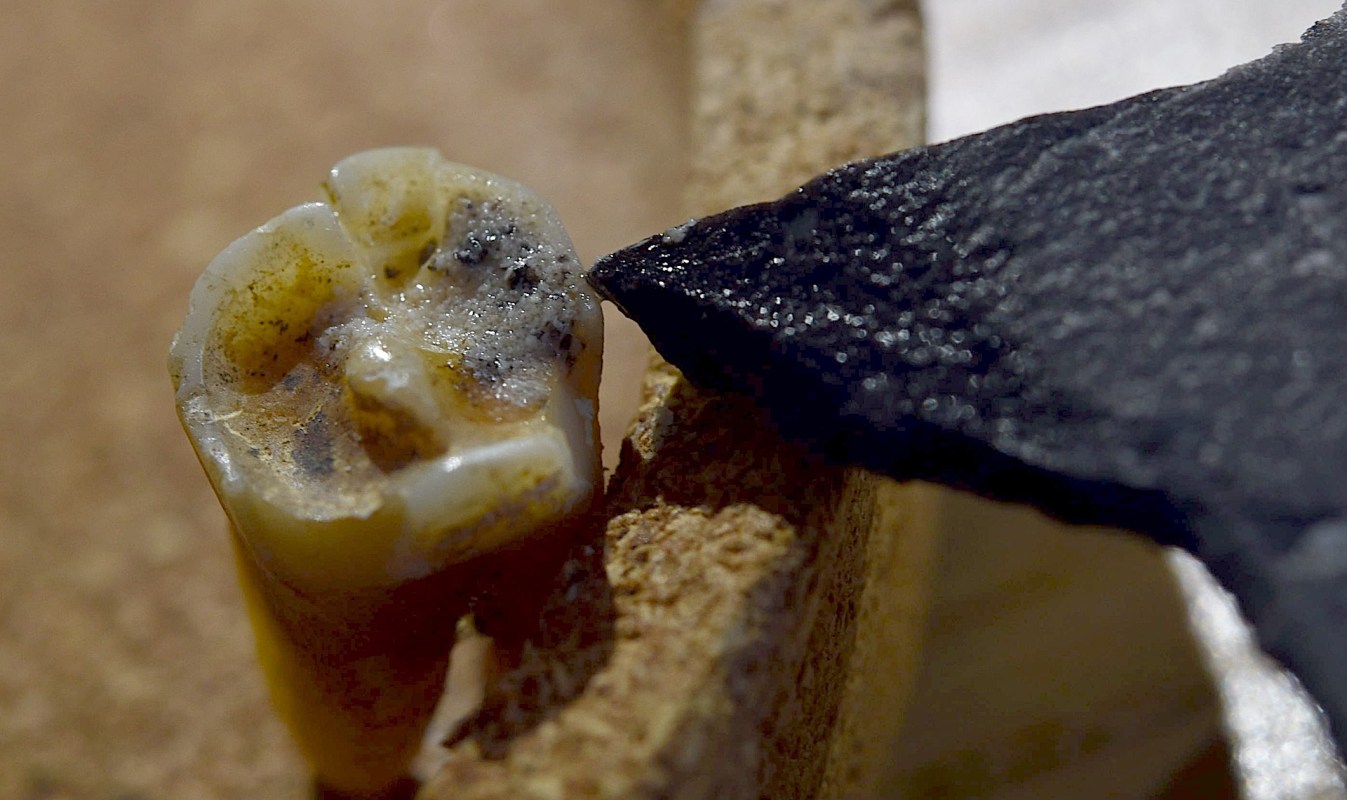
A damaged Neanderthal tooth discovered in Siberia may offer an unexpected look into the history of dental care.
In a study published in the journal PLOS One, scientists analyzed a Neanderthal lower molar called Chagyrskaya 64 from Chagyrskaya Cave in the Altai region of southern Siberia. The tooth came from an adult who lived around 59,000 years ago, Heritage Daily reported.
Researchers focused on a sizable cavity in the chewing surface of the molar. Using high-resolution microscopy and 3D scanning, they found grooves and pick-style traces that appear to have been made deliberately to ease pain or address infection.
That possibility makes the find especially notable. Rather than reflecting ordinary food processing or natural tooth wear, the tooth may preserve evidence that Neanderthals used a tool — perhaps a small pick or sliver of bone — multiple times on a diseased tooth, per Heritage Daily.
The study authors added that the evidence may point to a landmark moment in medical history.
"This study establishes compelling evidence for the earliest documented instance of invasive dental caries intervention in human evolutionary history," they wrote.
TCD Picks » Quince Spotlight
💡These best-sellers from Quince deliver affordable, sustainable luxury for all




"This discovery not only enriches our understanding of Neanderthal behavioral complexity but also situates the roots of deliberate medical intervention deeper within the hominin lineage."
Researchers also found signs of healing in the surrounding area. They suggest that the individual lived for some time after the treatment and that the intervention may have helped.
The discovery is a reminder that dental pain, infection and the impulse to care for others are not uniquely modern experiences. Oral health has always mattered. Even tens of thousands of years ago, close human relatives likely tried to manage severe discomfort through practical intervention.
It also adds to a growing body of research showing that Neanderthals were more capable, resourceful, and socially supportive than theories once suggested.
Findings like this can help scientists better understand the origins of medicine, caregiving, and community survival. They also strengthen the case for preserving caves, fossils, and archaeological sites that demonstrate how ancient people responded to injury and illness.

Get TCD's free newsletters for easy tips, smart advice, and a chance to earn $5,000 toward home upgrades. To see more stories like this one, change your Google preferences here.






