


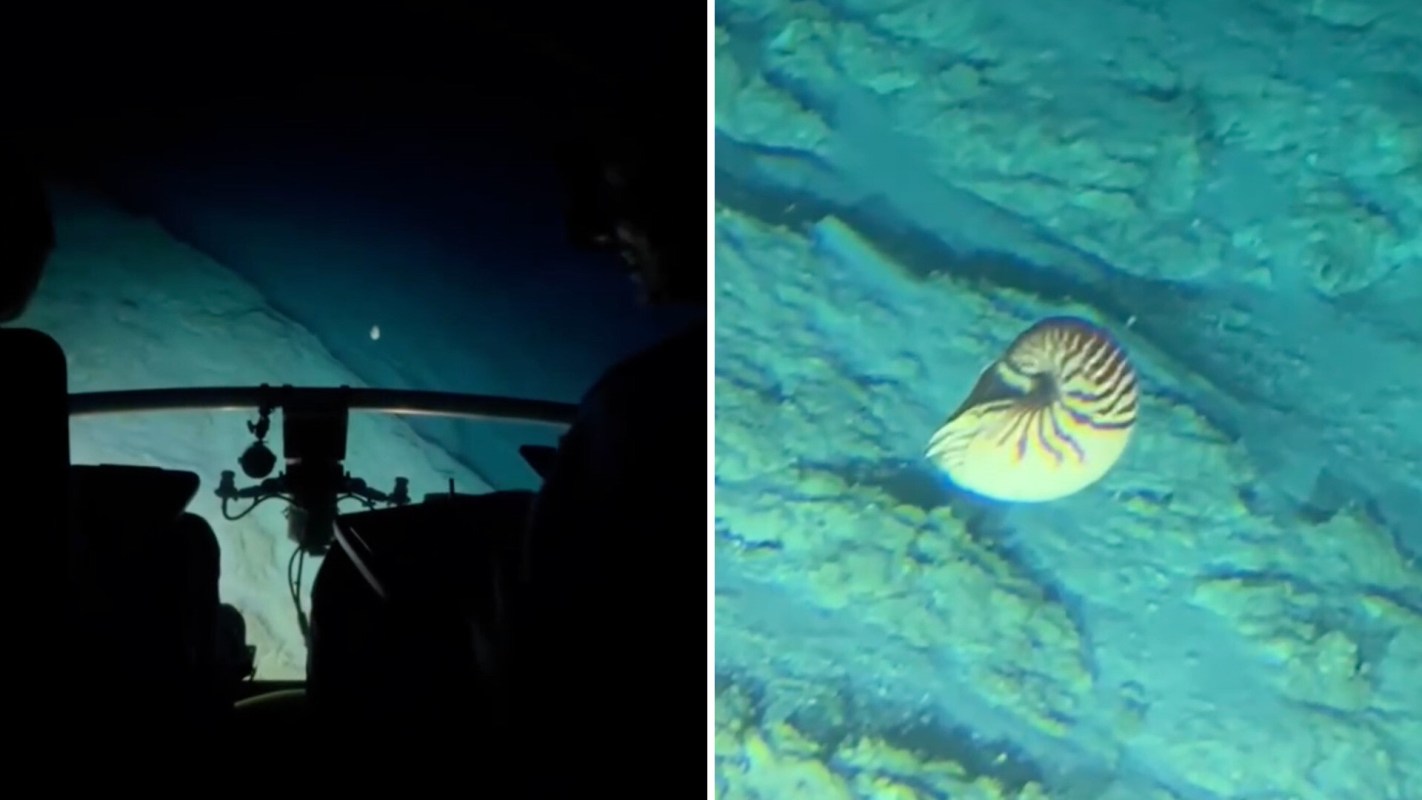
A research dive near Fiji led to a completely unexpected close encounter when a nautilus rose off the seafloor and swam directly toward a submersible, seeming to inspect the people inside.
What happened?
While surveying waters near Rotuma, roughly 300 miles north of Fiji, the team noticed the striped shell of a nautilus at about 1,198 feet, according to Discover Wildlife. Instead of moving away, the animal appeared intrigued by the unfamiliar object as it "swam right up to their underwater vehicle to say hello."
"As we approached, it seemed like the shelled creature was just as curious about us as we were about it, because it lifted up from the seafloor and started swimming its way over to us," said Whitney Goodell, a marine ecologist with National Geographic Pristine Seas.
With the nautilus out of the submersible's camera view, the researchers quickly reached for their phones.
"It came right up to the glass dome and hovered around at our eye-level," Goodell added to Discover Wildlife.
She continued, "We occasionally see them on baited camera video, but encountering one by pure chance in their natural habitat is an absolute treat."
TCD Picks » Quince Spotlight
💡These best-sellers from Quince deliver affordable, sustainable luxury for all




Why does it matter?
Nautiluses are among the oldest surviving animals in the ocean. These ancient mollusks have existed since long before the dinosaurs, yet today, they can only survive within a very specific depth range.
"They spend most of their time in a 'Goldilocks' depth zone," Goodell said. "Too shallow and the water is dangerously warm, but too deep and extreme pressure will implode the gas-filled shell chambers they rely on for buoyancy."
That narrow range makes them especially vulnerable to changing ocean conditions and damage to the underwater environments they depend on.
Ocean ecosystems help regulate the climate, support food webs, and sustain biodiversity far beyond what most people ever see firsthand.
What's being done?
Scientists are continuing to study remote marine habitats using submersibles and baited cameras, helping researchers better understand where vulnerable species live and the conditions they need to survive.
"Protecting these features safeguards the movement and survival of nautiluses and countless other deep-sea species," Goodell said.

Get TCD's free newsletters for easy tips, smart advice, and a chance to earn $5,000 toward home upgrades. To see more stories like this one, change your Google preferences here.






