


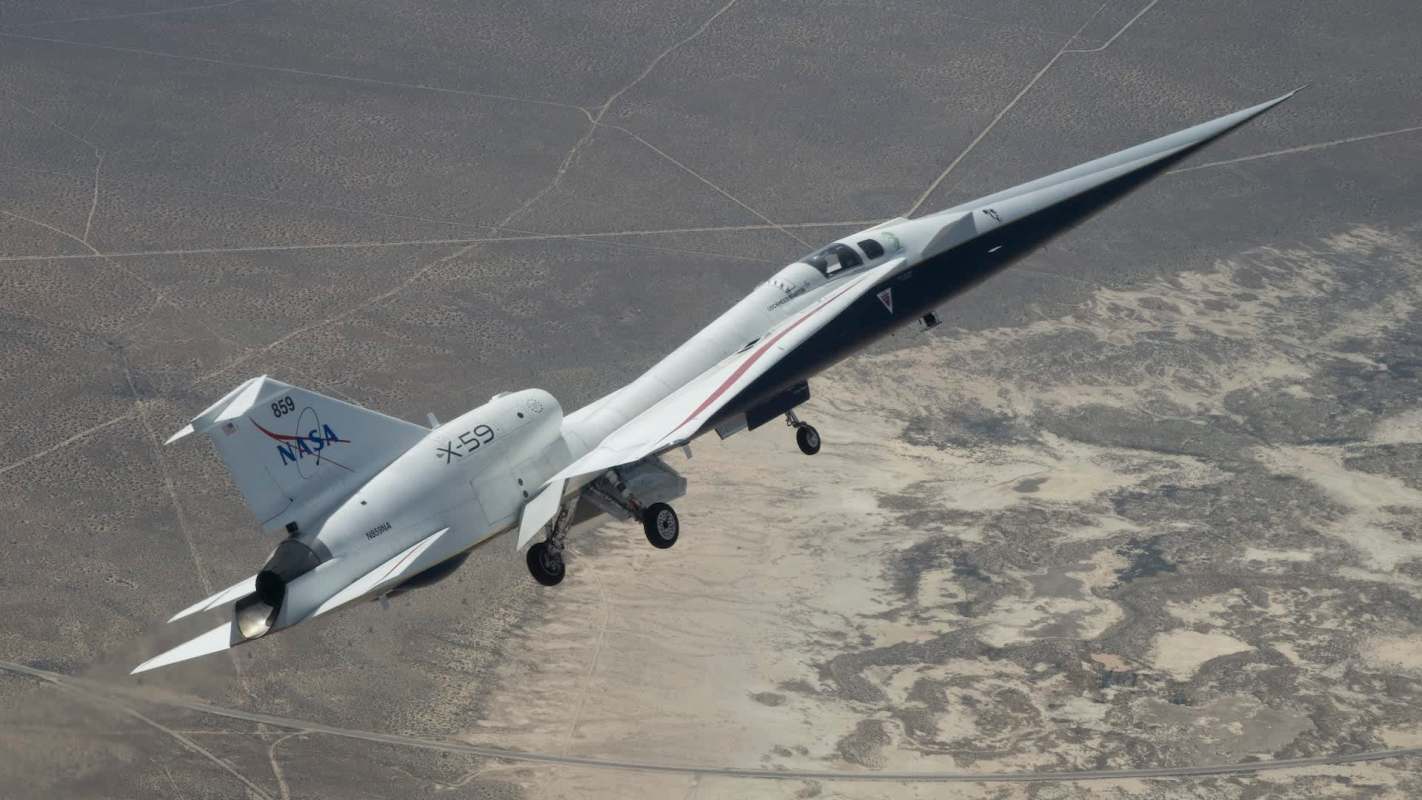
NASA's experimental X-59 aircraft, known for its extra-long nose, has now broken the sound barrier for the first time, a key step in NASA's effort to rethink high-speed air travel.
The flight is attracting interest because NASA wants to show that supersonic aircraft do not necessarily have to produce the explosive boom most people associate with going faster than sound.
What happened?
According to NASA, the X-59 flew for 81 minutes after departing Edwards Air Force Base in California on June 5 and reached roughly Mach 1.1, or 713 miles per hour. Test pilot Jim "Clue" Less took the aircraft to 43,400 feet in a flight that marked a major first for NASA's Quesst mission.
The aircraft is designed to travel faster than sound while creating a subdued "thump" instead of the kind of sonic boom that has long curtailed supersonic flying over land.
Ahead of the flight, NASA shared a video of Less describing one of the aircraft's most unusual design features.
"The X-59 doesn't have a forward-facing window," he said. "So I won't be able to see where I'm going without a little help."
TCD Picks » Quince Spotlight
💡These best-sellers from Quince deliver affordable, sustainable luxury for all




To solve that, NASA developed an External Vision System that, as UPI described it, gives the pilot a virtual forward view through cameras and high-definition displays.
Why does it matter?
If the X-59 works as NASA hopes, it would strengthen the case for bringing back commercial supersonic travel without the same disruptive noise problems that contributed to limiting earlier aircraft.
NASA's next major goal is even more demanding: a "mission conditions" run that would send the aircraft to 55,000 feet at 925 mph. It also intends to fly the aircraft over communities around the country to learn whether people on the ground can hear the softer "thump."
Those results are expected to help guide new noise standards and support the broader case for practical supersonic travel.
The concept itself is not new. Concorde famously cut transatlantic travel times for years, but NASA is now trying to solve one of the biggest barriers that kept that kind of speed from being adopted more widely.
What are people saying?
NASA administrator Jared Isaacman said the milestone reflects how quickly the program is moving.
"X-59 is getting ready for its quiet supersonic debut," he said in a statement. "Since the aircraft's first flight on Oct. 28, 2025, the team has made tremendous progress."
Less has also described how unusual the aircraft is, pointing to both its camera-based visibility system and its distinctive dimensions, including a nose longer than a school bus.
NASA is not the only group pushing toward faster air travel. As AccuWeather observed, Boom Supersonic, another company in the space, is promoting its Overture jet as "the world's fastest airliner."

Get TCD's free newsletters for easy tips, smart advice, and a chance to earn $5,000 toward home upgrades. To see more stories like this one, change your Google preferences here.






