


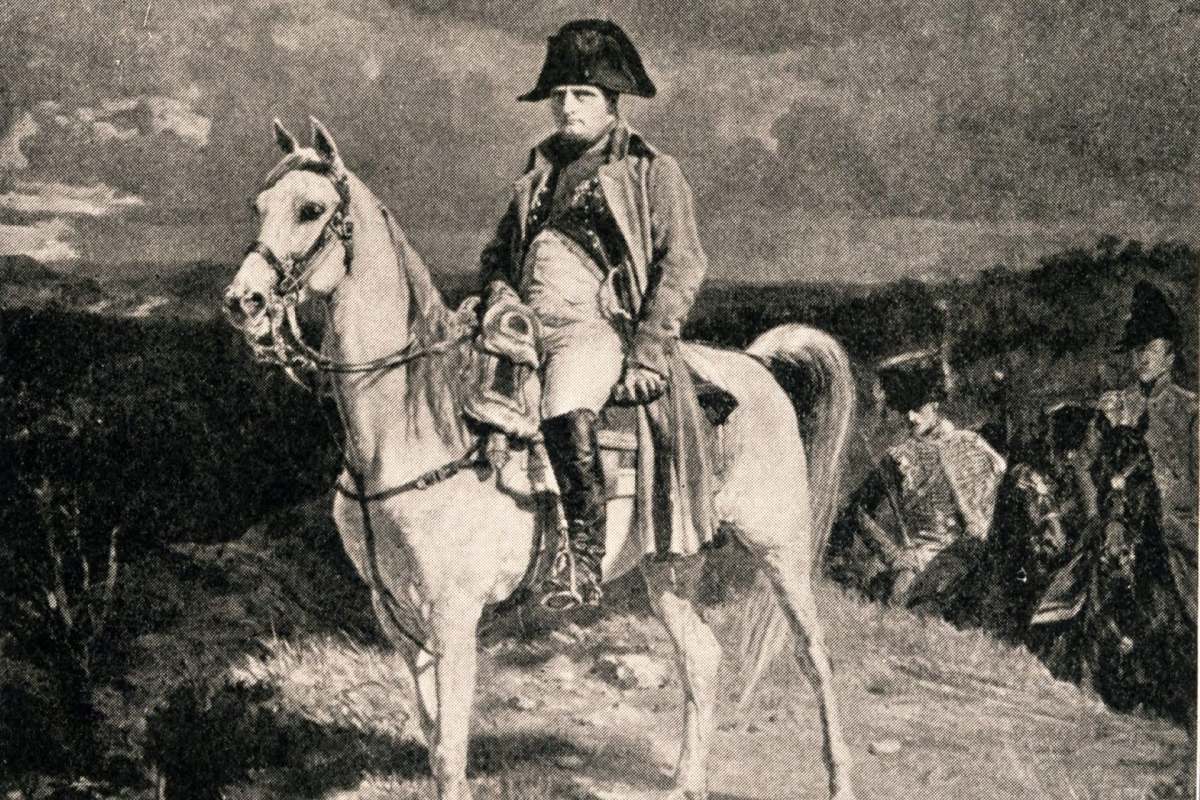
An OpenAI model reportedly solved a 217-year-old Napoleonic cipher from a single scanned image, reconstructing a March 1809 battlefield briefing and correcting the letter's published date.
Here's what to know
The document was a letter Napoleon Bonaparte sent to General Auguste de Marmont. According to Popular Mechanics, Carter Church, an AI engineer at SentinelOne, had OpenAI's GPT-6 Astra work from a single low-resolution scan, a blurry reproduction from a 1969 French Army journal. The model transcribed and decoded 24 lines of symbols, numbers, and letters.
In Church's account, Astra logged about 1,300 hand-drawn marks, sorted them into 155 unique signs, and then solved the homophonic cipher, a format where multiple symbols can stand in for the same common letter. Church said the feat took about six hours to verify.
Church said the model linked the letter to a partial key not previously associated with it, used its own simulated annealing solver to complete the decipherment, and checked nearby letters to fix the publication date. The editor of Cryptiana's Unsolved Historical Ciphers list has marked the entry as solved.
"Transcription and cryptanalysis are usually separate skills, often separate careers," he wrote. "Here they ran as one workflow, and the plate stayed in the loop: proposed values were checked back against every occurrence of a sign on the image."
More background
The surviving message is dated March 16, 1809. From Paris, Napoleon instructed his stepson Eugène, the Viceroy of Italy, to get a coded letter to Marmont, whose forces in Dalmatia were cut off from the rest of the French armies.
TCD Picks » Quince Spotlight
💡These best-sellers from Quince deliver affordable, sustainable luxury for all




Napoleon wanted the dispatch encrypted and carried by an intelligence officer so it would be harder to read if intercepted. Church wrote that the decoded text was essentially a war briefing on the positions of French and allied armies, and that it went out before Austria invaded.
Church also avoided overstating the cipher's difficulty, saying human cryptographers could have cracked it "easily" if they had dedicated the time. He told Live Science, "I didn't believe it at first. Everyone has the experience of seeing a model claim something outrageous, but the difference here is that the solution is mechanically testable: there's essentially zero chance an incorrect key could produce coherent and historically consistent output."
"Every field has an unsolved backlog of niche problems that specialists don't have the bandwidth to tackle," he wrote. "The takeaway here is that the people shortening those lists will increasingly be outsiders who were simply curious."
AI systems powerful enough to process an 1809 manuscript may also help utilities forecast demand and optimize clean energy on the grid, but the computing boom behind those tools can consume enormous amounts of electricity and water.
The growing power of these systems also raises concerns about misuse, cybersecurity, and the possibility that rising data-center demand could push up energy costs for households.
Where can I learn more?
These stories explore other ways AI is being put to work — and some of the tradeoffs that come with it.
• Researchers have developed an approach to revolutionize artificial intelligence that could replace energy-intensive techniques.
• Scientists used AI to map ocean currents with incredible new detail.
• At a nuclear cleanup site, scientists used AI to accelerate research on radioactive iodine removal.
• Westinghouse and Google outlined an AI-driven nuclear construction push they call the fastest path.
• Researchers are warning about critical sustainability issues as generative AI adds to e-waste.

Get TCD's free newsletters for easy tips, smart advice, and a chance to earn $5,000 toward home upgrades. To see more stories like this one, change your Google preferences here.






