


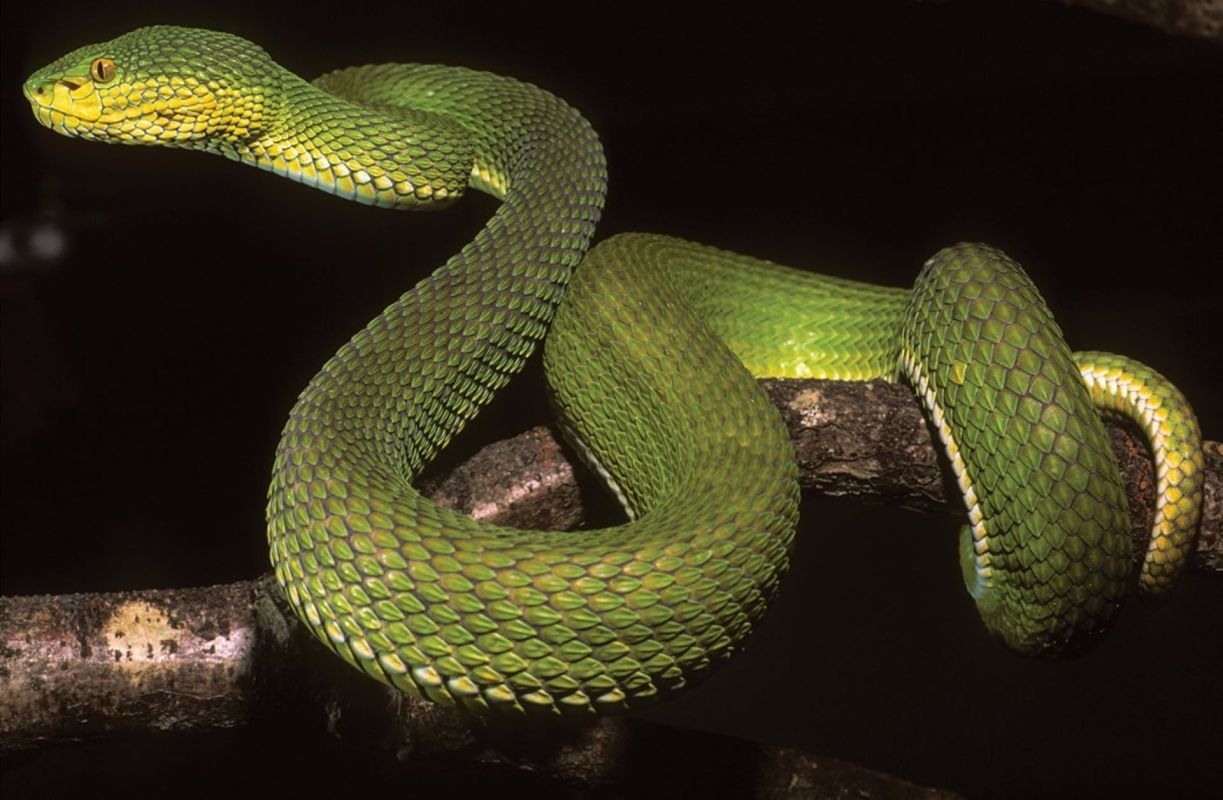
In central Myanmar, researchers encountered green pit vipers that appeared to be a mix of two known species, but DNA testing showed they were a distinct species.
What happened?
A team led by herpetologist Dr. Chan Kin Onn of the University of Kansas' Biodiversity Institute and Natural History Museum investigated an unusual snake population in central Myanmar and determined it was a distinct species, according to Pensoft Publishers.
Researchers later described the species as the Ayeyarwady pit viper, or Trimeresurus ayeyarwadyensis. According to Science Daily, that formal description followed a 2023 genomic study in Systematic Biology that identified the snakes as their own lineage.
The confusion came from how unevenly the snakes matched their nearest relatives. In northern coastal Myanmar, the redtail pit viper is bright green all over and lacks markings. Farther south, the mangrove pit viper is typically marked with dark blotches and is more often gray, yellow, brown, or black than green.
"This mysterious population in central Myanmar baffled us and we initially thought that it could be a hybrid population," the researchers said.
Genetic testing ultimately ruled out hybrid status and showed that the snakes instead make up a separate species, despite their broad variation in appearance.
TCD Picks » Quince Spotlight
💡These best-sellers from Quince deliver affordable, sustainable luxury for all




Why does it matter?
Finding a new species gives scientists a clearer picture of where animals live, how they evolved, and which habitats may need protection.
Better biodiversity maps can help inform land use, river basin management, and habitat conservation in places where farming, development, and wildlife overlap.
Snakes can also play an important role in local ecosystems, acting as predators that help keep food webs in balance.
"Asian pit vipers of the genus Trimeresurus are notoriously difficult to tell apart, because they run the gamut of morphological variation," the researchers said. "Some groups contain multiple species that look alike, while others may look very different but are actually the same species."
DNA tools are becoming increasingly important for conservation. If a species is overlooked because it appears too familiar, it may miss out on the attention needed to monitor and protect it.
What's being done?
To separate the Ayeyarwady pit viper from similar species, the researchers used both field-based observations and genomic methods. Rather than judging the snakes by color alone, they weighed physical traits, location, and genetic data together.
Publishing the findings in an open-access journal could also help by giving researchers, students, and conservation planners broader access to information they can use to track biodiversity in Myanmar and beyond.
"This is an interesting phenomenon, where one species is simultaneously similar and different from its closest relative (the redtail pit viper)," Dr. Chan said. "We think that at some point in the past, the new species may have exchanged genes with the redtail pit viper from the north and the mangrove pit viper from the south."

Get TCD's free newsletters for easy tips, smart advice, and a chance to earn $5,000 toward home upgrades. To see more stories like this one, change your Google preferences here.






