


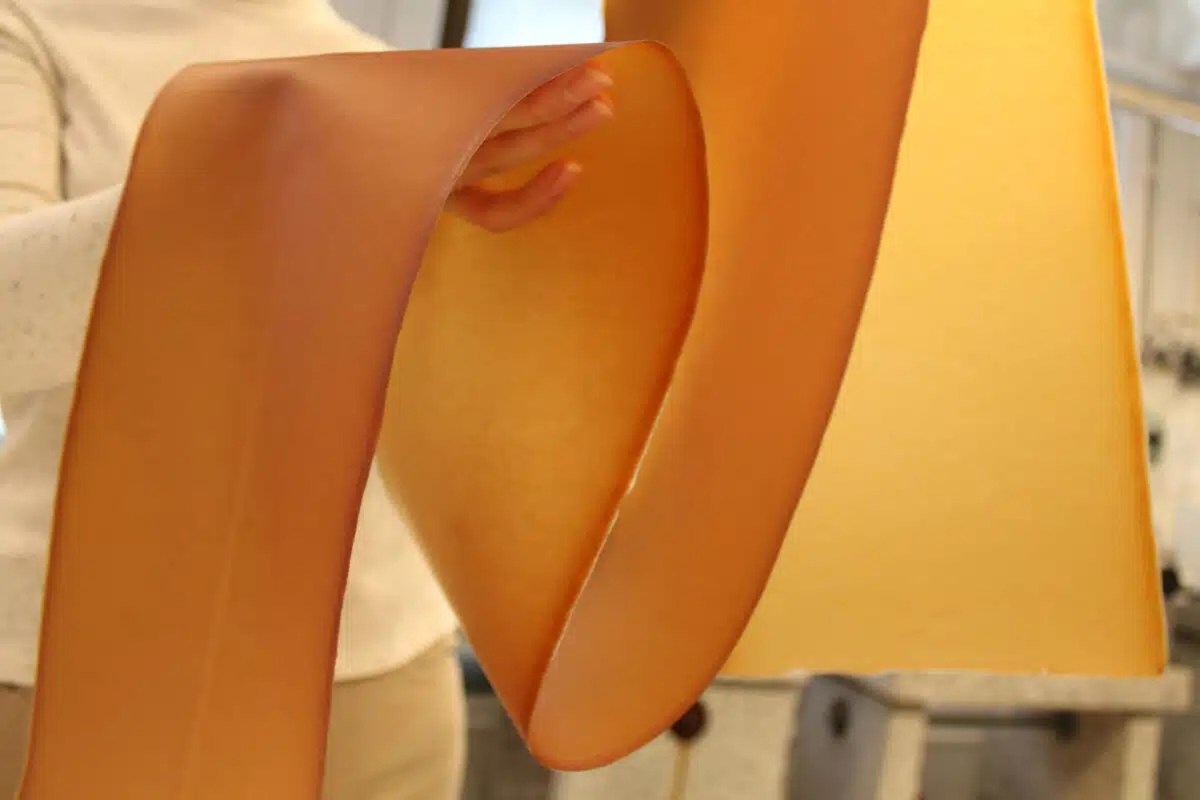
Could mushrooms be the key to a new sustainable "leather"?
As science outlet Study Finds recently detailed, a Finnish research team produced a leather-like sheet from fungus grown in fermentation tanks and used it to make a prototype handbag.
In tests, the material broke down much more quickly than conventional leather and vinyl-based textiles.
Here's what to know
Known as mycelium, the material comes from the interwoven, thread-like fibers fungi grow. To make it, the researchers grew the fungus Trichoderma reesei — already used for some industrial purposes — in liquid tanks until it formed a pulp-like mass. They then combined that material with additives and dried it into sheets, according to Study Finds.
The results were striking. The mushroom-based fabric reached 77% biodegradation in aquatic conditions after 28 days, according to the study, published in ACS Applied Bio Materials in June. Cow leather, by contrast, broke down 15% over 119 days, and a vinyl-cotton fabric reached 35% biodegradation over the same period.
To show the mushroom-based material could be worked into a product, the researchers cut, dyed, and stitched it into a test handbag. At larger production volumes, the approach might create another option for bags, car interiors, and household goods, offering a leather-like look without generating as much waste.
TCD Picks » Quince Spotlight
💡These best-sellers from Quince deliver affordable, sustainable luxury for all




"Our work has solved one significant bottleneck, enabling large-scale production of affordable mycelium-based fabrics," study co-author Manuel Arias-Barrantes said, per a press release.
More background
Interest in mycelium as a lower-impact material has been building, but producing something that is strong, flexible, and practical to manufacture in larger volumes has remained difficult.
In this study, researchers found that mycelium on its own produced sheets that were too brittle. Adding sorbitol helped soften the material, while nanofibrillated cellulose — an ultra-fine wood fiber — improved both strength and flexibility, according to Study Finds.
In the best-performing version, the fabric reached about 19 megapascals of tensile strength, putting it in competition with, and at times above, chrome-tanned cow leather, which is typically reported at 8 to 15 megapascals, per the science outlet.
The team also created dyed sheets, textured surfaces, and a textile-backed form with improved tear resistance. The mushroom-based fabric extended only about 10% before it failed, however, far below conventional leather.
What's being done?
The researchers were able to demonstrate that manufacturers could potentially adapt existing industrial processes to produce and work with the mushroom-based material rather than build an entirely new production system from scratch.
More research is needed to test the material and its potential uses, however. And because the study did not include a full life cycle assessment, broader comparisons with animal leather — including water use, energy use, and overall environmental impact — still need confirmation.

Get TCD's free newsletters for easy tips, smart advice, and a chance to earn $5,000 toward home upgrades. To see more stories like this one, change your Google preferences here.






