


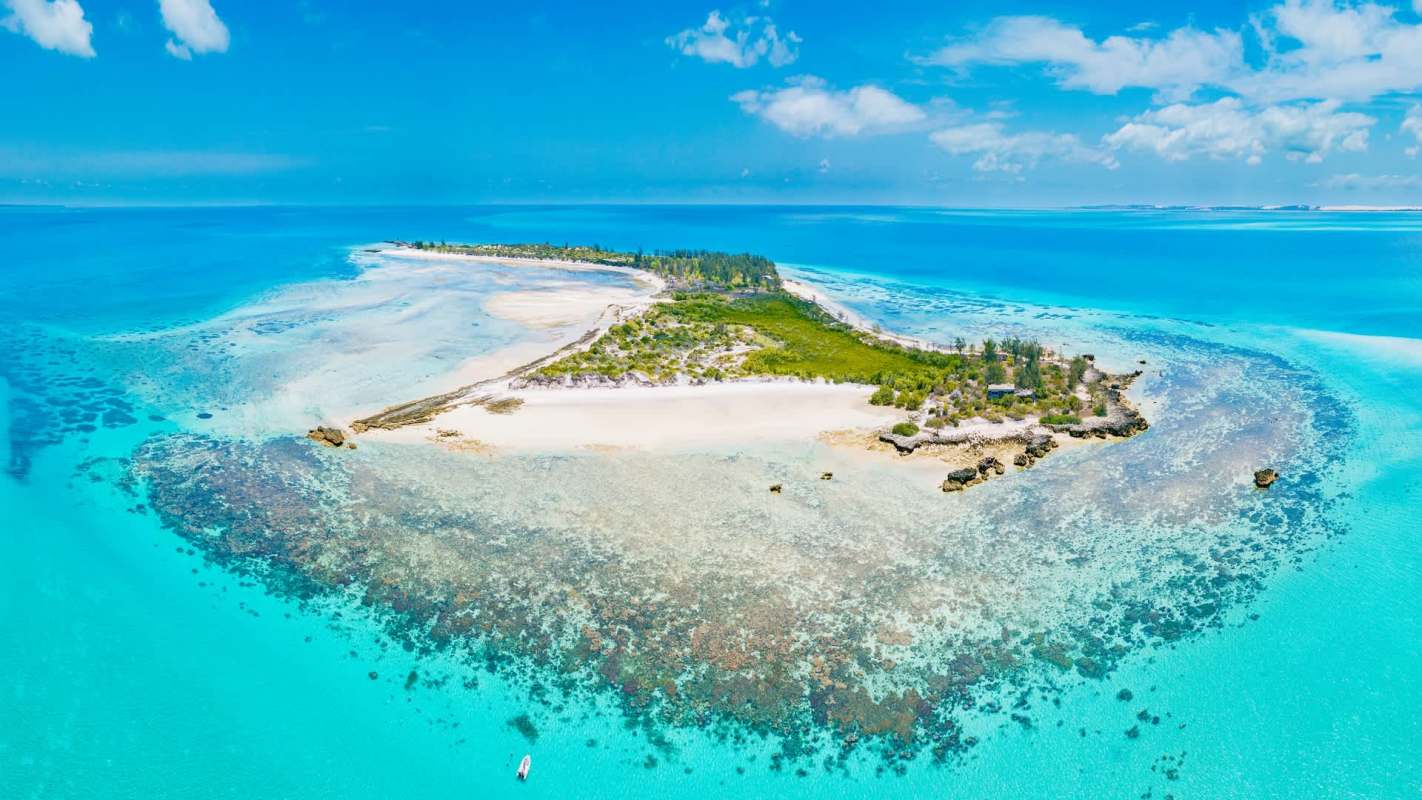
Fish, turtles, and sharks inhabit reefs made from ancient forest remains near Mozambique, where the abundance of marine life rivals that of neighboring coral reefs.
Here's what to know
Researchers investigating dark underwater platforms in the Bazaruto Archipelago found peat reefs within Bazaruto Archipelago National Park, according to Eos. A study in Scientific Reports documents the habitat in these protected waters.
"We kept seeing marine life on dark, firm platforms that didn't fit any habitat we knew," said Mario Lebrato, a marine biogeoscientist at the Bazaruto Center for Scientific Studies.
Samples contained up to 40% carbon by dry weight, pointing to the reefs' forest origins, the study said.
Despite their name, these reefs contain no coral. Instead, seagrass, microalgae, and sponges grow on the peat, providing shelter for young animals and smaller residents. Invertebrates also inhabit the structures.
This abundance of marine life thrives in water just 6.6 to 13.1 feet (2 to 4 meters) deep, according to Lebrato. Parts of the reefs emerge with the tides, while storms regularly break them apart.
TCD Picks » Quince Spotlight
💡These best-sellers from Quince deliver affordable, sustainable luxury for all




More background
Radiocarbon dating revealed that the submerged material could be between 300 and 5,000 years old, Eos reported. Rising seas covered the peat swamps and forests that once grew along the coast.
The otherwise sandy shores now offer marine life a carbon-rich foundation made from the decomposed remains of those ecosystems.
Lebrato said the Bazaruto research may be the first ecological study of tropical peat reefs. According to Eos, only a handful of peat reef habitats have been documented worldwide, most in Europe, with others in Southeast Asia and the United States.
Richard Lindsay, who studies peatland ecology at the University of East London and did not participate in the study, explained how much carbon peat can hold.
"A 30-centimeter-thick layer of peat over an area of a hectare [approximately 2.47 acres] can contain as much carbon as a hectare of rainforest," he told Eos.
What's being done?
The Bazaruto reefs already lie within a marine protected area, and researchers have begun documenting their ecology, age, and composition, as described in the findings.
That work gives conservation planners a clearer understanding of a habitat that can be difficult to find because shifting sand can cover and uncover the reefs.
Researchers have yet to determine how much carbon the reefs contain or whether they are storing or releasing it. Peat reefs are also often absent from climate models.
Lebrato is calling for these habitats to be included in coastal mapping and conservation decisions. Without that recognition, overlooked reefs could be damaged by activities such as trawling or deep-sea mining, potentially releasing carbon while destroying wildlife habitat, according to Eos.
"For the blue economy, the first step is simple: Put peat reefs on coastal maps and into conservation plans and policy, so they're not lost before we understand their full value," Lebrato said.

Get TCD's free newsletters for easy tips, smart advice, and a chance to earn $5,000 toward home upgrades. To see more stories like this one, change your Google preferences here.






