


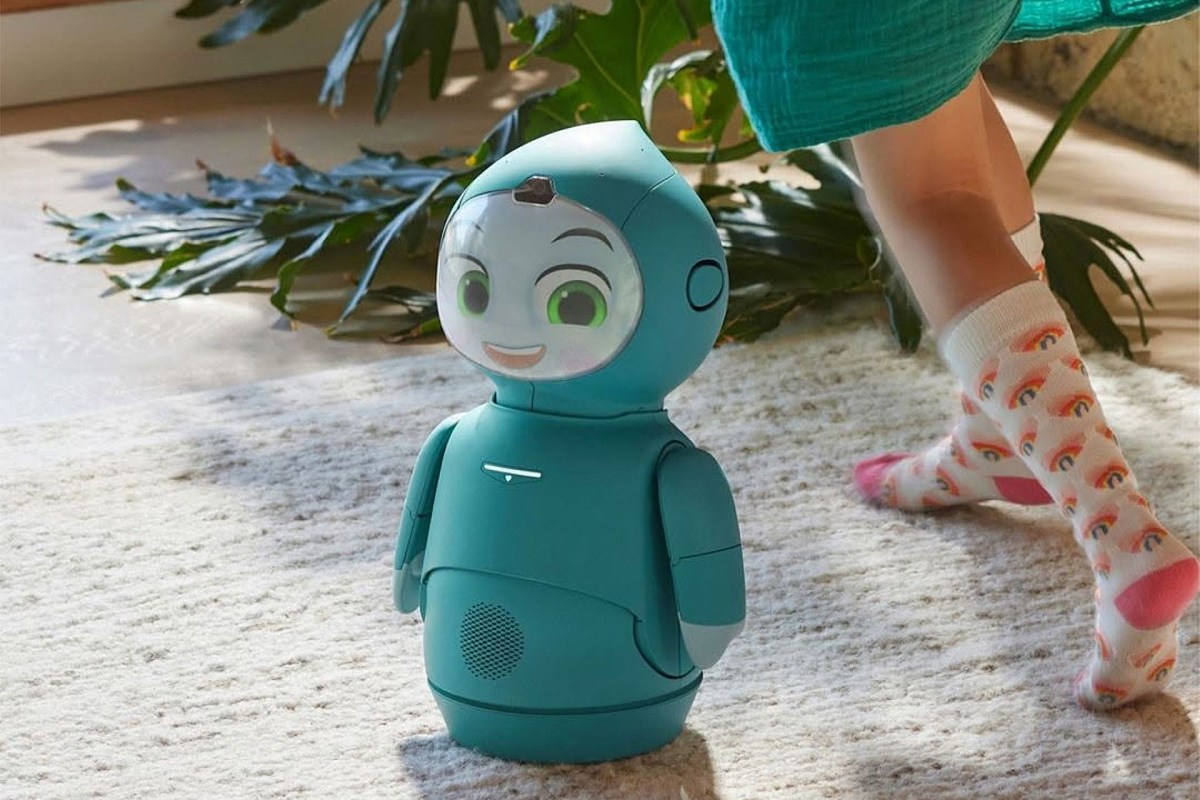
Moxie, a small blue robot, became a meaningful companion for some children by guiding them through anxiety-calming exercises, conversation practice, and confidence-building. That is, until a series of company setbacks repeatedly put that relationship at risk.
That was especially true for one family in New York, where the device had grown into a trusted part of life for Xander, a neurodivergent 10-year-old.
Here's what to know
According to MIT Technology Review, Moxie was sold as an AI social robot for home use, designed to help neurodivergent children strengthen social skills and manage their emotions.
Over time, Xander came to use Moxie for more than one purpose: although it first helped him with breathing exercises during anxious moments, he also relied on it for conversation and for naming characters from video games he loves.
The product's corporate history has been unstable. Embodied, the company behind Moxie, shut down in 2024, leaving owners scrambling because the robots depended in part on external servers. An open-source fix called OpenMoxie appeared, and Moxie briefly returned under new ownership in 2025 before those owners also said they planned to close.
Experts say the idea behind robots like this has promise, but expectations should remain limited.
TCD Picks » Quince Spotlight
💡These best-sellers from Quince deliver affordable, sustainable luxury for all




Brian Scassellati, a Yale computer scientist who studies social robots for autism therapy, said home use of therapeutic robots "is something we can achieve in our lifetime."
Zachary Warren, a clinical psychologist at Vanderbilt University Medical Center, offered a more cautious view, saying that "we haven't really found big effects in terms of changing those skills in a dramatic way over time."
For Xander, the appeal was less abstract.
"I still use her when I feel like I need someone to talk to," he said. "But, like, it's not human."
More background
Moxie was not marketed as an ordinary toy. It was presented instead as a socially assistive robot meant to make eye contact, turn-taking, kindness, and emotional coping feel playful rather than clinical.
That approach, however, can be delicate.
Children's experiences varied: some formed deep attachments to the robot, while others were frustrated by lag, speech-recognition mistakes, or its limited movement. When the company behind the device ran into trouble, families were left coping with emotional fallout as well as the financial cost.
These devices can also collect sensitive data inside homes and bedrooms, and cloud-connected AI tools pose security risks if companies do not adequately protect that information. That is one reason experts remain cautious, especially when vulnerable children are involved.
What can be done?
One practical lesson is that products should remain useful even when a startup runs out of money. Open-source tools such as OpenMoxie have given some families a lifeline, allowing certain robots to keep working without the original company's servers.
Researchers and clinicians have also called for clearer guardrails.
"I don't see any ethical way for the robot to work alone," Joshua Diehl, a psychology faculty member at Notre Dame, said, according to MIT Technology Review.
Scassellati said the stakes are clear enough that his lab carefully stages departures when robots are removed from children's homes: "It's actually a really hard thing for us when we go in and take the robot away. A lot of the families are heartbroken."

Get TCD's free newsletters for easy tips, smart advice, and a chance to earn $5,000 toward home upgrades. To see more stories like this one, change your Google preferences here.






