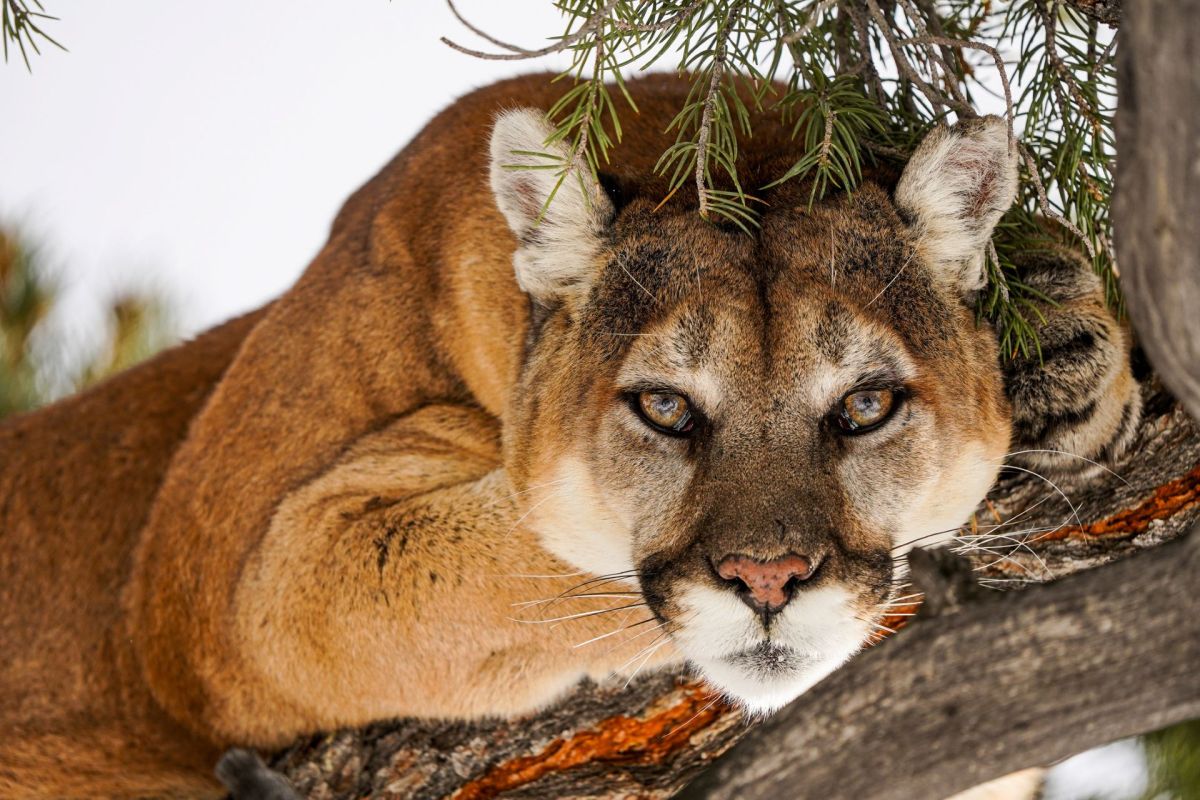
Living near an apex predator may sound dangerous, but new research suggests having mountain lions on Washington state's Olympic Peninsula can actually make life safer for people, too.
Researchers found that deer-vehicle collisions dropped by as much as 76% in places with the strongest cougar presence, revealing an unexpected public-safety upside to predator conservation, according to Current Biology.
What's happening?
Research indicates that mountain lions are reshaping how deer move through the landscape.
The apparent effect is not mainly that the cats are killing enough deer to substantially shrink the population. Instead, deer seem to change when they travel and which areas they use in response to the predators.
Lead author Justin Suraci, a scientist at the California-based research group Conservation Science Partners, and his colleagues used data from 503 camera traps and 59 tracked mountain lions collected through a long-term Panthera project conducted with multiple Native American tribes and nations.
In areas used by mountain lions, deer became more active during the day, but they were 15% less likely to use places with dense road networks and were 86% more likely to stay in remote habitat farther from development.
TCD Picks » Quince Spotlight
💡These best-sellers from Quince deliver affordable, sustainable luxury for all




The team then mapped those behavioral shifts onto 3.1-by-3.1-mile grid cells and compared them with crash records, finding the biggest reductions in deer-car collisions where mountain lion presence was highest.
Why does it matter?
Crashes involving large animals can be deadly, costly, and traumatic for the people in the vehicle. The study now adds to work on how recovering carnivore populations may affect deer-related crashes in other parts of the United States.
These results suggest that healthy ecosystems can offer direct protection to nearby communities by reducing crash risk and cutting costs for families, insurers, and local economies.
Mountain lions are often discussed mainly in the context of threats to livestock, pets, or people, but this study points to a different benefit: their direct influence on prey behavior.
TCD Picks » Quince Spotlight
💡These best-sellers from Quince deliver affordable, sustainable luxury for all
As Suraci explained to AFP, "You can put a dollar amount on how much a rancher loses when wolves kill their cows, and people are putting dollar amounts on those things. But if we don't put a dollar amount on the services [these animals provide], or at least articulate those services, they get perceived as not existing."
As study author Mark Elbroch, Panthera's puma program director, explained to AFP, "Research like this… helps people want to live alongside cougars."
This kind of long-term research can also give wildlife managers, transportation planners, and local leaders better information for decisions about habitat protection, land use, and road safety. It similarly gives conservation groups stronger evidence that protecting predators can produce tangible benefits for human communities.

Get TCD's free newsletters for easy tips, smart advice, and a chance to earn $5,000 toward home upgrades. To see more stories like this one, change your Google preferences here.