


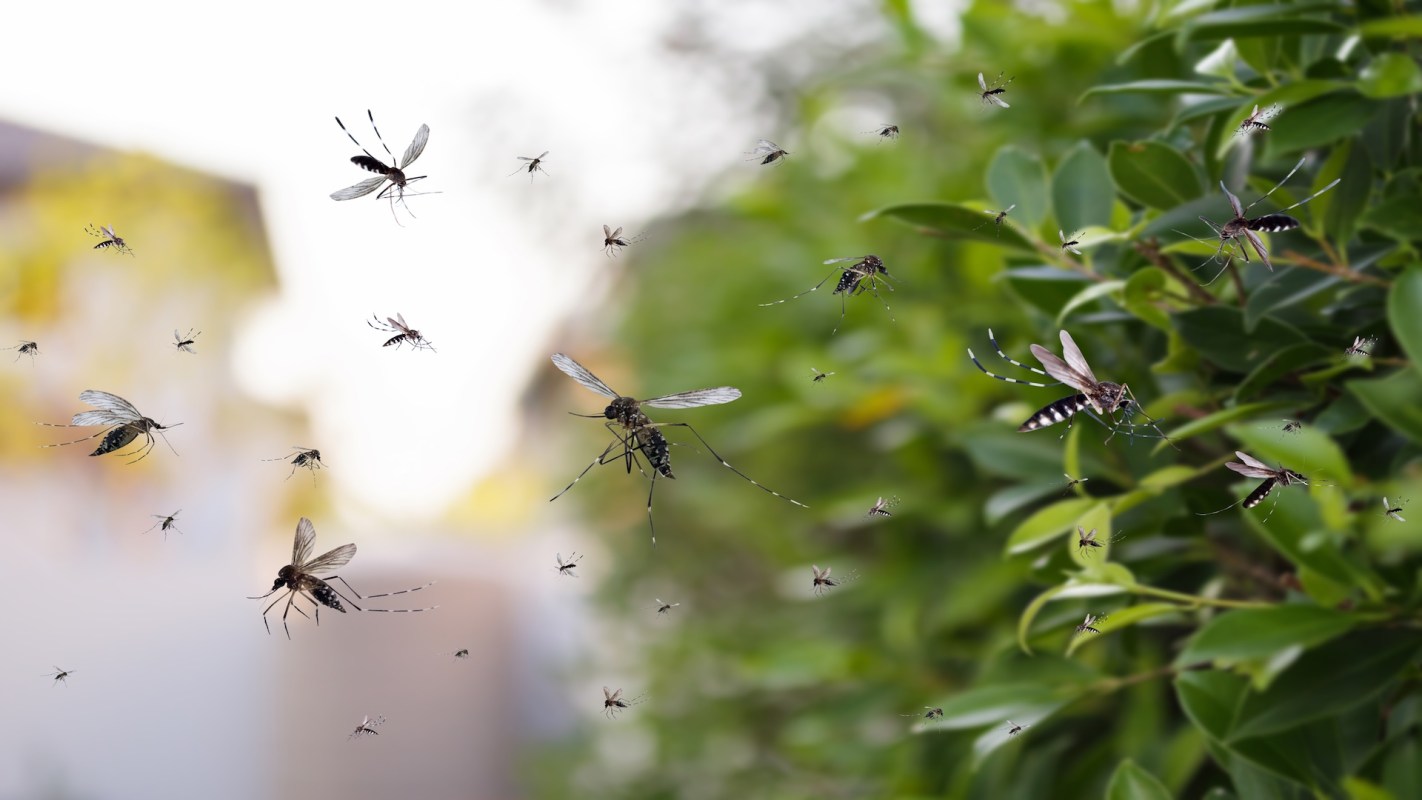
New research shows that whether mosquitoes zero in on you may depend more on the species around you than on some universal tendency to attract the pests.
In work out of Florida International University, scientists found that three common disease-carrying mosquito species did not agree on a favorite target, challenging the idea that some people are simply irresistible to every mosquito.
Here's what to know
Published in iScience, the study adds detail to earlier research on so-called "mosquito magnets" by suggesting that bite risk is complicated and not a yes-or-no trait.
As ZME Science reported, the researchers studied 119 volunteers in Miami and measured how appealing each person was to three mosquito species, Aedes aegypti, Aedes albopictus, and Culex quinquefasciatus.
Because Culex mosquitoes are most active at night, volunteers wore nylon sleeves for 12 to 16 hours so their scent could be collected and tested later. For the two daytime-biting Aedes species, participants used an olfactometer that let mosquitoes fly toward a forearm's odor without allowing them to bite, per ZME Science.
The team analyzed chemicals coming off the volunteers' skin and found that attraction did not appear to hinge on one shared scent cue. Instead, each mosquito species seemed to respond to its own odor preferences.
TCD Picks » Quince Spotlight
💡These best-sellers from Quince deliver affordable, sustainable luxury for all




The three species showed little agreement in whom they preferred. Being highly attractive to one mosquito type did not necessarily translate to the others, and no participant ranked as highly attractive to all three.
These results may help explain why two people sitting close together can have very different experiences, with one getting covered in bites and the other barely bothered. The difference may stem from a combination of skin chemistry and the bacteria living on the skin, which break down sweat and oils into airborne compounds.
"We want to understand what people's risks are for being bitten because all of these mosquitoes that we studied are vectors of disease," Matthew DeGennaro, a neurogeneticist and senior author of the study, told Science News, per ZME Science.
Where can I learn more?
These stories take a closer look at why mosquitoes go after some people, how their behavior is changing, and what researchers are doing about it.
• Researchers are finding that why mosquitoes keep choosing the same people has little to do with blood type.
• A researcher who endured 32,000 mosquitoes showed a next-gen repellent sharply limited bites in testing.
• Scientists found that mosquito access to sugary plant nutrients may shape how diseases spread.

Get TCD's free newsletters for easy tips, smart advice, and a chance to earn $5,000 toward home upgrades. To see more stories like this one, change your Google preferences here.






