


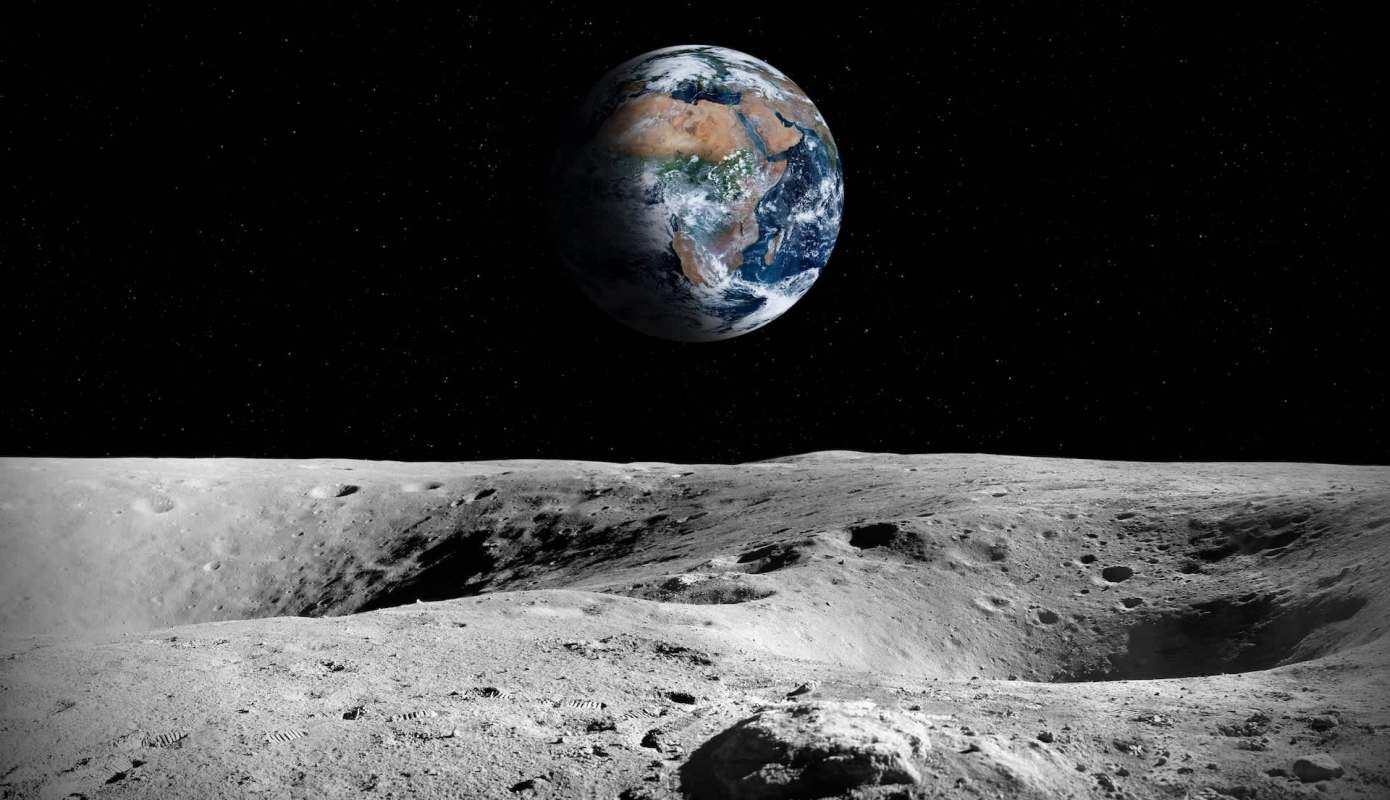
Experts say future lunar explorers may be able to put some of the equipment abandoned on the moon to good use — bringing a whole new meaning to the idea that one person's trash may be another's treasure.
Here's what to know
More than 140 lunar missions have delivered seven rovers and 12 people to the moon's surface, leaving behind landing gear, scientific instruments, toolboxes, and other equipment, according to Popular Science.
Dating back to the 1950s, the missions have reportedly abandoned roughly 206 tons — or 412,000 pounds — of this material. And while on Earth most waste continues to be an ever-growing challenge, on the moon, it could represent an important opportunity.
Aidan Cowley, who serves as a science officer with the European Space Agency, told Popular Science that future missions might benefit from it.
"Rather than bringing things here with you or mining them on the moon, you could actually reuse the old equipment in the same way we recycle stuff down here on Earth," Cowley explained.
He also noted that his agency already has plans to use 3D printing to transform used equipment into new materials.
TCD Picks » Quince Spotlight
💡These best-sellers from Quince deliver affordable, sustainable luxury for all




What else can be done?
The moon's punishing environment, which degrades the debris, may actually be helpful too.
A combination of intense radiation, sunlight, and dramatic temperature swings steadily damages equipment left on the lunar surface, with tiny rock fragments called micrometeorites adding to the wear.
According to Cowley, this could help scientists better understand how lunar environments impact materials.
He told the science news outlet that seeing how repeated micrometeorite collisions affect equipment "might allow us to produce better solar cell or solar panel protection, so they don't get degraded for humans when humans may eventually live on the moon."
What's next?
Some scientists planning for lunar living say that reducing, reusing, and recycling equipment and waste will also be key because launching materials up into space is so costly.
"Every ounce you take up, you want to be able to fully utilize, because that's money," former NASA chief scientist Jim Green told Chemical & Engineering News in July.
NASA researchers are also exploring how to create recyclable composite materials from biodegradable polymers and lunar soil. The manufacturing materials could be sustainably made and reused, saving limited lunar real estate from stacking up with trash.
While the implementation of these sorts of strategies on the moon may seem far off to the average layperson, learning more about how to repurpose debris and make gear more resilient to degradation could inform sustainability on Earth and in space.

Get TCD's free newsletters for easy tips, smart advice, and a chance to earn $5,000 toward home upgrades. To see more stories like this one, change your Google preferences here.






