


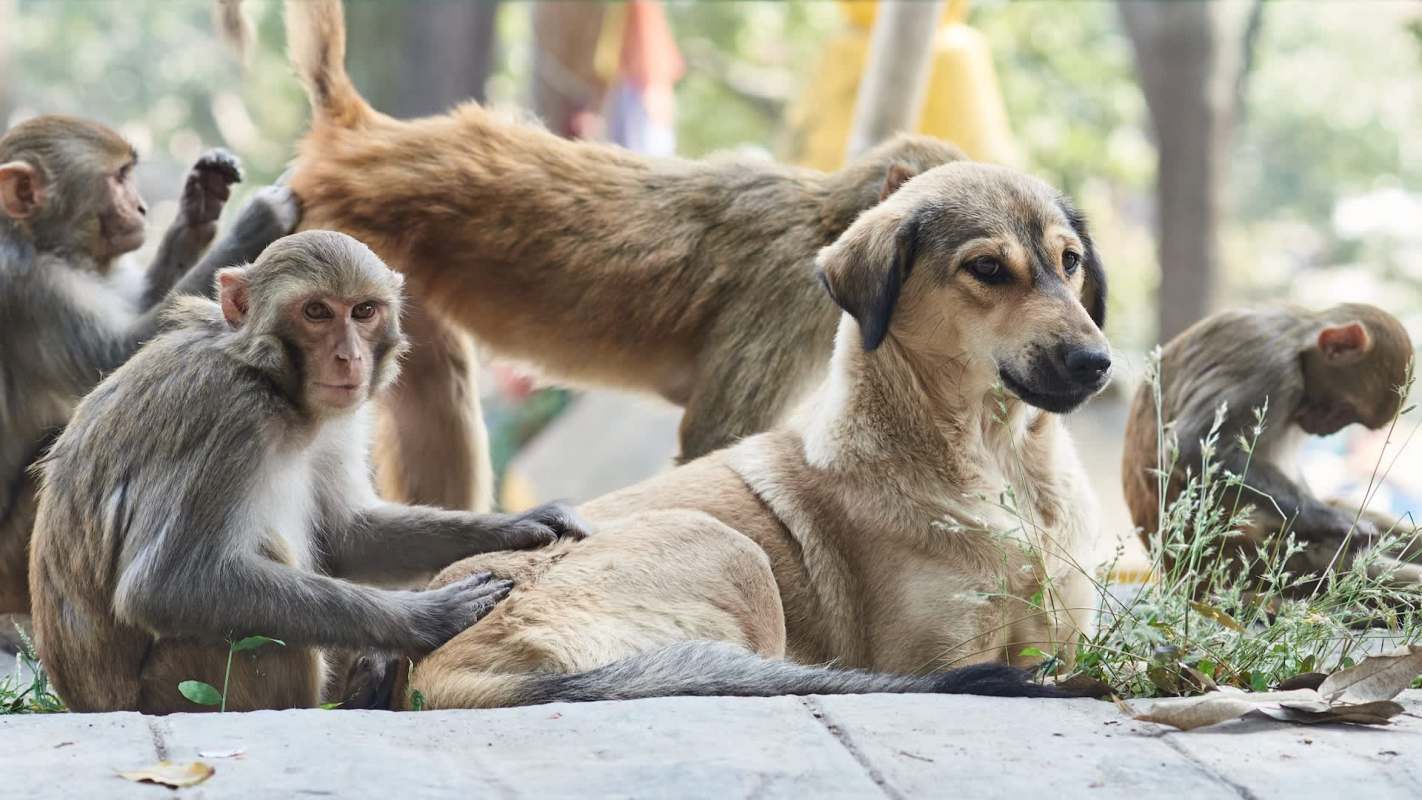
Humans may not be as unique as we like to think when it comes to befriending other species of animals.
According to a broad new review, monkeys and apes sometimes show unexpectedly affectionate behavior toward other species through play, grooming, and, in rare cases, even prolonged caregiving.
What happened?
Led by anthropologists at the University of Oxford, the study assembled 303 documented examples of primates interacting with animals from other species, according to Popular Science.
Published in the journal Primates, the paper combined existing research with 66 surveys of primatologists and 58 media reports, making it the first review of its kind.
Rather than being examples of animals simply coexisting, many of the reported encounters looked distinctly social in nature. For instance, researchers noted instances of Sri Lankan tufted gray langurs touching squirrels, snub-nosed monkeys in China playing with domesticated pigs, and capuchins in Brazil caring for a baby marmoset for months.
Study co-author and anthropologist Cyril Grueter said these behaviors should not be treated as direct equivalents of human pet keeping. Even so, he said the pattern may reflect something far older in primate evolution.
TCD Picks » Quince Spotlight
💡These best-sellers from Quince deliver affordable, sustainable luxury for all




"They may represent some of the evolutionary building blocks from which human-animal companionship eventually emerged," Grueter said, per Popular Science.
Why does it matter?
Cross-species relationships are not unusual in nature, but they are often driven by practical benefits.
For example, some fish move in mixed schools for protection, while ostriches and zebras roaming together benefit from their different ways of detecting danger. These are examples of what experts call mutualism.
However, of the primate cases cited in the study, many do not appear to offer such obvious mutual payoffs. A monkey grooming another animal or resting beside it does not fit neatly into the usual survival-based explanations of such interspecies relationships.
Instead, the study's findings show that curiosity, tolerance, and caregiving toward other species may have deep evolutionary roots and that the impulse to bond with animals may not be exclusively human.
The findings also expand how scientists think about empathy and social behavior in our closest relatives, suggesting the emotional foundations of companionship may have emerged long before modern humans.
What's being done?
By pulling together reports from researchers and media accounts, the team created a foundation for studying how widespread these bonds really are. Now, the next step for researchers is to document these interactions in a more systematic way, allowing for a more detailed and nuanced analysis of the primates' behaviors.
Aside from revealing previously unknown traits among primates, the researchers' work could also have practical value. For example, future analysis may improve care in places that house multiple species, including wildlife sanctuaries and zoos, where understanding which species can safely and comfortably coexist is important for animal welfare.
The findings may also encourage scientists to look beyond obvious survival benefits when studying animal behavior. Rather than assuming every interaction is transactional, researchers may begin asking whether some species are capable of forms of social curiosity and companionship once thought to be the exclusive domain of humans.
"Humans have long been considered unique in forming close social relationships with other species," Grueter said. "Our study shows that many primates also display remarkable curiosity, tolerance, and even caregiving towards animals that are not their own species."

Get TCD's free newsletters for easy tips, smart advice, and a chance to earn $5,000 toward home upgrades. To see more stories like this one, change your Google preferences here.






