


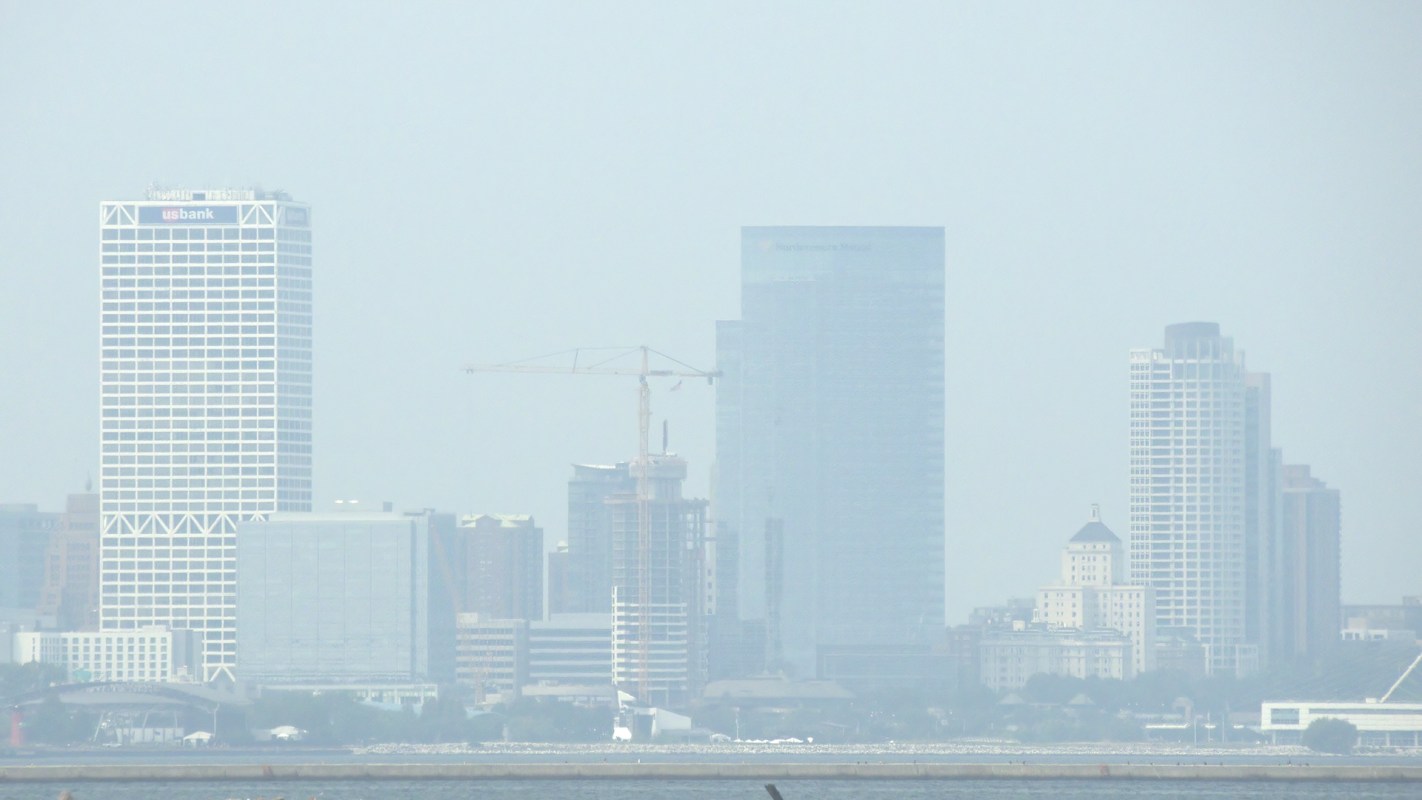
Clear skies over Milwaukee this week are giving a misleading picture of local air conditions.
On June 3, the area's first air quality alert of 2026 was issued after an uncommon weather setup kept ozone concentrated near the surface rather than allowing it to lift higher into the atmosphere.
What's happening?
The alert from the National Weather Service was not driven by Canadian wildfire smoke, which has not yet reached levels strong enough to spread across the Midwest.
Instead, forecasters pointed to ozone. Benjamin Sheppard, a meteorologist with the National Weather Service, said a subsidence inversion pattern, a layer of warm, sluggish air, was preventing that pollution from dispersing upward, the Milwaukee Journal Sentinel reported.
Ozone is created when nitrogen oxide meets sunlight, and Milwaukee's forecast called for abundant sun through Wednesday and Thursday. With bright skies fueling the reaction and little air movement to carry pollution away, more of that ozone can linger in the air near ground level.
Smoke may become more of an issue later on. As of June 3, only a small number of fires near Wisconsin's border were under watch, and most were being contained, but two Ontario wildfires east of Lake Nipigon and east of Thunder Bay were considered "out of control" and posed the biggest future risk for smoky conditions.
TCD Picks » Quince Spotlight
💡These best-sellers from Quince deliver affordable, sustainable luxury for all




Why does it matter?
Because people breathe it directly, ground-level ozone can harm the respiratory system. The American Lung Association likens the effect to a sunburn for the lungs.
Air quality alerts are meant to warn people that invisible pollution may be present at unhealthy levels, even on days that look ideal for spending long hours outside.
Many people now associate poor air quality with wildfire smoke, but stagnant air and strong sunlight can also create unhealthy breathing conditions.
Natural Resources Canada is projecting wildfire conditions through July, and its outlook says provinces bordering the Great Lakes are likely to see more severe wildfires than usual this year. Manitoba, in particular, is expected to face especially severe fire conditions that can help flames spread quickly.
What can I do?
Do not judge air quality by visibility alone. Blue skies do not always mean clean air, and checking official alerts from the National Weather Service and other local agencies can help people make safer choices about their day.
On air quality alert days, it may be wise to limit prolonged or strenuous outdoor activity, especially during sunny periods when ozone formation is strongest. That can be particularly important for people with respiratory sensitivities.
This alert is not mainly about smoke, but wildfire haze could still affect the region later in the summer, and on those days, keeping windows shut can help limit indoor exposure.

Get TCD's free newsletters for easy tips, smart advice, and a chance to earn $5,000 toward home upgrades. To see more stories like this one, change your Google preferences here.






