


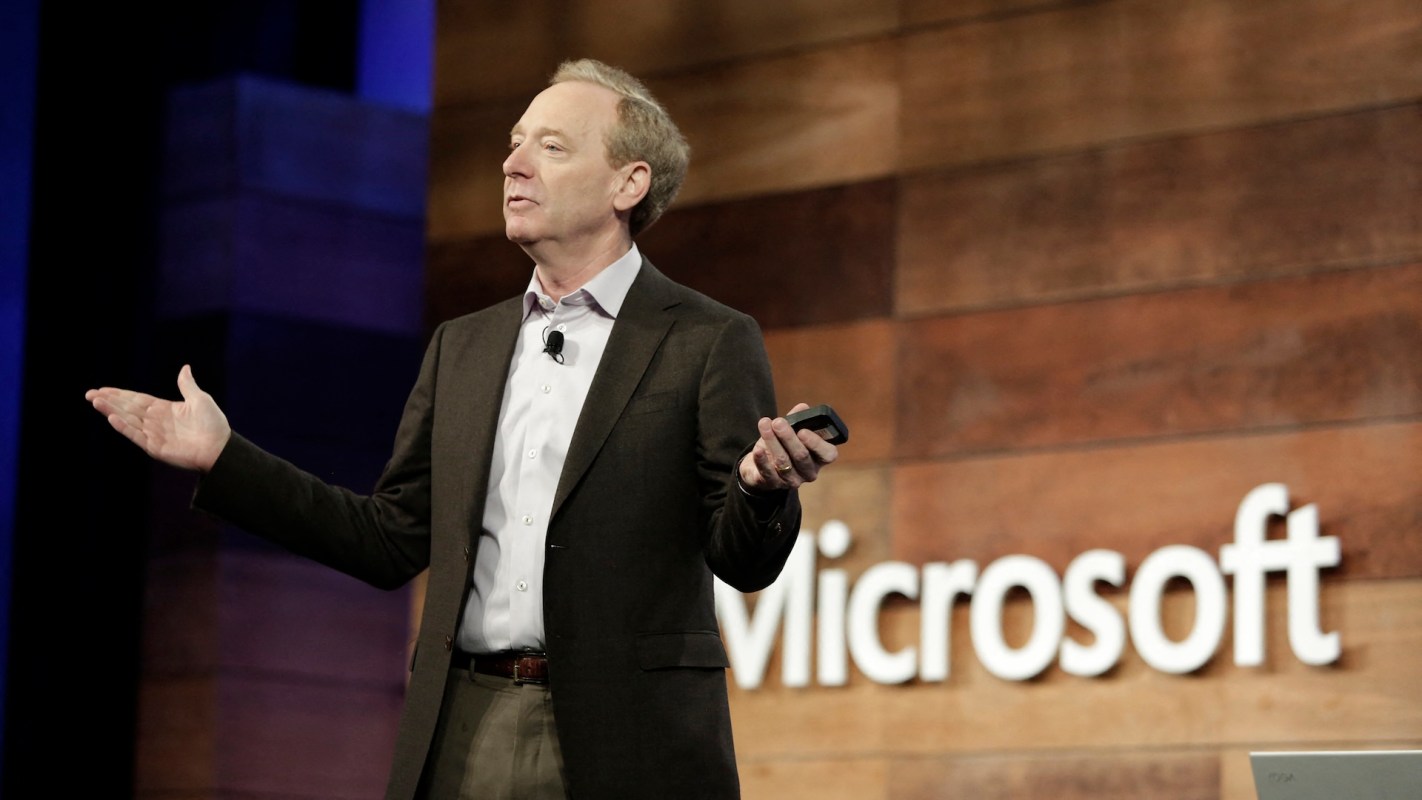
Brad Smith, Microsoft's president, is urging governments to quickly implement AI rules, including "kill switches" and third-party testing, according to the BBC.
Coming from a leader at one of the world's biggest tech companies, that stance diverges sharply from President Donald Trump's view that the industry should largely regulate itself.
Here's what to know
In remarks published Oct. 12, Smith argued that AI should be governed by global safety standards.
On the BBC's Big Boss Interview podcast, he described the technology as "both a tool and a weapon." Smith stated companies should be legally required to file incident reports, notify victims after AI-related breaches, and submit some products for outside review before launch.
To show how little oversight AI faces today, Smith compared it with ordinary products.
"Right now, your washing machine is subject to more safety rules than AI. Every carton of milk that you see in the grocery store is subject to safety rules and inspection," he observed.
TCD Picks » Quince Spotlight
💡These best-sellers from Quince deliver affordable, sustainable luxury for all




Trump has taken the opposite tack, resisting stricter limits partly because he fears American companies could lose ground to Chinese rivals. The BBC stated that he has said that "whoever wins AI, wins."
Leaders at Anthropic, OpenAI, and Google DeepMind have endorsed an AI slowdown, and other experts have warned the technology could threaten humanity.
"Let's get started today," Smith said on the podcast.
More background
Smith also argued that the United Kingdom is well positioned to help shape global AI rules. Its AI Security Institute, established under former Prime Minister Rishi Sunak's government as the AI Safety Institute, could help immensely.
Smith held that the tech world sees the U.K. as the leading country for this kind of expertise and tied the risk directly to real-world cybersecurity.
He brought up "AI agents that have escaped human control" and models "so powerful that they're putting the world's cybersecurity at risk."
That could mean tougher disclosure expectations when AI systems improperly access accounts, networks, or sensitive data.
Predictive AI can help optimize electric grids and forecast energy demand. But AI, especially generative AI, relies on data centers that consume large amounts of electricity and water for cooling. People continue to raise concerns across the U.S. and beyond about grid strain, higher energy bills, security vulnerabilities, and other unintended consequences if deployment moves faster than safeguards.
Smith suggested the U.K. could serve as an effective middle ground for setting standards because Washington sees London differently from Brussels, which is often viewed as the unofficial capital of the European Union.
What's being done?
In late September, Trump brought executives from OpenAI, Anthropic, Nvidia, SpaceX, Meta, and Google to the White House, where they signed a "morally binding" document.
Under that agreement, the companies claimed they would use "independent auditors" to verify that their AI systems are functioning as intended and to make sure they do not "hack or access technical systems in unintended ways."
Smith said Microsoft is "happy to sign it," and he applauds the move. Even so, Smith called the White House pledge only a starting point.
"It's a good step, it's a necessary step … But I don't think it's sufficient any longer."
Where can I learn more?
AI regulation continues to be on the minds of many people.
• In Congress, lawmakers pushed a controversial AI plan despite climate and health warnings.
• As AI use increased, backlash over jobs, water, and electricity use kept growing.
• At the U.N. climate summit, debate raged over AI's role as a positive force.

Get TCD's free newsletters for easy tips, smart advice, and a chance to earn $5,000 toward home upgrades. To see more stories like this one, change your Google preferences here.






