


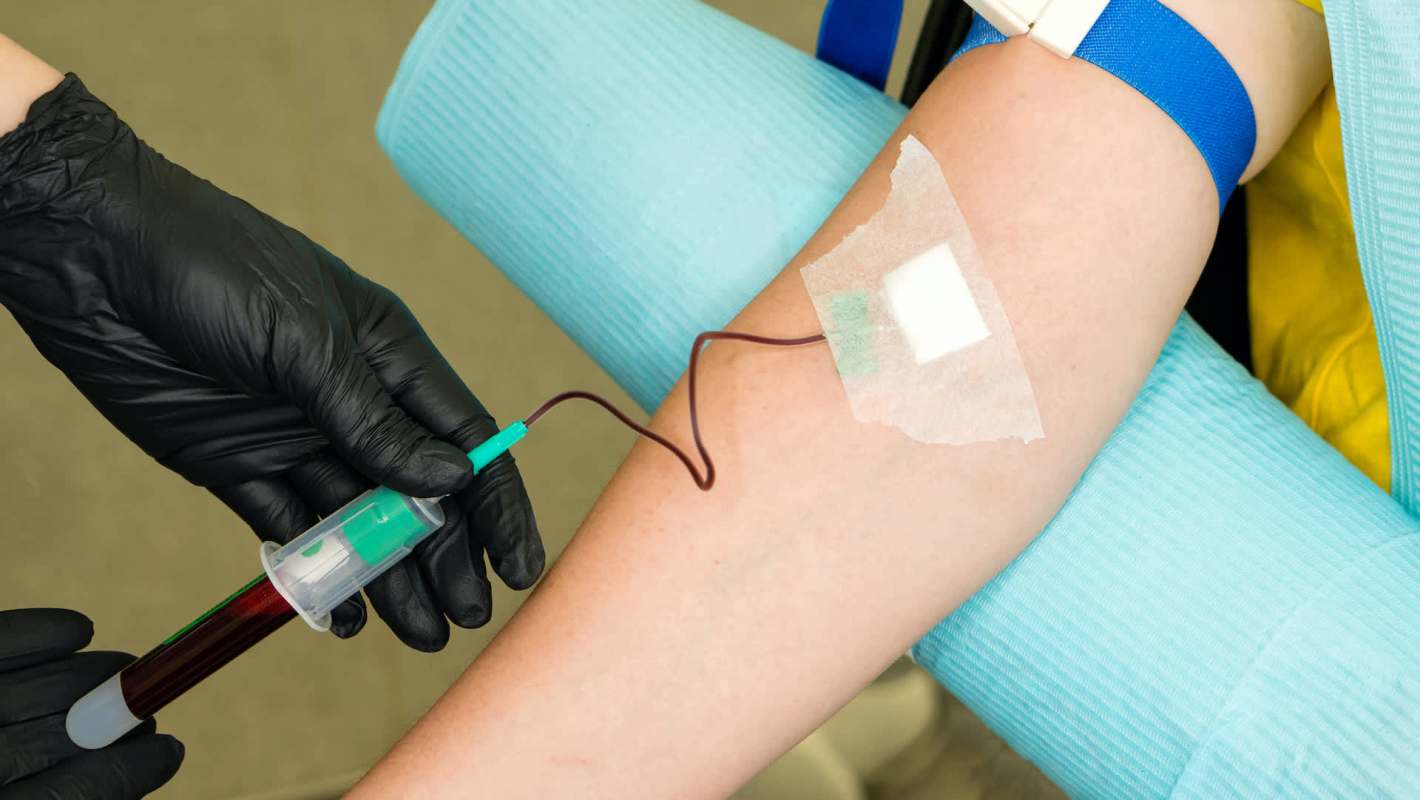
A study found that when microplastics come into contact with blood, they can produce molecules that may damage cells.
Here's what to know
In a study recently published in the journal Nature, researchers from Columbia University and the University of California, Berkeley, examined microparticles made from several common plastics, including polystyrene, polyethylene, and polypropylene.
They found that contact with water could cause the surfaces of these particles to become chemically reactive, according to a university news release.
"Water molecules become chemically active when they come into contact with plastic, which is hydrophobic," Columbia professor Wei Min said in the release. "Contact between the water and plastic creates an environment that facilitates electron transfer and the formation of reactive radicals. When plastics fragment into smaller particles, their increasing surface-to-volume ratio creates more of these chemically active areas."
New Scientist reported that, in water, those charges were found to pull DNA and other biological material toward the particles' surfaces.
The researchers believe their findings could be significant because human blood contains a great deal of water. "The new research suggests that microplastics that enter the bloodstream or cells could remain chemically active in this water-rich biological environment," according to the news release.
TCD Picks » Quince Spotlight
💡These best-sellers from Quince deliver affordable, sustainable luxury for all




When the team repeated experiments in blood serum, the radical-producing effect was weaker but did not disappear. Min told New Scientist it was "still detectable," raising concern about what could happen when microplastics circulating in blood interact with tissues over time.
More background
Scientists have continued to investigate potential links between microplastics and a variety of health concerns, including poor cognition and cardiovascular disease. Lab studies have connected the particles to inflammation, cell death, and DNA damage — effects that reactive oxygen species, or ROS, may help drive.
"ROS are textbook examples of the kinds of molecules that can damage animal and human tissue," Naixin Qian, a postdoctoral researcher and the study's lead author, said in the release.
Even so, this is still an evolving area of public health research, not proof that microplastics are directly causing disease in any specific person. The study took place in controlled lab conditions rather than in living humans. And, as New Scientist reported, although microplastics have been detected in blood, claims that they are present throughout the body may sometimes reflect contamination or mistaken positives.
What's being done?
Researchers have also found that adding a surfactant — a chemical that loosens the forces binding water molecules together — may reduce the production of potentially harmful reactive molecules. This could be relevant in the human body, where certain fats can act in a similar way.
Matthew Campen, a researcher not involved with the study, told New Scientist, "Microplastics hit your lung, and they are surrounded by surfactants immediately," adding, "In most situations that I can imagine in a biological system, they will be surrounded by those lipids. The big concern is [whether] this is getting worse over time, and we really need to get a handle on what the health effects are, or could be, so that we can avoid exposures."
Min said the study results could also help researchers think about safer material design. In the tests, polyethylene and polypropylene were more active radical generators than more hydrophilic plastics such as PET, suggesting scientists may be able to develop plastics that produce fewer radicals.
Campen cautioned that such changes may come with trade-offs, noting that the plastics with the lowest radical-generating activity may also be the ones that break down more slowly in the environment. As the researcher posed to New Scientist, "How do you make that trade-off?"
Where can I learn more?
Microplastics and their effects on human health have long been under scrutiny:
• Scientists developing microplastics removal from blood have said the need is already urgent.
• At the University of Cincinnati, microplastics' potential threat to heart health is driving a $3.3 million study.
• In mouse experiments, brain blood flow faltered after microplastics clogged tiny vessels.
• Scientists are still sorting out how worried we should be about microplastics.

Get TCD's free newsletters for easy tips, smart advice, and a chance to earn $5,000 toward home upgrades. To see more stories like this one, change your Google preferences here.






