


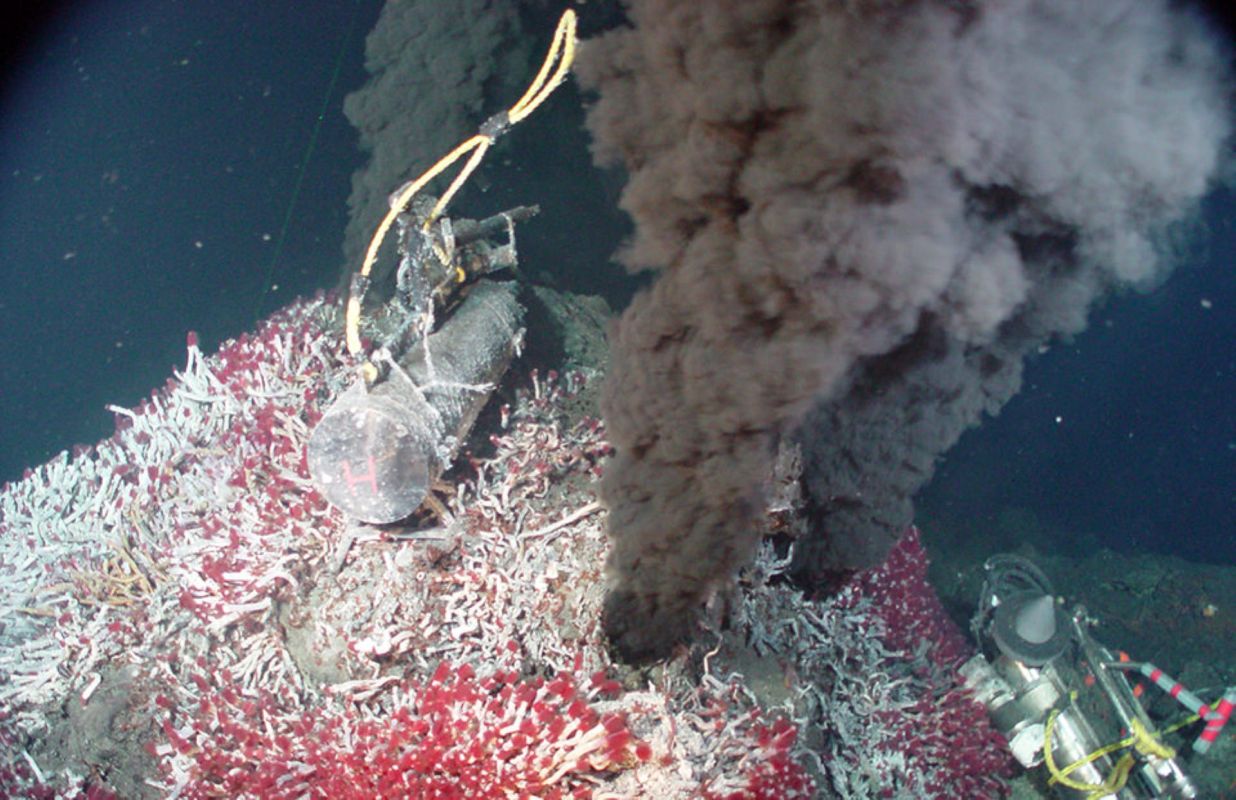
Microplastics are showing up in yet another place once thought to be far beyond the reach of everyday pollution: deep-sea hydrothermal vents more than 2,000 meters (6,562 feet) below the ocean's surface.
What's happening?
At vent fields in the North Fiji Basin of the southwestern Pacific and along the Central Indian Ridge in the Indian Ocean, a team from the Korea Research Institute of Bioscience and Biotechnology examined snails and mussels from hydrothermal vent communities, according to Science Alert.
Researchers found the tiny plastic fragments inside animals living around these remote vent ecosystems, adding another entry to a list that already includes ancient rocks, human bones, and wildlife across the planet. The findings showed microplastics in 11 of the 12 animals tested — about 92% — as published by Water Research.
Marine biologist Se-Joo Kim of the Korea Research Institute of Bioscience and Biotechnology said, "Plastic pollution has now spread even to deep-sea hydrothermal vent ecosystems that were once considered among the most isolated environments on Earth."
Across the board, the animals contained an average of 3.42 plastic pieces each, and polystyrene appeared more often than any other material. The researchers also found that feeding style and location seemed to influence where the particles accumulated.
In the seafloor-grazing snails, plastics built up in digestive organs. In the filter-feeding mussels, the particles were distributed more evenly through the animals' tissues. Snails and mussels from the Indian Ocean site had much higher microplastic levels than those from the southwestern Pacific, suggesting that nearby pollution sources, ocean circulation, and river systems may all influence how plastic reaches the deep sea.
TCD Picks » Quince Spotlight
💡These best-sellers from Quince deliver affordable, sustainable luxury for all




Why does it matter?
Because hydrothermal vents are some of Earth's most extreme and remote habitats, the discovery of microplastics there suggests that few ecosystems, if any, remain beyond the reach of plastic waste from land or surface waters.
There is also a human health concern as scientists are still working to understand the full effects of microplastics in living tissue since particles have already been detected in the human body and throughout the food chain.
As the researchers wrote, "Across the four vent species examined, microplastics were detected in nearly all individuals, but abundance varied considerably among them."
What's being done?
The study gives scientists a clearer picture of where microplastics are ending up, which could help improve monitoring systems and strengthen protections for vulnerable ecosystems. Because hydrothermal vents are so deep and difficult to access, cleanup is not considered a practical solution.
That leaves prevention as the main strategy. Reducing plastic waste before it enters rivers and oceans, improving recycling systems, and replacing some conventional plastics with safer alternatives are the goals with large-scale policy and industry changes likely to have the biggest impact.
Cutting back on single-use plastics, choosing reusable containers, supporting local and national efforts to improve waste management, and seeking out products with less unnecessary plastic packaging can help reduce the flow of new plastic into the environment.
"Our findings provide important scientific evidence for establishing future deep-sea environmental monitoring systems and conservation policies," Kim said, indicating their research may serve as a guide for future conservation efforts for places most people never see.

Get TCD's free newsletters for easy tips, smart advice, and a chance to earn $5,000 toward home upgrades. To see more stories like this one, change your Google preferences here.






