When thinking of creatures that can live for hundreds of years, one's mind likely turns to the supernatural, conjuring images of vampires and other long-lived ghouls.
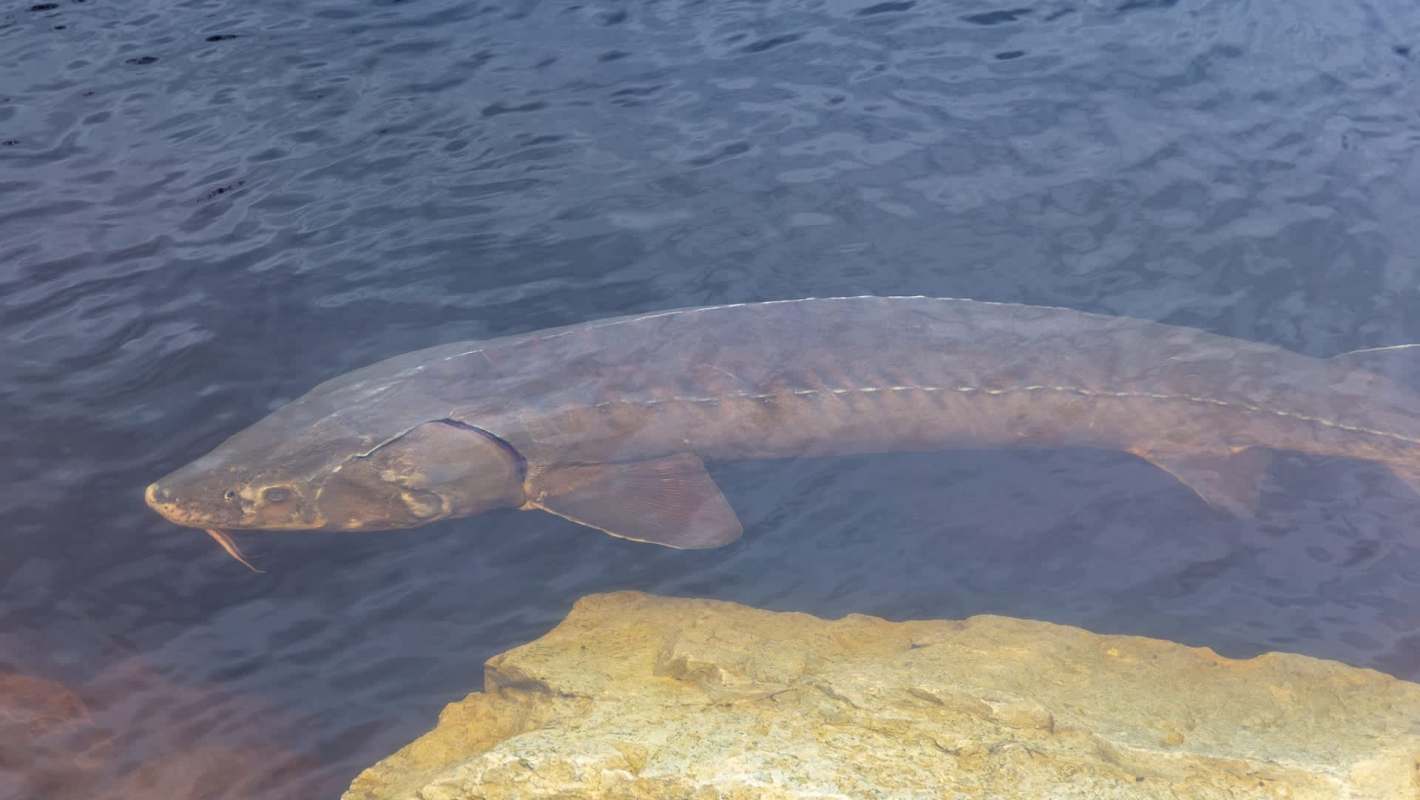
Based on new research, however, a new creature could be joining the ranks of the centuries-old: the Michigan lake sturgeon.
Researchers now think Michigan lake sturgeon may reach ages far beyond earlier estimates of around 150 years, according to an article appearing in The Pioneer.
A new study indicates that some lake sturgeon in the Great Lakes could survive for more than 400 years, a range that would put them among the longest-lived vertebrates on Earth.
What happened?
The new estimate is based on 44 years of records drawn from five Great Lakes lake sturgeon populations. The Michigan waters included in the research were Black Lake, the Sturgeon River, and the St. Clair River.
The findings challenge earlier assumptions about how long these fish can survive. Rather than topping out at around an already-impressive 150 years, some sturgeon may persist for multiple centuries, making them living links to eras that existed long before modern industry and development reshaped the Great Lakes region.
TCD Picks » Quince Spotlight
💡These best-sellers from Quince deliver affordable, sustainable luxury for all




Vertebrates — animals with backbones, including fish, birds, reptiles, and mammals — rarely reach such extreme ages. If the estimates hold up, lake sturgeon would join a very small group of these animals capable of spanning multiple human lifetimes.
Why does it matter?
The study could significantly reshape conservation planning. Losing even a small number of these fish could mean the irreplaceable loss of animals that first hatched hundreds of years ago, before the United States even existed.
Making conservation even more challenging, recovery can be slow for species with very long life spans. When animals live that long, population changes may play out over decades rather than years, meaning that habitat quality, water conditions, and fishing pressure can have lasting consequences.
Additionally, female lake sturgeon do not reach reproductive maturity until they are between 14 and 33 years old, and they spawn only once every three to seven years.
Lake sturgeon are an important part of freshwater systems that support recreation, local economies, and regional ecosystems across Michigan and beyond.
What's being done?
The study points to the value of long-term monitoring. Researchers were able to reach these conclusions only because they had access to decades' worth of data collected across multiple sturgeon populations. That kind of patient tracking can reveal trends that shorter studies would miss.
The findings may also help guide future management decisions by showing that lake sturgeon should be understood on a much longer biological timeline. When a species can live for hundreds of years, restoration and protection efforts may need to account for very slow-moving population shifts.
Michigan's lake sturgeon were already seen as ancient fish. This study suggests they may be even more extraordinary: animals capable of surviving not just for decades, but for centuries, in some of North America's most iconic waters.

Get TCD's free newsletters for easy tips, smart advice, and a chance to earn $5,000 toward home upgrades. To see more stories like this one, change your Google preferences here.