


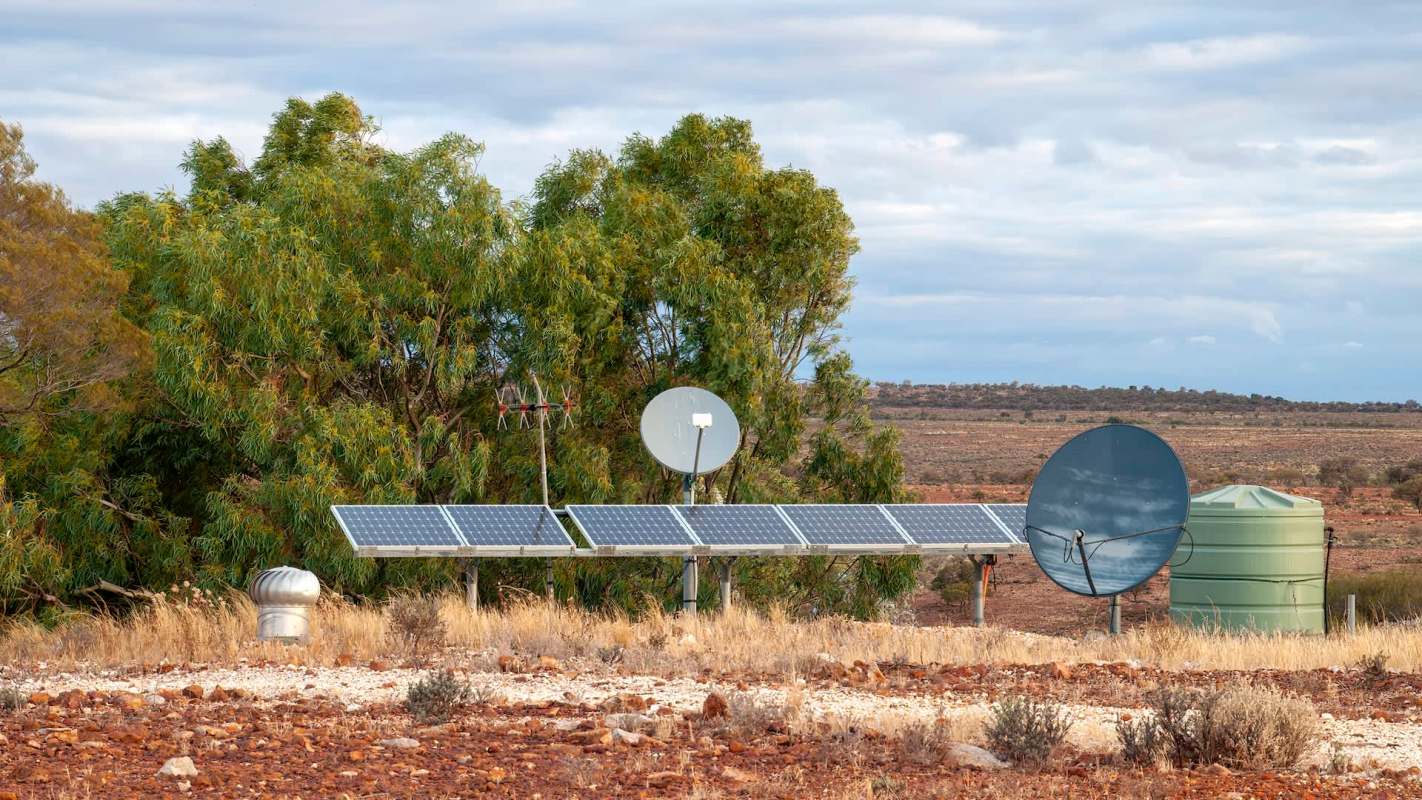
After using artificial intelligence to sketch out an off-grid solar build, a Michigan homeowner brought a revised version of the plan to the "r/solar" subreddit to see how it would hold up under outside scrutiny.
While their first Gemini-produced draft drew some backlash, the new plans mostly passed muster.
Here's what to know
In a Reddit thread, the homeowner described an off-grid setup for a 2,300-square-foot house with a basement built around an EG4 18k inverter, two EG4 PowerPro wall batteries, and 30 Atlas panels rated at 550 watts each.
For heating, the plan relied on a pellet stove, with the furnace set to fan-only mode to move air, while mini-splits were intended for summer cooling.
At about 16.5 kilowatts of solar, the proposed array was large for a residential system. Even so, commenters focused less on panel count than on whether the battery capacity and heating approach could make it through Northern Michigan's long, overcast winter periods.
For homeowners weighing a similar move, going solar is one of the best ways to save money on home energy. You can try EnergySage to get free solar installation estimates and compare quotes.
More background
Much of the feedback shifted away from sheer generation and toward what would happen when conditions got tougher.
"30 panels at 550W is a beefy setup, that should cover a lot even with northern winters being what they are," a user observed. "The pellet stove with the furnace on fan-only is a smart way to reuse existing ductwork, and the mini splits will sip power compared to central AC."
Save $10,000 on solar panels without even sharing your phone number Want to go solar but not sure who to trust? EnergySage has your back with free and transparent quotes from fully vetted providers that can help you save as much as $10k on installation. To get started, just answer a few questions about your home — no phone number required. Within a day or two, EnergySage will email you the best local options for your needs, and their expert advisers can help you compare quotes and pick a winner. |

In cold climates, heating is often the hardest part of the energy equation. Comfort and operating costs still depend heavily on how well warm air moves through the house and how much backup capacity is available. Most posters' concerns related to the latter.
Solar can lower utility bills, reduce dependence on volatile energy prices, and keep key home systems running more reliably, but only if the system is sized for real-world conditions, not ideal ones.
People are also turning to online communities to test AI-assisted planning before committing money. In this case, commenters raised questions about load shedding, generator sizing, and propane as part of the backup strategy.
What can be done?
For people still comparing options, EnergySage can be especially useful because it helps simplify a complicated purchase. With EnergySage's assistance, the average person can save up to $10,000 on solar purchases and installations. That kind of price transparency can make a big difference for a complex project.
More From EnergySage
💡Go deep on the latest news and trends shaping the residential solar landscape

It can also help to check EnergySage's solar map, which shows the average cost of a home solar panel system on a state-by-state level in addition to details on solar panel incentives for each state. Together, these resources can aid homeowners in getting the best price for rooftop solar panels and access available incentives.
Adding battery storage to a solar setup is one of the best ways to protect your home during outages, save money on energy, and go off-grid. It can also help households use more of their own solar power after sunset instead of relying on the grid or a generator. Homeowners can explore EnergySage for information about home battery storage options, including competitive installation estimates.
Where can I learn more?
For anyone eyeing a similar setup, there are practical trade-offs to consider regarding solar, batteries, and backup power.
• An off-grid homeowner dispels a common winter myth after two years running solar.
• EnergySage's former COO breaks down what actually drives solar costs for homeowners comparing quotes.
• In Australia, a homeowner says a 20kW solar setup made blackouts nearly invisible.

Get TCD's free newsletters for easy tips, smart advice, and a chance to earn $5,000 toward home upgrades. To see more stories like this one, change your Google preferences here.






