


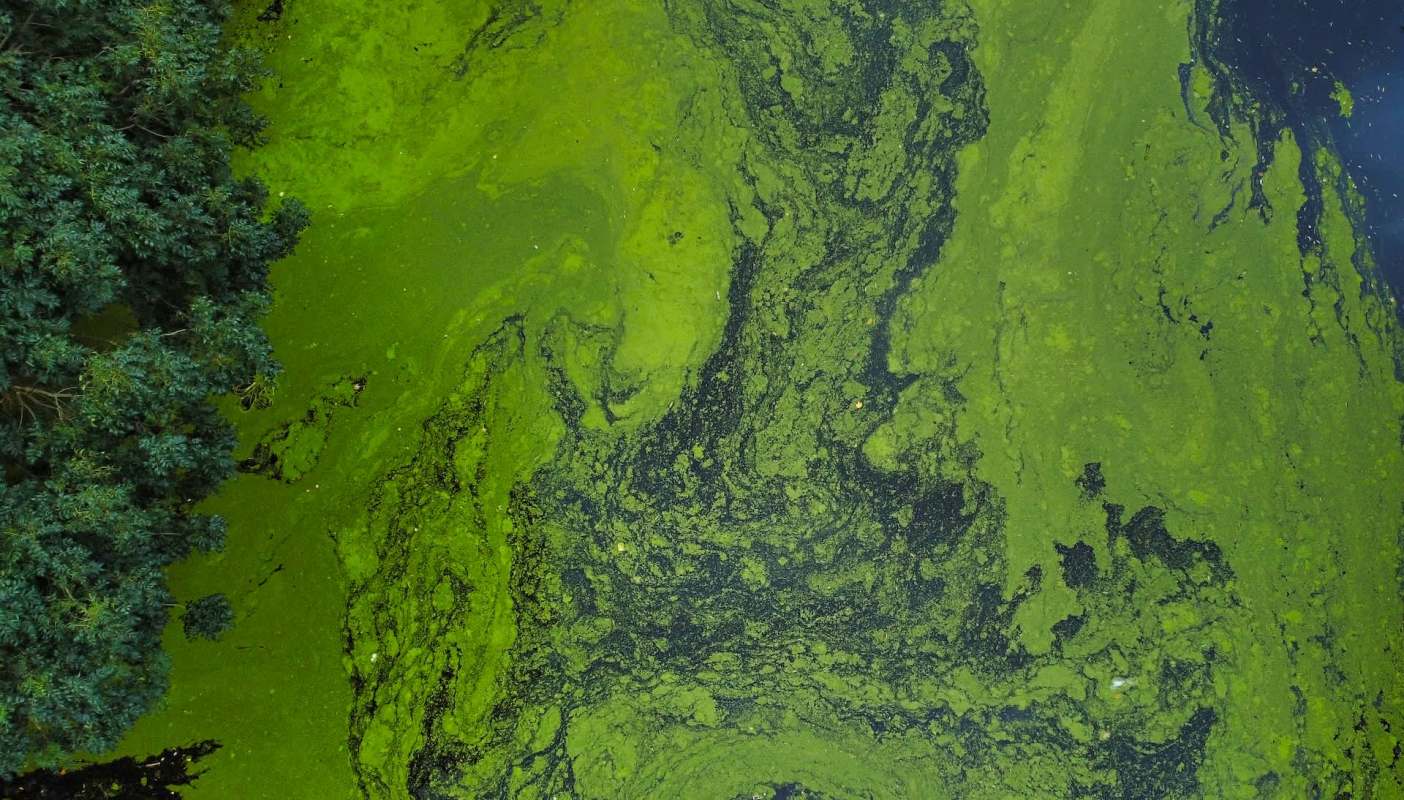
Nitrate, a pollutant tied to drinking water contamination and algal blooms, could one day be turned into something useful instead of being treated only as waste.
At the University of Michigan, chemists say they created a plant-inspired catalyst that can convert hard-to-break-down nitrate into ammonia, a key fertilizer ingredient, Earth.com reported.
Here's what to know
Published in the journal Nature Chemistry, the study, led by chemist Nathaniel Szymczak, found that an iron compound encircled by hydrogen bonds could break down nitrate under lab conditions.
The catalyst behaved differently depending on the setup.
When heated in solution, it removed one oxygen atom from nitrate and produced nitric oxide. Under blue LED light at room temperature, it removed all three oxygen atoms and yielded ammonia at an 85% rate, Earth.com noted.
Nitrate pollution is common because excess fertilizer often runs off farm fields into streams, lakes, and groundwater. Once there, it can contaminate drinking water and feed blooms that force beach closures.
TCD Picks » Quince Spotlight
💡These best-sellers from Quince deliver affordable, sustainable luxury for all




"Now we tend to overfertilize crops, and a huge majority of the fertilizer we apply actually leaches off with runoff into streams, groundwater, lakes, and oceans," Szymczak said, per Earth.com.
More background
Part of what makes nitrate so difficult to deal with is its chemical stability.
Its nitrogen atom is tightly bound to three oxygen atoms, and even metals that can remove oxygen often do not attach strongly enough to nitrate to begin the reaction.
To get around that, Szymczak's team looked to plants and adapted a strategy based on proteins that capture nitrate through hydrogen bonds.
"Biology has provided an awesome blueprint outlining the molecular details needed to reduce nitrate," Szymczak told Earth.com.
To test the concept, the researchers used zinc as a control metal. Because zinc cannot carry out the same reduction chemistry as iron, it helped reveal what the hydrogen bonds were doing on their own.
Versions of the catalyst with those bonds bound nitrate up to 10 million times more strongly than versions without them while also weakening the bond that must break first.
If the concept can be adapted for real-world water treatment, it c
ould provide a more circular approach by converting a harmful contaminant into a useful chemical instead of simply filtering it out and leaving behind concentrated waste.
What's being done?
This remains early-stage bench chemistry.
The reactions took place in small flasks using organic solvents and carefully prepared nitrate salts, not in the more complex water conditions found in wells or wastewater plants.
In the heat-driven setup, the best run converted 87 nitrate molecules per catalyst molecule.
In the light-driven version, the catalyst turned over 5,000 nitrate molecules per catalyst molecule at very low loading. When researchers removed the hydrogen-bond donors, the yield dropped to just 2%.
"I think that large-scale applications of this approach in a wastewater plant would be fairly challenging at the moment due to compatibility with other products within wastewater," Szymczak said, per Earth.com.
Practical nitrate removal still relies on established tools such as ion exchange and reverse osmosis, while improved fertilizer management can reduce runoff before it reaches waterways.
"We found that just by having well-positioned hydrogen bonds, you can actually change the bonding structure in nitrate and force a subsequent reduction step," Szymczak told Earth.com.
Where can I learn more?
These articles explore other efforts to rethink pollution, fertilizer, and chemical production. They cover cleaner ammonia, lower-fertilizer crops, and new treatment methods for contaminated water and soils.
• In Utah, efforts to make cleaner ammonia with nuclear energy could cut fertilizer emissions.
• In wheat research, a hidden plant ability could sharply reduce synthetic nitrogen use.
• In China, engineers have created an ingenious method for cleaning harmful wastewater.

Get TCD's free newsletters for easy tips, smart advice, and a chance to earn $5,000 toward home upgrades. To see more stories like this one, change your Google preferences here.






