


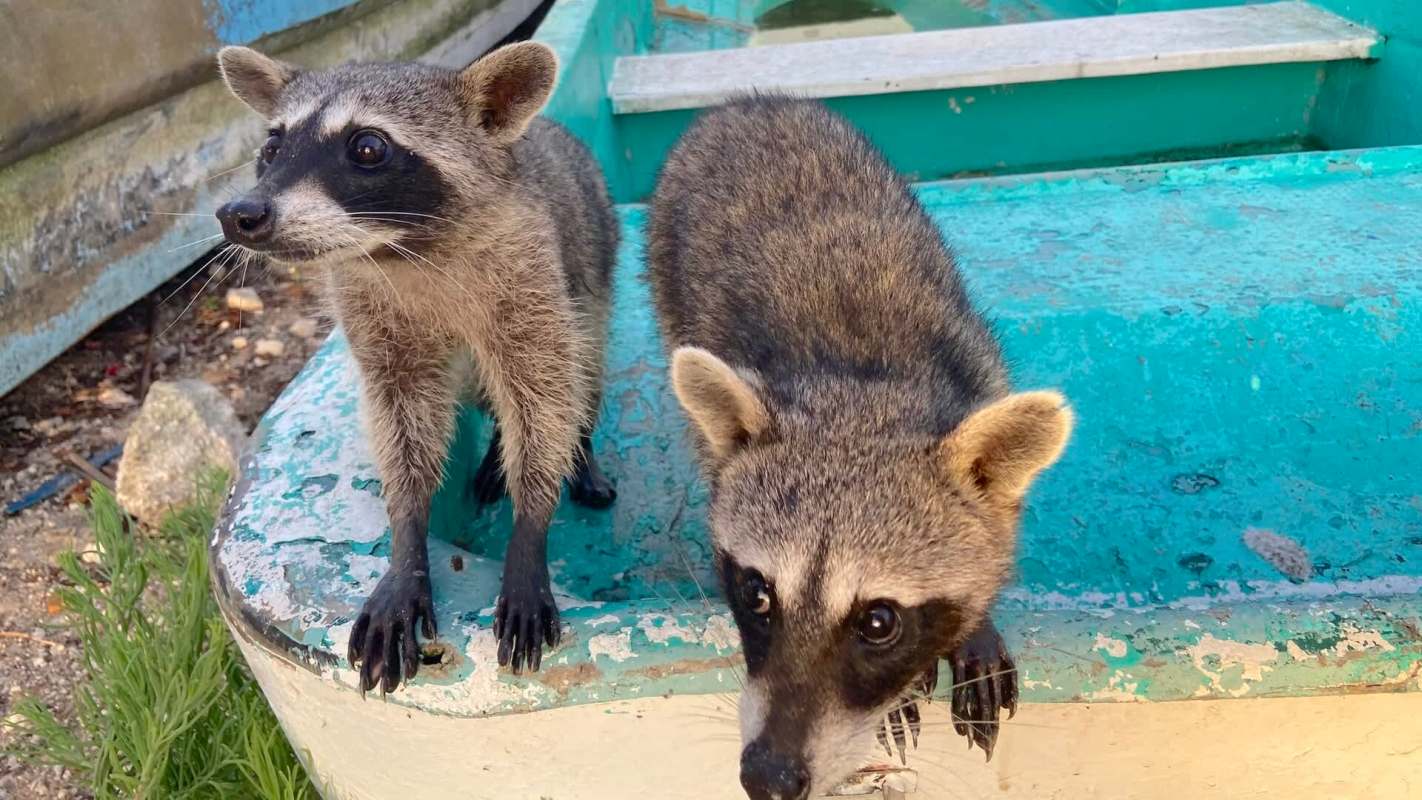
Toy-making became a family tradition for pygmy raccoons on Mexico's Cozumel Island, beginning with a receipt that a young female pulled from a trash bin.
Here's what to know
Procyonidae, the family that includes raccoons, coatis, and ringtails, has its first documented evidence of "material culture."
Researchers gained a rare look at animals developing and sharing traditions as the raccoon batted around a paper ball she had made by soaking the receipt and rolling it against sand. The finding appeared in an Aug. 25 study in the journal Wild, Smithsonian Magazine reported.
Material culture applies to objects whose manufacture or use is learned by watching others in a group.
The young raccoon's sister picked up the ball-making skill, but their mother abandoned her attempts. Researchers documented the behavior's spread over 64 hours of field observations.
The siblings and their mother played a version of "soccer," once joined by two juvenile Cozumel dwarf coatis, the outlet noted.
TCD Picks » Quince Spotlight
💡These best-sellers from Quince deliver affordable, sustainable luxury for all




Study co-author Michelle Szydlowski, an anthrozoologist at Miami University in Ohio, found the raccoons' hands-on behavior unsurprising, even though few animals make toys just for fun.
"It shouldn't be surprising that raccoons are where we're seeing this, just because they're so tactile; they see with their hands," she told New Scientist.
More background
Fewer than 200 mature pygmy raccoons remain, all on Cozumel, and the Caribbean island off Mexico's Yucatán Peninsula is their only home.
Mainland raccoons typically weigh 15 to 40 pounds. Their critically endangered Cozumel relatives weigh just six to nine pounds.
In a blog post on Nessie Explains, study co-author and Miami University biologist Nessie O'Neil reported that a new beach resort had destroyed part of the animals' home range. She linked the toy-making raccoon's subsequent severe sickness to likely malnutrition and toxic pollution.
While the young animal was taken for veterinary care, she ultimately succumbed to her illness.
Her death threatened the newly observed tradition. Animal culture depends on living individuals carrying knowledge and passing it along.
What's being done?
O'Neil was studying how tourism affects raccoon health when she recorded the toy-making.
Documenting these behaviors could help strengthen conservation efforts, Michael Kisley, a University of Colorado psychologist unaffiliated with the research, told Scientific American.
He described raccoons as "socially conscious, playful, learning beings."
"We hope to return and see if the behavior can be observed again and see if it arises in different locations or is passed to other individuals outside this family," O'Neil and Szydlowski told IFLScience.

Get TCD's free newsletters for easy tips, smart advice, and a chance to earn $5,000 toward home upgrades. To see more stories like this one, change your Google preferences here.







