


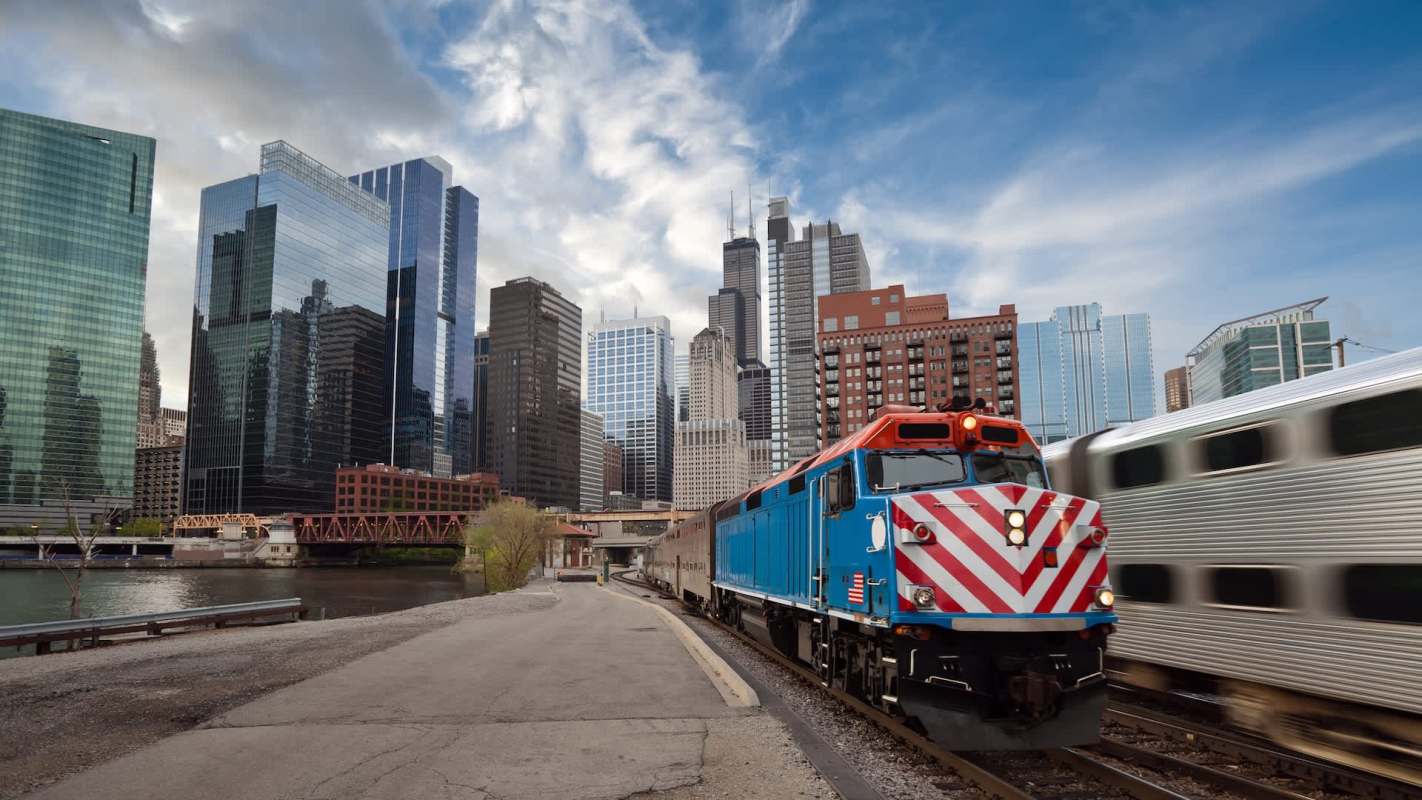
Metra's Systemwide Network Plan would let Chicago-area riders travel through Union Station to destinations beyond downtown while also increasing service frequency. The proposal envisions trains arriving as often as every 15 minutes, expanding the network's reach beyond the workday commute.
Here's what to know
Metra operates 488 route miles across 11 lines and more than 240 stations, extending north to Kenosha, Wisconsin. The agency announced its plan for a shift toward all-day regional rail in October 2026, as the content creators on Transit Tangents (@TransitTangents) explained.
The proposal would connect routes on opposite sides of downtown with through-running service. It also calls for shorter, modern trains and more predictable schedules.
Riders could travel between Tinley Park and O'Hare via Union Station on the first envisioned through-running route, which would join the Rock Island line and North Central Service, according to Transit Tangents.
"If you know exactly when that train is going to arrive, you are going to be much more likely to use it," the creator said.
More background
Transit Tangents reported that just 6%–10% of travel in the region consists of downtown commutes.
TCD Picks » Quince Spotlight
💡These best-sellers from Quince deliver affordable, sustainable luxury for all




Metra captures about 0.5% of the trips that follow its corridors without going downtown, even though those journeys account for 30% of regional travel across all transportation modes. Those figures suggest an opportunity to better serve riders traveling between intermediate stops, running errands, or reaching jobs outside the city center.
Outside commuting hours, service is sparse on the Heritage Corridor and Southwest Service, compared with roughly half-hourly trains on the BNSF and Union Pacific North lines, according to Transit Tangents.
What's being done?
Regional Rail 1.0, the plan's first phase, proposes approximately $2.7 billion in capital investments and an additional $269 million in annual operating expenses. Implementation is slated for 2027–2035, with all-day trains proposed at 30- to 60-minute intervals.
The work includes infrastructure for turning trains around partway along a corridor, preliminary improvements at Union Station, expansion of the 47th Street yard, and South Side track projects.
Trains from the outer zone could run express toward downtown, while more frequent inner-zone service would cover closer-in stops.
Regional Rail 2.0's approximately $6.4 billion capital program includes station upgrades, bridge replacements, flyovers, and additional trains. According to Transit Tangents, this phase envisions all-day service every 15–30 minutes, with implementation stretching from 2035 to 2045 and beyond.
Delivering expanded service will also require coordination with the freight companies that own much of Metra's track network.
For one commenter on the Transit Tangents video, Chicago's existing transit network is already a major draw. "One of the reasons I moved to Chicago years ago is because of the public transit. I'm glad to call this town home because it has so much to offer; the positives outweigh the negatives. It is good that they put all of the transit under one umbrella as far as funding is concerned, it can only get better from here," they wrote.
Where can I learn more?
Metra's proposed expansion comes amid rail upgrades and service cuts in other parts of the country. These stories cover a Massachusetts rail overhaul and service changes in Austin, Southern California, and Boston.
• Chicago commuters previewed Metra's first battery-powered train ahead of its planned 2028 launch.
• In Austin, CapMetro cut two peak-hour trips, leaving Red Line trains every 37 minutes.
• In Massachusetts, a $130 million rail overhaul near Springfield could pave the way for Boston-Albany trips.
• Southern California riders face fewer Metrolink trains after fare hikes, adding to service concerns.
• Boston's Orange Line now offers 55 mph trips and 76% more weekday service.

Get TCD's free newsletters for easy tips, smart advice, and a chance to earn $5,000 toward home upgrades. To see more stories like this one, change your Google preferences here.






