


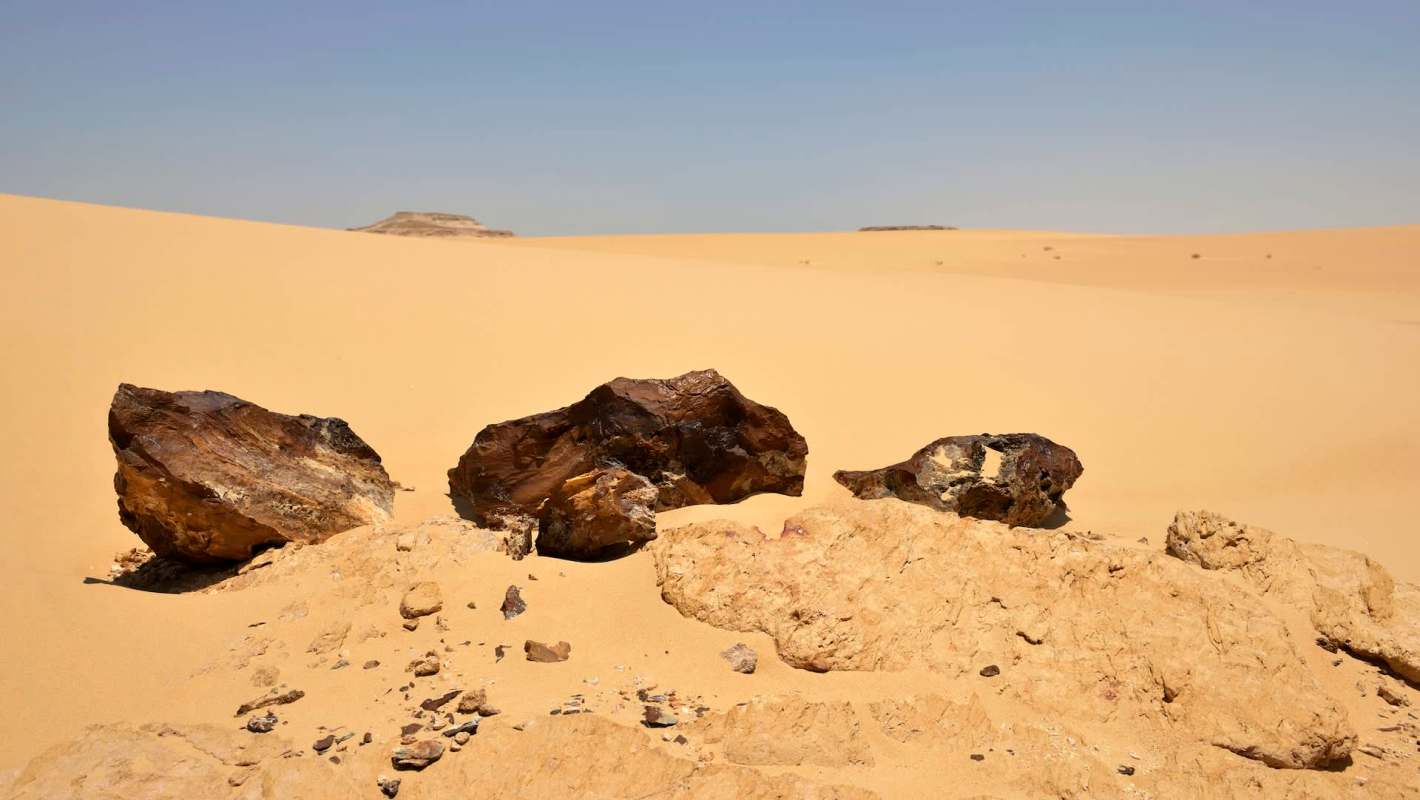
Scientists have proposed that Northwest Africa 12774, a meteorite recovered from the Sahara Desert, may be debris from a destroyed protoplanet, according to Sci.News.
What happened?
Dr. Aaron Bell, a researcher at the University of Colorado Boulder, led a team that studied Northwest Africa 12774, or NWA 12774. It's an angrite meteorite that was most likely found in Mauritania.
As Sci.News reported, their analysis indicates the rock's source was not a small asteroid, which is where angrites usually come from.
A key clue was the presence of aluminum-rich clinopyroxene, a mineral associated with formation under crushing pressure deep within a much larger object.
The researchers calculated pressures of at least 17.5 kilobars, which is far above what a modest asteroid could produce. Based on that, they concluded the parent body must have had a radius of at least 1,000 kilometers (about 621 miles). It may have even been more than 1,800 kilometers (at least 1,118 miles).
That would make the parent body roughly comparable to the Moon and possibly not far from Mars in scale.
TCD Picks » Quince Spotlight
💡These best-sellers from Quince deliver affordable, sustainable luxury for all




Why does this meteorite matter?
If this idea holds up, the specimen would provide some of the strongest evidence yet that sizable young worlds formed early in the Solar System and then vanished before becoming fully developed planets.
Angrites are unusual even by meteorite standards. They are among the oldest volcanic rocks known in the Solar System, and they are extremely scarce. Sci.News said only 68 angrites are known among the more than 80,000 meteorites recovered on Earth.
The study suggests some early planetary bodies formed from materials very different from those that built Earth and Mars. The Solar System's cosmic neighborhood may once have included worlds that followed entirely different evolutionary paths.
The techniques scientists use to study meteorites can help explain how rocky planets form, how violent collisions shaped the Solar System, and how Earth itself may have inherited some of its building materials.
What's the research team saying?
Dr. Bell summed up the discovery by saying, "It's incredible to think there was once a world this large."
The lead researcher added to Sci.News, "There are many meteorites sitting in drawers that haven't been thoroughly studied, so there were likely more of these protoplanets we don't know about."

Get TCD's free newsletters for easy tips, smart advice, and a chance to earn $5,000 toward home upgrades. To see more stories like this one, change your Google preferences here.






