


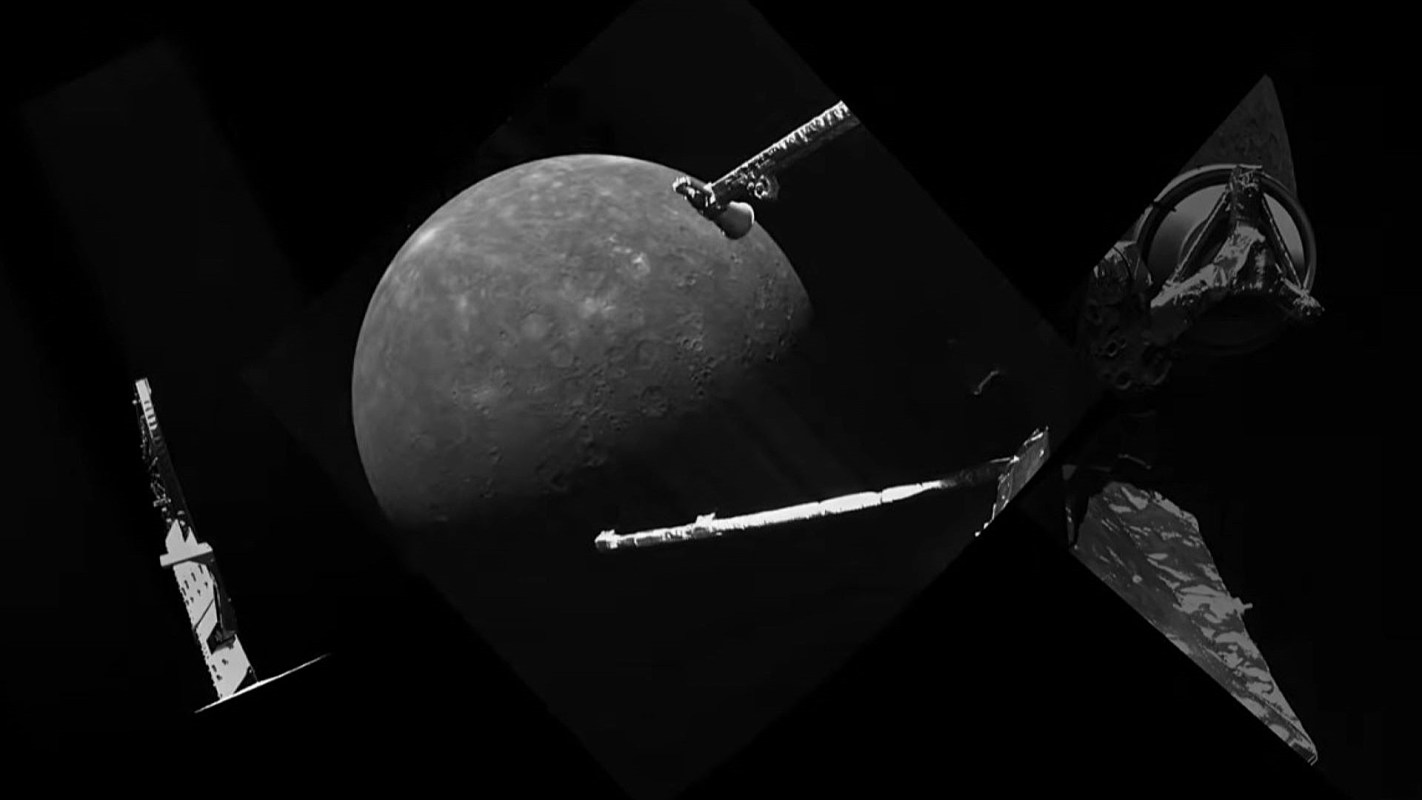
Mercury may be even more wrinkled than scientists first realized — new research suggests the smallest planet in our solar system shrank about 30% more than earlier estimates, with impact debris hiding much of the evidence in plain sight.
Proof of Mercury's contraction may have been buried by debris from ancient impacts, leading scientists to underestimate the planet's shrinkage by about 30%, according to new research cited by Mashable.
Here's what to know
Scientists now estimate that, over the roughly 4.5 billion years since Mercury formed, the planet may have lost as much as 14.5 miles from its diameter.
Because Mercury is only about 3,000 miles wide, that revision meaningfully changes how we picture the planet's evolution.
The giant cliffs and ridges seen on Mercury are signs of a long cooling process: as the planet's heavy iron core loses heat, Mercury contracts and its crust crumples.
Researchers have used those visible features to gauge how much the planet shrank over time. The new study argues that this record missed part of the story.
TCD Picks » Quince Spotlight
💡These best-sellers from Quince deliver affordable, sustainable luxury for all




Repeated meteor impacts have strewn rubble and rough debris across Mercury's surface, and that broken material appears to have covered many of the tectonic features scientists relied on for their estimates.
More background
To evaluate the idea, the team matched a global map of Mercury's surface roughness with maps showing contraction and shortening structures.
That comparison revealed a clear pattern: the roughest areas showed the fewest visible wrinkles.
At major impact sites, including the massive Rachmaninoff crater, thick debris deposits had largely buried the tectonic cracks.
In a statement, Gaku Nishiyama, a planetary scientist at the German Aerospace Center Institute of Space Research and the study's lead author, explained the unexpected findings.
"Thirty percent is a little bit surprising, but the corrected amount of contraction actually makes sense to me," Nishiyama stated.
What's being done?
The researchers revised their estimate of Mercury's overall contraction to include those obscured features.
Their published findings appeared in the journal Geophysical Research Letters.
"We compared a global map of Mercury's surface roughness with maps of shortening structures and contraction," Nishiyama said. "Mercury appears to have shrunk considerably more than what the visible tectonic record alone suggested."
Where can I learn more?
Scientists often have to piece together big changes from surface clues, especially when parts of the record have been buried or worn away.
Here are a few examples from Earth, from cratered ground in Siberia to collapsing ice and shrinking lakes spotted from orbit.
• In Siberia, thawing permafrost has produced mysterious exploding craters as trapped gas erupts.
• In Antarctica, scientists reconstructed a hidden ice shelf collapse that went unseen for decades.
• Near China's Ebinur Lake, satellite images revealed rapid lake shrinkage tied to nearby agriculture.
Each case reminds us that a landscape can hide more than it reveals at first glance. That same idea helps explain why Mercury's surface may have masked more of the planet's long history of shrinking.

Get TCD's free newsletters for easy tips, smart advice, and a chance to earn $5,000 toward home upgrades. To see more stories like this one, change your Google preferences here.






