


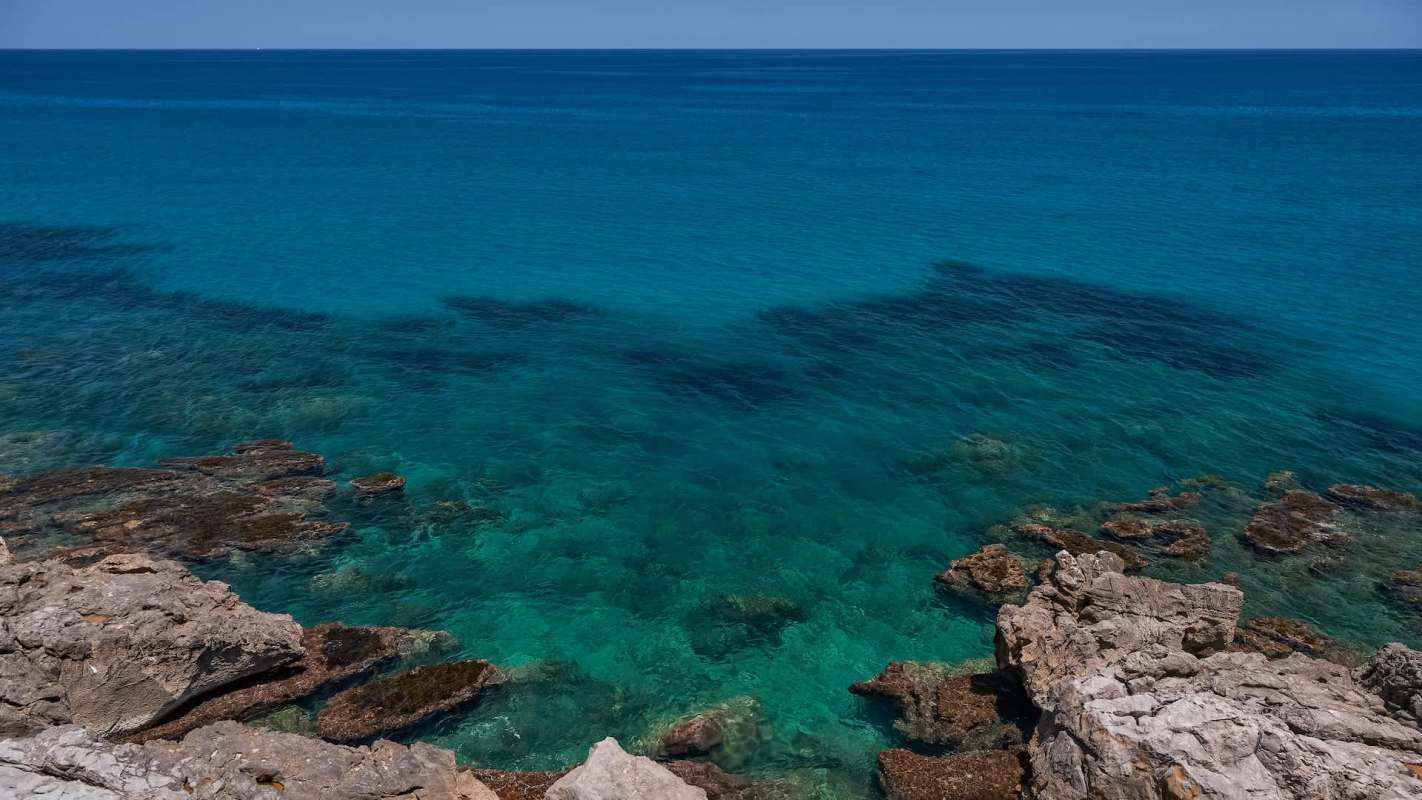
Heating in the Mediterranean Sea is no longer confined to the surface.
Here's what to know
According to AGU, researchers have said the pace of change is increasing from the upper layers down toward the seafloor, a trend that could threaten marine life as well as the coastal communities that rely on the Mediterranean.
Research led by Elena Terzić, a physical oceanographer at the Ruđer Bošković Institute, also found that salinity is rising more quickly across most of the basin. The strongest shifts are showing up in the central and eastern Mediterranean and in the Adriatic.
In the study, published in the journal Geophysical Research Letters, scientists used temperature and salinity measurements gathered by research cruises and robotic floats from 1950 to 2025. Their analysis found accelerating warming and salinification across almost the entire Mediterranean.
The upper 328 feet (100 meters) of the sea are about 3.6 degrees Fahrenheit (2 degrees Celsius) warmer than the 1950-1999 average. Since 2000, surface waters have been warming by about 0.9 degrees Fahrenheit (0.5 degrees Celsius) per decade, roughly two to three times faster than the global ocean-surface rate.
These trends extend well below shallow water. Increases in both temperature and salinity remain statistically significant down to 9,843 to 13,123 feet (3,000 to 4,000 meters), and the acceleration itself reaches about 8,202 feet (2,500 meters) deep.
TCD Picks » Quince Spotlight
💡These best-sellers from Quince deliver affordable, sustainable luxury for all




"For us, what was alarming was the rate at which this is changing, and the depths that such significant changes reach," Terzić said.
More background
The Mediterranean's deep circulation is driven by differences in seawater density. Heat makes water lighter and salt makes it heavier, and across much of the basin, the warming influence is starting to dominate, making it more difficult for surface waters to mix downward.
The Adriatic stands out because cold winter winds there can make surface water dense enough to sink. That sinking water then spreads into the central and eastern Mediterranean, bringing oxygen to deep-sea ecosystems.
A major weakening or shift in that process could have consequences for biodiversity, fisheries, and coastal economies linked to healthy marine systems. Warmer seawater also holds less oxygen, and oxygen declines have already been documented in parts of the Mediterranean.
The findings also point to the Mediterranean as a possible warning signal for the wider world. Because its waters cycle between the surface and the deep much faster than in the open ocean, the basin may provide an early look at how quickly larger seas could change as planet-heating pollution keeps building.
What's being done?
Researchers are trying to pinpoint the forces behind the acceleration. Terzić and co-author Ivica Vilibić, also at the Ruđer Bošković Institute, want to sort out the effects of the atmosphere, evaporation, rainfall, river discharge, and Atlantic inflow through the Strait of Gibraltar.
They also want to know whether existing climate models are capturing the speed of the changes being observed. Those projections are important for governments and communities preparing for risks to marine ecosystems, water resources, food systems, and local economies.
Fossil fuel dependence remains the main force trapping heat in Earth's system. Stronger monitoring and faster climate planning may help limit the damage, but slowing the root cause remains essential to protecting the sea's health.
"The Mediterranean is small enough that we can watch how a sea responds, on timescales we can witness ourselves, and what we see is unprecedented change," Terzić said.
Where can I learn more?
Those changes are showing up in the Mediterranean, from record surface temperatures to shifts in marine life. Similar pressures are surfacing elsewhere too, with salinity swings and ocean stress affecting food supplies, coastal economies, and decisions about the deep sea.
• The Mediterranean is nearing all-time temperature records, raising risks for ecosystems and coastlines.
• Across the Mediterranean, populations of invasive species are increasing, reshaping native ecosystems.
• In U.S. waters, scientists have warned that issues of deep-sea mining far outweigh the benefits.
• In Thailand, saltwater flooded an ancient estuary and threatened one of Asia's key farming regions.

Get TCD's free newsletters for easy tips, smart advice, and a chance to earn $5,000 toward home upgrades. To see more stories like this one, change your Google preferences here.






