


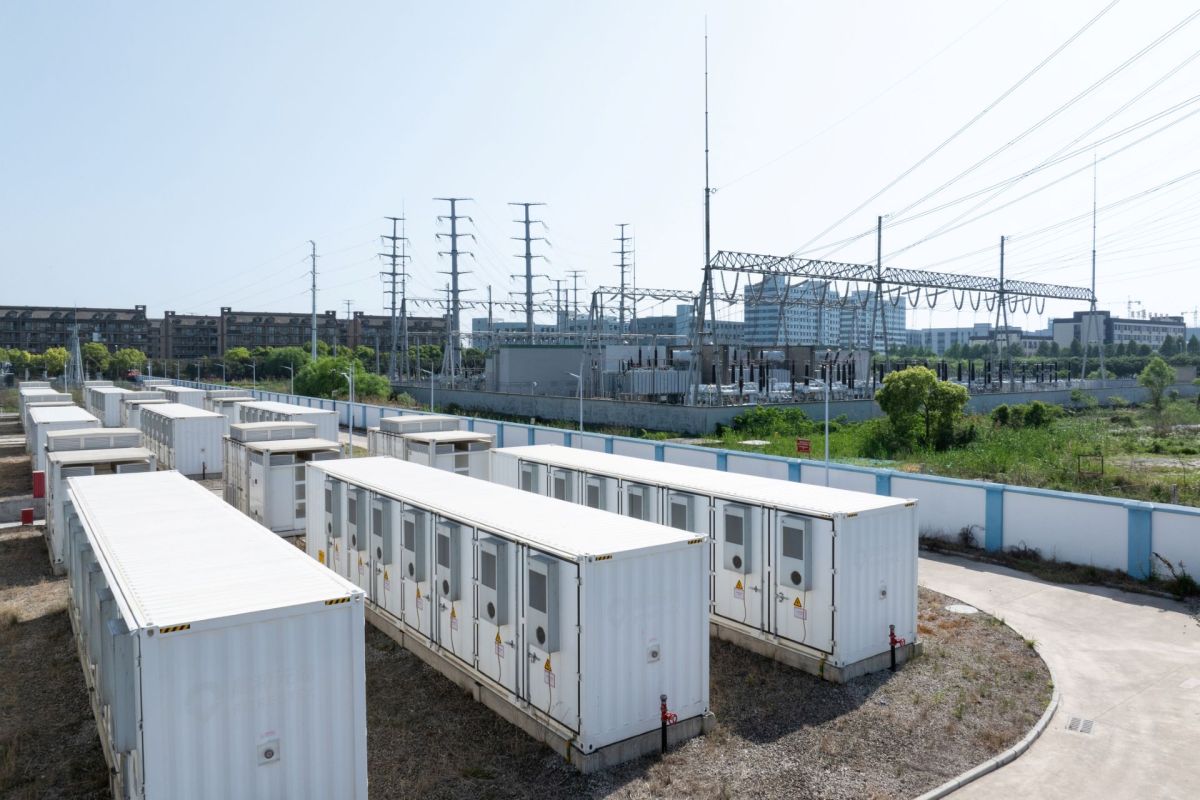
Massachusetts is advancing a 700-megawatt battery project just outside Boston, the largest storage project in New England.
The proposal underscores how aggressively the state is using large-scale batteries to cut costly peak-hour electricity use.
Here's what to know
The 700-MW Trimount project is part of a much larger development wave, Canary Media reported. A 200-MW storage facility near the Rhode Island border is already under construction and expected to come online, while another company in a neighboring town has secured $850 million to build a 250-MW battery project.
Although much larger states like California still dominate installed capacity with 23 GW, Massachusetts has set the country's most aggressive battery procurement goal. The state plans to bring 5 gigawatts of storage online by 2030 and add another 5 GW by 2035.
Erin Smith, energy and grid policy director for the Environmental League of Massachusetts, told the outlet, "Massachusetts is really a leader in this space. We're ahead of the pack as it relates to encouraging battery buildout."
With electricity prices among the highest in the nation, state officials see batteries as a way to shift power use away from the most expensive hours. These systems can charge when electricity is cheaper and cleaner, then send that energy back out when demand increases.
TCD Picks » Quince Spotlight
💡These best-sellers from Quince deliver affordable, sustainable luxury for all




Elizabeth Mahony, commissioner of the state Department of Energy Resources, said, "If we have storage on the system, we can deploy it at different times to manage our load."
More background
State leaders have been pursuing energy storage for more than a decade. Massachusetts launched its Energy Storage Initiative in 2015 under then-Governor Charlie Baker, and it has already exceeded its earlier 1 GW-by-2025 goal, reaching more than 1.6 GW.
However, the expansion is not without obstacles. In September, developers scrapped a planned 125-MW battery project in Tewksbury after learning grid upgrade costs would total $65 million just to connect the system. An Independent System Operator New England study found that many proposed Massachusetts battery projects could face interconnection costs of more than $200 million.
Community resistance has also slowed some proposals. In Oakham, opponents have raised concerns about fire risks near a reservoir used for drinking water by dozens of communities, while similar fears helped sink a Westfield proposal. Todd Olinsky-Paul, senior project director for the Clean Energy States Alliance, said, "It's something new. People are nervous about it. They may be hearing misinformation about possible environmental impacts."
What's being done?
Developers continue to pursue projects in Massachusetts largely because state policy has created financial incentives. The Clean Peak Standard, launched in 2020, was the first program of its kind to pay renewable energy and storage operators for supplying electricity during peak-demand periods. Aaron Lang, a partner at Foley Hoag, said, "Those credits are incredibly important to financing and developing these projects."
The state has also overhauled approval for large storage proposals. Under rules that took effect July 1, the Energy Facilities Siting Board can approve battery projects of 100 MW or larger, replacing a patchwork of local permitting systems with a single state-level path. The board must issue a decision within 15 months of an application being filed.
Hans Detweiler, vice president of development for Jupiter Power, said the long timelines involved mean companies need to know the rules will hold. Lang said, "The policy framework in place is certainly having an influence on bringing developers to Massachusetts. It holds a lot of promise. I am optimistic that the challenges can be overcome."
Where can I learn more?
These stories look at how Massachusetts is expanding battery storage while navigating reliability concerns, costs, and siting disputes. They cover local approval fights, state funding for backup batteries, and other projects moving through the pipeline.
• In Saugus, a battery project tests local control as state rules shift.
• Massachusetts awarded $40.3 million for battery storage at critical sites to strengthen backup power.
• A Massachusetts project neared approval after noise met state limits, clearing a key siting hurdle.
• Eversource says the overloaded grid needs relief as Burlington plans a new substation.
• In Southwick, officials drafted a 12-month permit path for battery and solar projects.

Get TCD's free newsletters for easy tips, smart advice, and a chance to earn $5,000 toward home upgrades. To see more stories like this one, change your Google preferences here.






