


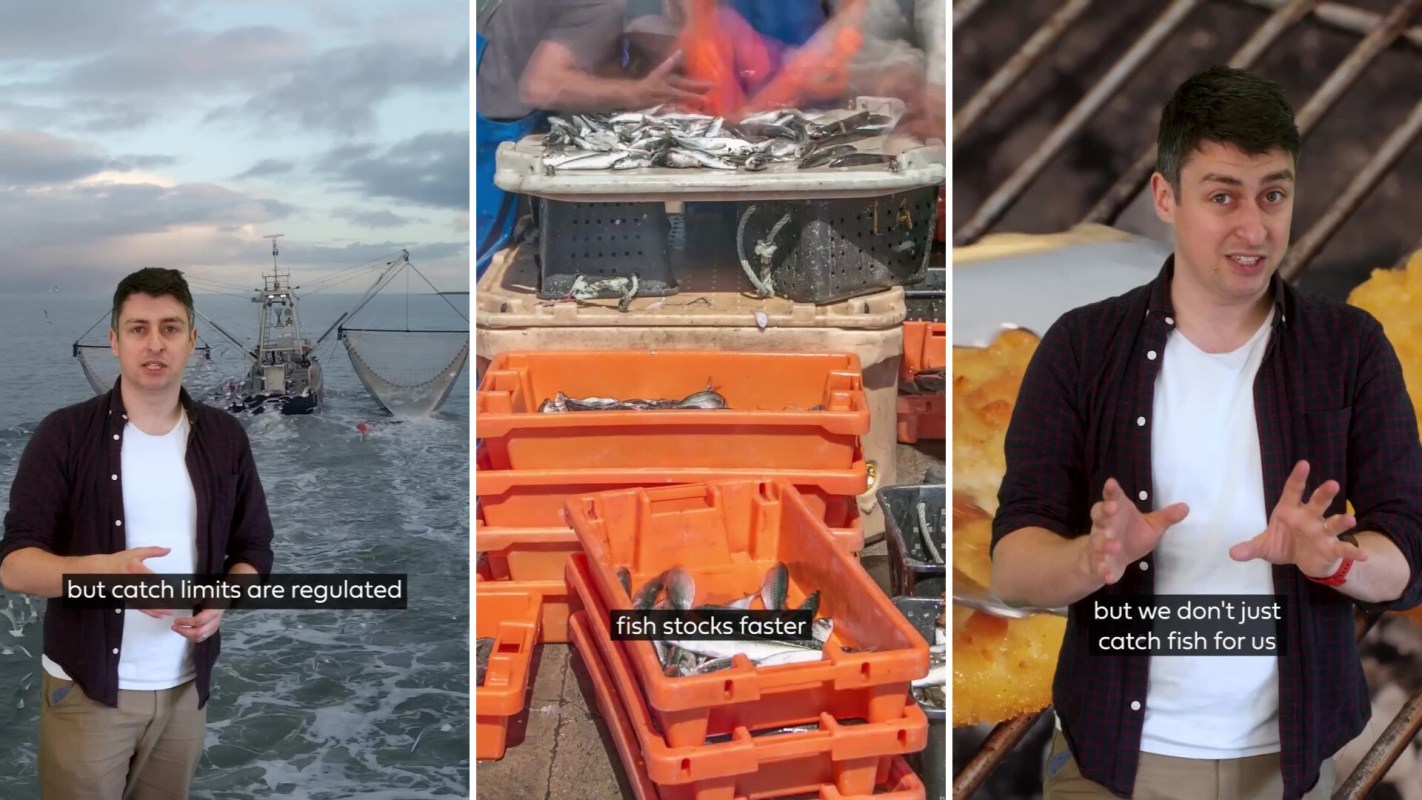
Marine ecosystems are under mounting pressure from industrial fishing and pollution, and the consequences could extend far beyond the ocean itself.
In a recent video, climate physicist Simon Clark warned that the same forces harming fish and other marine wildlife are also threatening food sources, coastal livelihoods, and the ocean's role in regulating the climate.
What's happening?
In the short video, Clark covered the biggest threats facing our oceans and the animals that inhabit them.
Citing a new report from Giving Green, Clark said, "Overfishing is depleting fish stocks faster than they can repopulate… the biggest extinction threat for endangered and vulnerable marine species"
Clark also highlighted the toll commercial fishing can take on animals that are not meant to be caught. He added, "Bycatch is harming species we're trying not to fish, like dolphins and birds," describing the long-standing problem that can injure or kill other marine animals during fishing operations.
Another concern he raised was bottom trawling, which involves dragging heavy equipment across the ocean floor. As Clark put it, "This process is catastrophic to fish, their homes, their food chains, pretty much everything. Oh, and it releases tons of carbon, too."
TCD Picks » Quince Spotlight
💡These best-sellers from Quince deliver affordable, sustainable luxury for all




It's not all bad news, though. Clark noted that there is work that can help to reduce the damage associated with these issues. He especially noted that utilizing "smart nets" and developing alternative sources for fishmeal could make a huge difference.
But he stressed that technological solutions only go so far. Policy and government-based solutions will be critical to protecting the ocean; specifically, he advocated banning bottom trawling.
Why does it matter?
Healthy oceans support a vast amount of life on Earth, but they also sustain people in more immediate ways. Food security, jobs, tourism, and coastal economies all depend on thriving marine ecosystems.
When fish populations collapse or habitats are destroyed, the effects can quickly ripple outward. Fishing communities may face reduced catches, consumers may see higher prices, and local industries can weaken under the strain.
Bycatch adds another layer of harm because it can kill species that are not being targeted in the first place. Dolphins, birds, and other animals can be swept up in the fallout, further disrupting already fragile food webs.
Bottom trawling may be especially destructive because it removes marine life and tears up the seafloor habitats many species depend on to survive. Disturbing ocean sediments can weaken one of the planet's natural climate defenses at a time when communities are already grappling with the costs of extreme weather and ecological decline.

Get TCD's free newsletters for easy tips, smart advice, and a chance to earn $5,000 toward home upgrades. To see more stories like this one, change your Google preferences here.






