


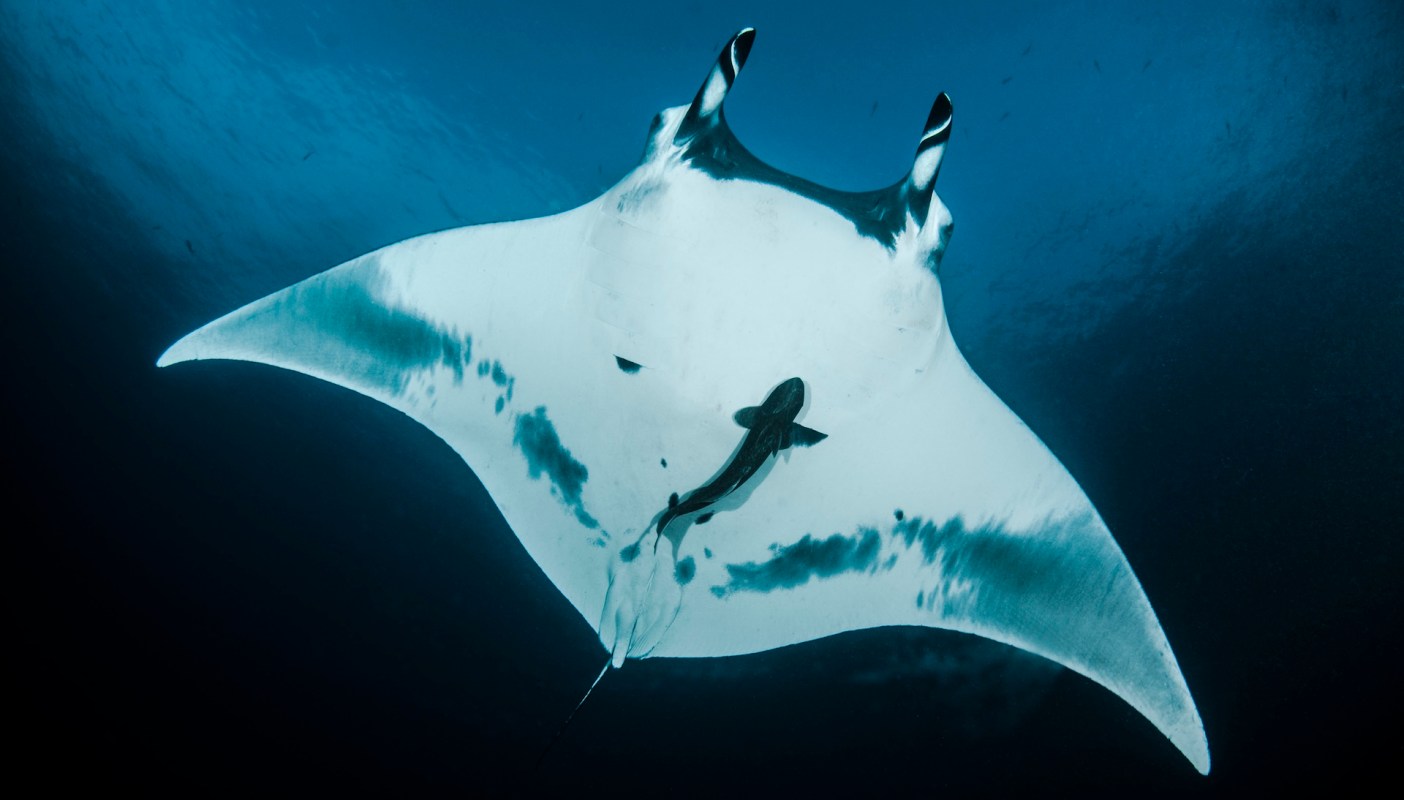
Small fish clinging to sharks, whales, and rays for a free ride have long been seen as the ocean's harmless hitchhikers.
But research suggests remoras may be doing far more than freeloading, including entering manta rays' cloacas — otherwise known as their buttholes.
What's happening?
According to Forbes, which first seized upon the "buttholes" terminology, researchers led by Emily A. Yeager, a Ph.D. student in the University of Miami's Shark Research and Conservation Program, reported seven cases of remoras showing what scientists call "cloacal diving behavior" in manta rays.
The behavior was seen in reef manta rays, giant oceanic manta rays, and Atlantic manta rays across more than one ocean basin.
The team also observed remoras attached beneath manta ray gill slits, along with injuries suggesting the fish may have entered the gills of juvenile and adult rays. The finding could change how scientists understand one of the ocean's most familiar animal relationships.
Remoras are known for the suction disc on their heads, an adaptation evolved from a dorsal fin that allows them to latch onto larger animals. Their relationship with hosts has traditionally been considered symbiotic, as remoras gain transportation, protection, and food while occasionally helping to remove parasites from the host.
TCD Picks » Quince Spotlight
💡These best-sellers from Quince deliver affordable, sustainable luxury for all




But these new observations add to a growing body of evidence that the arrangement may not always be so harmless.
Why does it matter?
Manta rays are already vulnerable animals facing several threats, including fishing pressure, boat strikes, habitat degradation, and warming oceans. If remoras are also adding physical stress, injuries, or extra energy demands, that could represent another hidden burden.
As Forbes noted, scientists have raised concerns that remoras may add drag during swimming, making movement less efficient. Bigger remoras, or several at once, may leave skin damage where they attach. If they are entering sensitive openings, such as cloacas and gill slits, the costs to the host could be greater than previously understood.
That does not necessarily mean every remora-manta interaction is harmful. The relationship likely exists on a spectrum. In some cases, remoras may help by removing parasites or dead tissue. In other situations, the outcome may depend on remora size, the species involved, or the host's overall condition, with the balance shifting closer to parasitism.
Understanding the full range of pressures on manta rays can help create a more accurate picture of what these animals need to survive.
What's being done?
Yeager's study gives scientists reason to move beyond the long-standing image of remoras as harmless tagalongs and to investigate when these interactions help, harm, or shift between the two.
That kind of research could improve how marine scientists assess the health of manta rays in the wild, and it may also help explain injuries or energy loss.
Nature rarely fits into neat categories, and this study is a reminder that even famous animal "partnerships" can be more complicated than they appear. The ocean's so-called little hitchhikers may not always be just along for the ride.

Get TCD's free newsletters for easy tips, smart advice, and a chance to earn $5,000 toward home upgrades. To see more stories like this one, change your Google preferences here.






