


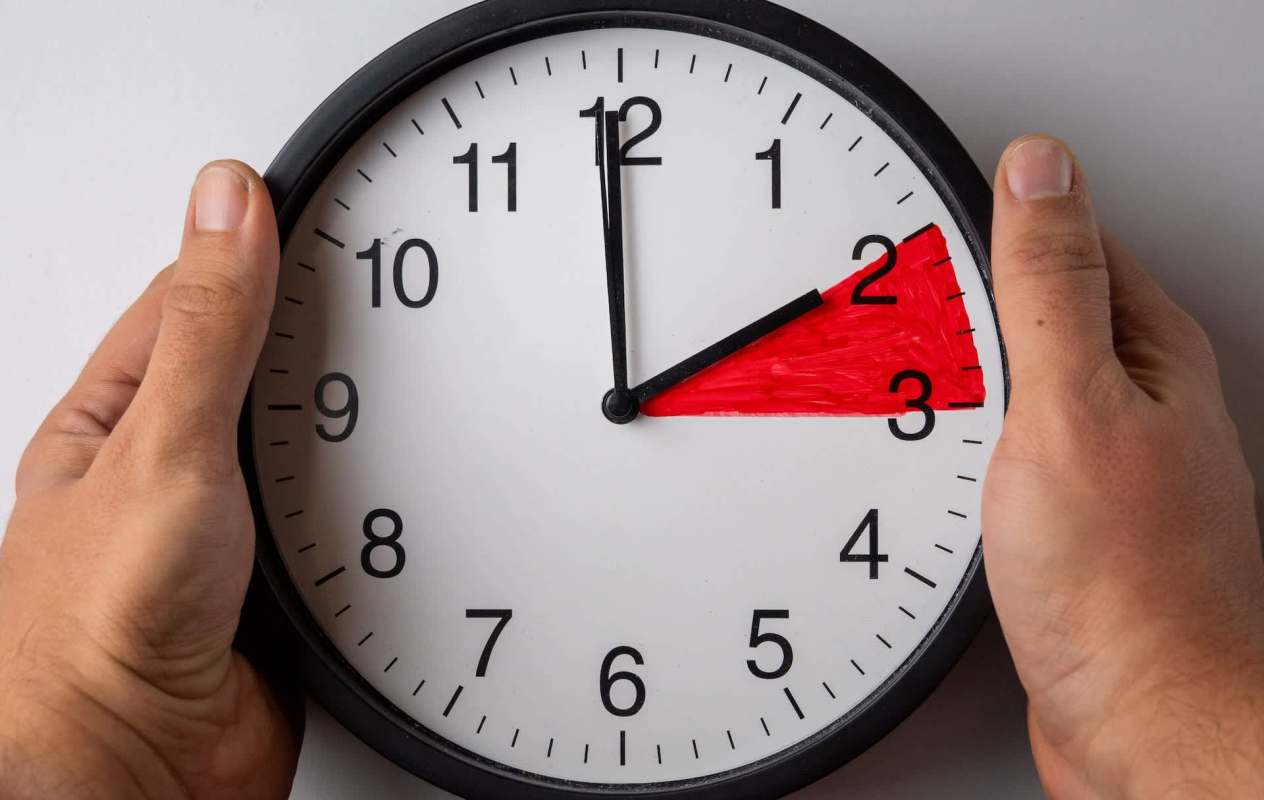
Manitoba residents will no longer need to turn back clocks Nov. 1, as the Canadian province will stay on daylight time year-round, CBC News reported.
The change is expected impact citizens' daily lives and health, especially during dark winter mornings.
Here's what to know
Under the change, Manitoba will keep daylight time all year.
By ending the twice-a-year switch, the province joined Yukon, Saskatchewan, British Columbia, Alberta, and the Northwest Territories, which use or are moving toward a fixed year-round time, according to the outlet.
The province said a survey helped shape the decision and drew nearly 72,000 responses.
In that poll, 92% of people wanted seasonal clock changes to end, while 58% preferred permanent daylight time, and 34% supported permanent standard time, CBC News noted.
TCD Picks » Quince Spotlight
💡These best-sellers from Quince deliver affordable, sustainable luxury for all




Officials cited a Manitoba Health analysis that found population health would likely improve if the clock changes ended. It described sleep loss as the spring shift's "most immediate consequence" and said adolescents are especially vulnerable to its effects.
The same analysis linked sleep and circadian disruption after the spring change to short-term increases in cardiovascular events, injuries, traffic collisions, and reduced well-being, per CBC News.
Historical data from Manitoba Public Insurance showed collisions were up 20% after the spring change compared with other Mondays.
More background
Inna Rabinovich-Nikitin, an assistant professor in the University of Manitoba's Department of Physiology and Pathophysiology, said that keeping daylight time year-round is the wrong choice for people's health.
"Our body has an internal circadian clock … and when we're moving to daylight saving time, it doesn't align with the light and dark cycles outside, and that basically makes us feel like we're always jet-lagged," she told CBC News. "It's better not to change the time twice a year, but between daylight saving time and standard time, we should have chosen standard time."
Doctors Manitoba took the opposite view.
In a written statement, the advocacy group held that while permanent standard time may align more closely with natural circadian rhythms, permanent daylight time offers "more usable sunlight in the late afternoon and evening for people to get outside and get active."
CBC News also spoke with residents about the change.
"I think I'll be relieved not to have to change the clocks," Winnipeg resident Marilyn Strukoff said.
Not everyone agreed.
Matthew Klassen countered, "I work construction, and lots of sites have poor lighting in the morning."
What's being done?
The adjustment may reduce acute risks, but it also means Manitobans — especially in northern communities — will need to prepare for dark winter mornings.
In Churchill, where winter sunrise can come after 10 a.m., resident Joe Stover told CBC News that parents are concerned kids "will be going to school when it's pitch black."
For Declan Shroeder, who runs Winnipeg Daylight Tracker, evening daylight matters more than morning light. Stover would like the province to revisit the change in roughly a year.
"I just hope that people aren't stubborn about it [and] have an open mind, whether you're for this or against this," he told CBC News.
Where can I learn more?
Manitoba's decision sits alongside questions about how we keep time and how winter is changing. These stories explore shifts in timekeeping and seasonal patterns.
• Global timekeepers weighed a leap second as climate shifts altered Earth's rotation.
• Across the Great Lakes, ice coverage got off to a slow start.
• In Iowa, an unusual snow drought signaled another break from typical winter weather.

Get TCD's free newsletters for easy tips, smart advice, and a chance to earn $5,000 toward home upgrades. To see more stories like this one, change your Google preferences here.






